 Fairhaven Siding
 Siding in Sunnyland: What the Local Climate Actually Demands
Sunnyland sits close enough to Bellingham Bay and the Fairhaven waterfront that homes here take a steady beating from three things at once: salt-laden air off the water, driving rain that comes in sideways during winter storms, and a moss season that can run from late fall clear into spring. None of these are dramatic events. They're slow, constant pressure, and that's exactly what wears out the wrong siding material years before it should fail.
Salt air is corrosive to fasteners and hardware, and it accelerates the breakdown of coatings that aren't built to handle it. Driving rain doesn't just wet a wall's surface — wind-driven moisture gets pushed up under laps, around trim, and into any gap in the water-resistive barrier that wasn't detailed correctly. And moss doesn't just grow on roofs. Given a north-facing wall, tree shade, and months of damp weather, it colonizes siding too, holding moisture against the surface and feeding rot in anything wood-based or wood-adjacent.
Any siding installation in this part of Whatcom County has to be planned around those three realities, not just around how the finished wall looks. That's the difference between a job that holds up for decades and one that starts showing problems in five to ten years.
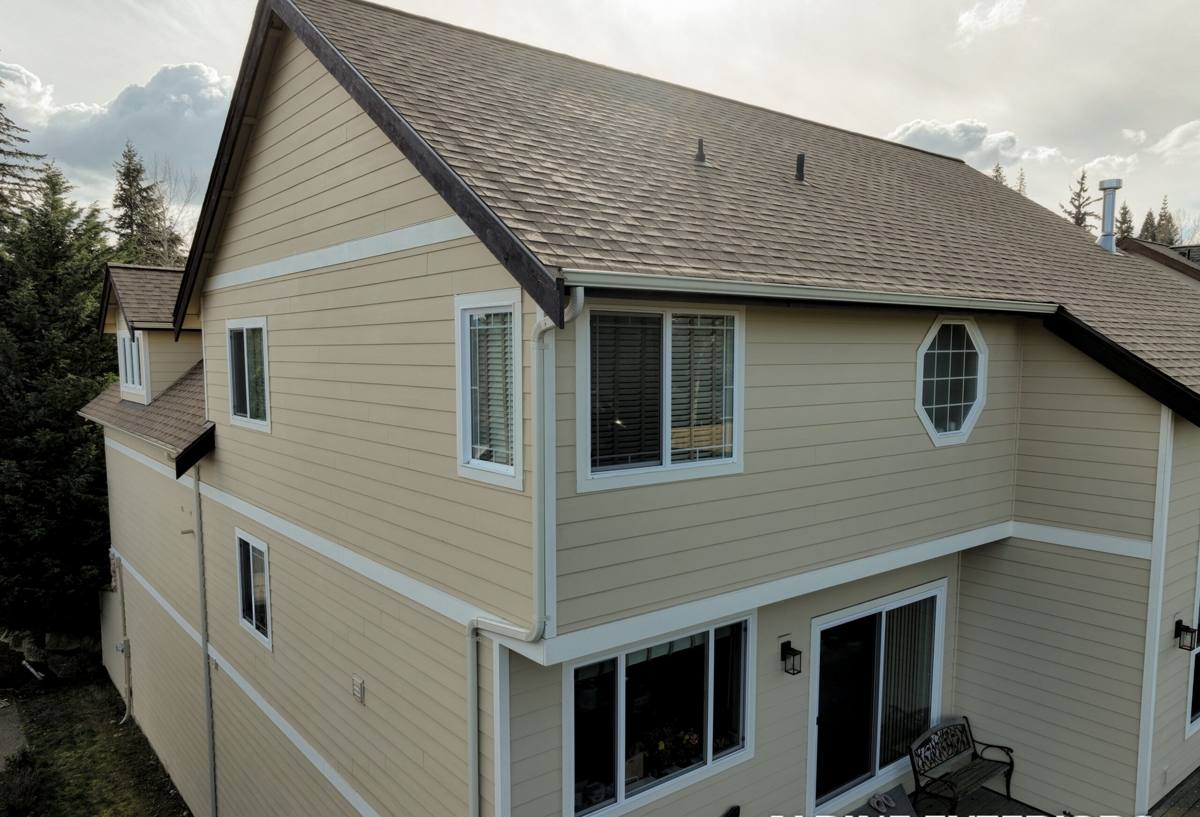
What "Correct" Siding Installation Actually Involves
Siding is a system, not a single layer. A wall that fails prematurely almost never fails because the siding boards themselves were bad — it fails because something behind or around them was done wrong. Correct installation means getting every layer right, in order:
The Water-Resistive Barrier
Before any siding goes up, the wall needs a continuous, properly lapped weather barrier. Every penetration — outlets, hose bibs, light fixtures, vents — needs to be flashed so water sheds outward instead of tracking behind the barrier and into the sheathing.
Rainscreen Drainage
In a climate with this much sustained rainfall, siding installed directly against the wall assembly traps moisture that has nowhere to go. A rainscreen gap behind the siding lets any water that does get past the outer layer drain and dry out instead of sitting against the sheathing.
Flashing at Every Transition
Windows, doors, deck ledgers, roof-to-wall intersections, and butt joints in the siding itself are the places water finds a way in. Each one needs metal or membrane flashing installed in the correct shingle-lap order — not caulk used as a substitute for flashing.
Fastening and Clearances
Fastener spacing, type, and depth all affect how a wall performs over time, and manufacturer clearance requirements — siding-to-grade, siding-to-roofline, siding-to-deck — exist specifically to keep splash-back and ponding water away from the bottom edge of the material.
Skip or shortcut any one of these steps and the finished wall can look perfect on installation day while already being set up to fail underneath.
Why We Install James Hardie Fiber Cement — and Nothing Else
We install James Hardie fiber cement siding exclusively. We don't install vinyl, LP SmartSide, cedar, primed spruce, or other fiber cement brands, and that's a deliberate standard, not a limitation in what we're capable of installing.
Fiber cement is non-combustible and dimensionally stable — it doesn't expand and contract with temperature and moisture the way wood-based products do, which matters in a climate that swings between soaked winters and warm, dry summers. Hardie's ColorPlus factory finish is baked on under controlled conditions rather than field-painted, which gives it better adhesion and color consistency than most site-applied coatings, and it comes backed by a real, transferable warranty. Hardie also engineers specific product lines (their HZ5 designation, for example) for wetter, harsher climates like the Pacific Northwest, which is a meaningful difference from siding built to a single national spec.
None of that means fiber cement is maintenance-free or that other materials don't have their place. It means that for the specific combination of salt air, sustained rain exposure, and moss pressure that Sunnyland homes deal with, we believe fiber cement installed correctly is the material that holds up with the least long-term risk to the homeowner. That's the standard we've built our business around, and it's why we'd rather turn down a job than install a product we don't stand behind for this climate.
Our Installation Process, Start to Finish
- Assessment and tear-off. We inspect the existing wall assembly, remove the old siding, and check the sheathing underneath for any moisture damage or rot that needs to be addressed before new siding goes on — this is often where hidden problems from years of moisture intrusion surface.
- Sheathing repair. Any soft, rotted, or water-damaged sheathing gets replaced. Installing new siding over compromised sheathing just hides a problem that will keep getting worse.
- Weather barrier installation. A continuous water-resistive barrier goes on with correct lapping and taped seams.
- Rainscreen and drainage plane. We install a drainage gap behind the siding so any incidental moisture can escape rather than sit against the wall.
- Flashing at all penetrations and transitions. Windows, doors, and roof lines get flashed in proper sequence before trim and siding cover them.
- Hardie siding installation. Boards are installed to manufacturer fastening schedules and clearance requirements, with attention to butt-joint flashing and consistent reveal lines.
- Trim, caulking, and final detailing. Trim is installed, gaps are sealed with appropriate sealants, and everything is checked against manufacturer installation standards before we call the job done.
Every one of those steps is inspectable. A contractor who can't explain what's happening at each stage, or who wants to skip straight from tear-off to new siding, is skipping the parts that actually determine how the wall performs in ten or twenty years.
Cost Factors for a Sunnyland Siding Project
Every home is different, and we don't quote pricing without seeing the house, but these are the main factors that move a siding project's cost up or down:
| Factor | Why It Matters |
|---|---|
| Home size and wall area | More square footage means more material and labor, the largest single driver of total cost |
| Number of stories | Second-story and taller walls require staging or lift equipment and slow the pace of work |
| Existing sheathing condition | Rot or water damage found during tear-off adds repair scope that can't be known until the old siding is off |
| Trim and architectural detail | Homes with more corners, dormers, and trim work take more time to flash and finish correctly |
| Siding profile and finish | Lap width, shingle-style siding, and specific ColorPlus finishes vary in material cost |
| Access and site conditions | Tight lots, landscaping, fencing, or limited driveway access affect setup and staging time |
Because moisture damage is only fully visible once the old siding is removed, we always build in an honest conversation about what happens if we find rotted sheathing — it's better to know the possibility up front than to be surprised mid-project.
Signs Your Sunnyland Home's Siding Is Already Failing
- Soft or spongy spots when you press on the siding, especially near the bottom courses or below windows
- Persistent moss or algae growth that keeps coming back after cleaning, particularly on shaded or north-facing walls
- Visible cracking, warping, or bubbling, especially on wood-based or older composite siding
- Paint that's peeling or failing faster than it should between repaints
- Staining or streaking below seams and butt joints, a sign water is tracking behind the siding rather than shedding off it
- Rising energy bills that can't be explained by anything else, which can point to moisture-compromised insulation behind the wall
Any one of these on its own isn't necessarily an emergency, but a wall showing two or three of them at once is usually telling you the siding system has already let water in.
What to Look for in a Sunnyland Siding Contractor
Hiring a crew that already works this part of Whatcom County matters more than it might seem. A contractor who mostly works drier inland areas may not build in the rainscreen detailing or flashing sequencing that a wet, coastal-influenced neighborhood like Sunnyland actually needs.
- Ask specifically how they handle rainscreen drainage and flashing at butt joints — not just what siding brand they install
- Ask what happens if they find rotted sheathing during tear-off, and get that answer in writing before work starts
- Confirm they're a certified installer for the specific siding manufacturer they're proposing
- Ask for the manufacturer's fastening and clearance specs and confirm those are what they'll follow, not a shortcut version
- Check that any warranty offered is actually transferable if you sell the home
- Get a written scope that separates siding installation from any sheathing repair, so pricing stays honest if problems are found
Maintenance After Installation
Correctly installed fiber cement siding is low-maintenance, but low-maintenance isn't no-maintenance, especially with a moss season this long. A yearly rinse-down, keeping gutters clear so water isn't overflowing onto walls, and trimming back vegetation that shades and dampens siding all go a long way toward protecting the investment. Recaulking joints and touching up any chipped finish promptly also keeps small issues from becoming bigger ones.
If you're in Sunnyland and your current siding is showing wear, or you're planning ahead for a replacement, we're happy to take a look and walk you through what we'd actually recommend for your home — no pressure, no obligation. Reach out using the form below for a free estimate.