 Fairhaven Siding
 New-Construction Windows Built for How Sunnyland Actually Weathers
If you're framing a new home or a major addition in Sunnyland, the windows you choose and how they're installed will decide whether that house stays dry and comfortable for the next 30 years or starts showing rot, fogged glass, and stuck sashes within a decade. New-construction window installation is fundamentally different from a replacement job — the window, the flashing, and the wall's water-resistive barrier all get built together, in the right order, before siding ever goes on. Get that sequence wrong and no amount of caulk fixes it later.
We install new-construction windows throughout Fairhaven and the surrounding Bellingham neighborhoods, including Sunnyland, and the approach we take here is shaped by one thing: Whatcom County's marine climate doesn't forgive shortcuts.
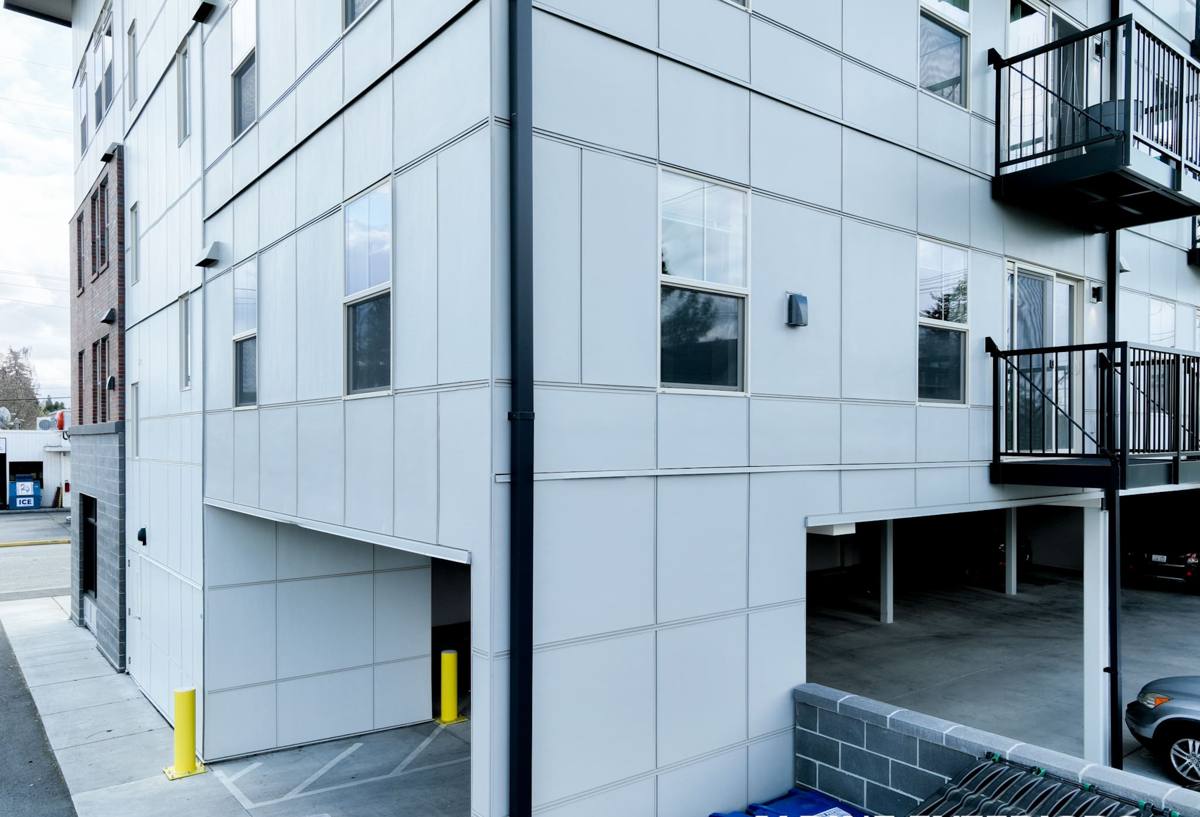
What Sunnyland Homes Are Up Against
Homes in this part of Whatcom County deal with a specific combination of conditions that windows either handle well or fail against slowly:
- Salt-laden air off Bellingham Bay accelerates corrosion on unprotected fasteners, hardware, and cheaper aluminum components.
- Driving, wind-blown rain that doesn't fall straight down — it gets pushed sideways into wall assemblies, which is why flashing details matter more here than in drier climates.
- A long moss and mildew season, roughly fall through spring, when surfaces stay damp for weeks at a time and any trapped moisture behind a window has little chance to dry out before the next rain arrives.
None of these conditions are dramatic on their own. The problem is that they're constant. A window detail that would survive a few wet weeks a year in a drier region gets tested by months of sustained moisture exposure here, and small installation mistakes compound over years instead of getting caught early.
What a Correct New-Construction Window Installation Actually Involves
Flashing and Water-Resistive Barrier Integration
The single biggest factor in long-term window performance isn't the window itself — it's how it ties into the wall. New-construction windows have a nailing fin that gets integrated into a shingled, layered system: the water-resistive barrier laps over the top flashing, side flashing laps over the sill pan, and everything is sequenced so water is always directed outward and downward, never behind a layer that's supposed to be protecting the framing. On a driving-rain coast, a reversed lap or a skipped strip of flashing tape is often invisible for years until it isn't.
Sill Pan and Drainage
Every new-construction window opening should get a sloped sill pan, not just a bead of sealant, so any water that does get past the window has somewhere to go besides straight down into the framing. This is one of the details that separates a correctly built opening from one that merely looks finished.
Fastening and Shimming
Windows need to be shimmed plumb, level, and square at the right points — not just at the corners — so the sash operates smoothly and the seal stays consistent under wind load. Over-fastening or under-shimming a frame is a common cause of windows that bind or leak within the first few winters.
Choosing Windows and Glass for a Salt-Air, High-Rain Climate
Not every window on the market is a good fit for this environment, and the "best" choice depends on budget, exposure, and how much upkeep you want to take on. Here's how the common frame materials compare for new construction in a coastal Whatcom County setting:
| Frame Material | Moisture & Salt Air Performance | Maintenance | Typical Fit |
|---|---|---|---|
| Vinyl | Good — won't corrode or rot; seams are the main watch point | Low | Best value for most new builds |
| Fiberglass | Excellent — dimensionally stable in wet/dry cycling, resists corrosion | Low | Higher upfront cost, longer service life |
| Wood-clad | Good exterior protection if cladding and flashing are done right; interior wood still needs care | Moderate | Homeowners prioritizing interior wood appearance |
| Bare aluminum | Poor in salt air without upgraded finishes — prone to corrosion and condensation | Higher | Generally not our first recommendation here |
On glass, a dual-pane, low-E unit with an argon fill is standard for this region — it manages both the heat loss of a wet winter and the glare of long summer daylight. We also pay attention to the spacer system in the glass unit itself; the spacer is often the first thing to fail in a chronically damp climate, showing up as fogging between the panes years before anyone expects it.
Our New-Construction Window Process
- Rough opening check — verify each opening is square, correctly sized, and free of framing defects before any window arrives on site.
- Water-resistive barrier prep — install and lap the barrier correctly at each opening ahead of window set.
- Sill pan installation — sloped, sealed, and tied into the drainage plane.
- Window set — shim plumb/level/square, fasten per manufacturer spec, avoid over-driving fasteners that can distort the frame.
- Flashing integration — jamb and head flashing shingled correctly over the nailing fin and barrier.
- Sealant and backer rod — applied at the right joints only; sealant is a backup, not the primary water management strategy.
- Final inspection — operation check, visual flashing review, and photo documentation before siding closes everything in.
That last step matters more than it sounds. Once siding goes up, the flashing work is hidden for the life of the house. We document it while it's still visible so there's a record of how each opening was built.
New Construction vs. Replacement — Why the Distinction Matters
People sometimes assume "new-construction window" just means a new house. It actually refers to the window unit itself — one with a nailing fin designed to be integrated into the wall assembly during framing, before siding and trim go on. A replacement window, by contrast, is built to fit into an existing opening without disturbing the surrounding siding. Using the wrong type for the situation — or trying to retrofit a new-construction window into a finished wall — creates water management problems that are difficult to fix without opening the wall back up. If you're framing new or doing a full addition, new-construction units done at the right stage are almost always the better long-term choice.
Cost Factors for New-Construction Windows in Sunnyland
Every project is different, but the line items that most often move the price on a new-construction window job in this area are:
| Factor | Why It Affects Cost |
|---|---|
| Frame material | Vinyl runs lower upfront; fiberglass and wood-clad cost more but reduce long-term maintenance |
| Window size and configuration | Larger units, casements, and multi-panel combinations cost more than standard sliders or single-hungs |
| Glass package | Upgraded low-E coatings, triple-pane, or impact-rated glass add cost but improve comfort and durability |
| Number of openings | Per-unit cost typically drops on larger jobs due to shared setup and flashing prep |
| Site access and stage of framing | Coordinating install timing with the framing crew avoids delays and rework costs |
We give a firm, written quote after walking the plans or the framed openings — not a rough phone estimate — because the flashing and sill detail work is where labor time actually goes.
A Homeowner's Checklist Before Framing Closes
If you're managing a new build or addition in Sunnyland, these are worth confirming before the crew moves on to siding:
- Rough openings were checked square and correctly sized for the specified window unit
- Water-resistive barrier is installed and lapped correctly at every opening, not just the visible ones
- Sill pans are in place and sloped to drain outward
- Flashing is shingled in the correct order — bottom to top, always lapping over the layer below
- Windows operate smoothly (open, close, and lock) before siding covers the opening
- Photos or documentation exist of the flashing work before it's covered
- Sealant is used at joints only, not as a substitute for proper flashing
Why Hire a Crew That Already Works in Sunnyland
A window installer who mostly works inland or in a drier climate may do fine work by the book and still miss the details that matter most here — the extra lap on flashing, the sill pan slope, the fastener choice that resists salt air. We work new-construction window jobs throughout Fairhaven and the Bellingham area, including Sunnyland, regularly enough that these details are routine, not an afterthought. That familiarity with local moisture patterns and how Whatcom County's weather actually behaves over a full year — not just during a dry install week — is what keeps a new-construction window job performing a decade or two down the line instead of needing rework.
If you're planning new construction or a major addition in Sunnyland, we're glad to walk the plans or the framed openings with you and put together a straightforward, no-pressure estimate. Use the form below to get started.