 Fairhaven Siding
 Windows Built for Sunnyland's Particular Climate
Sunnyland sits close enough to the water that homes here take a different kind of weather beating than houses further inland in Whatcom County. Salt-laden air off Bellingham Bay works on window hardware and finishes year-round, wind-driven rain finds its way into gaps that would stay dry in a calmer climate, and the long gray stretch of fall through spring keeps moss and algae growing on anything that stays damp too long. Windows in this neighborhood aren't just an energy question — they're a weatherproofing question first, and an efficiency question second. Get the weatherproofing wrong and no amount of glass technology will save you from rot, fogged panes, or a drafty house.
That's the lens we bring to every Sunnyland window project. We're not selling a product; we're solving for a specific set of local conditions — corrosion resistance, water management, and insulation that actually holds up through a Fairhaven winter.
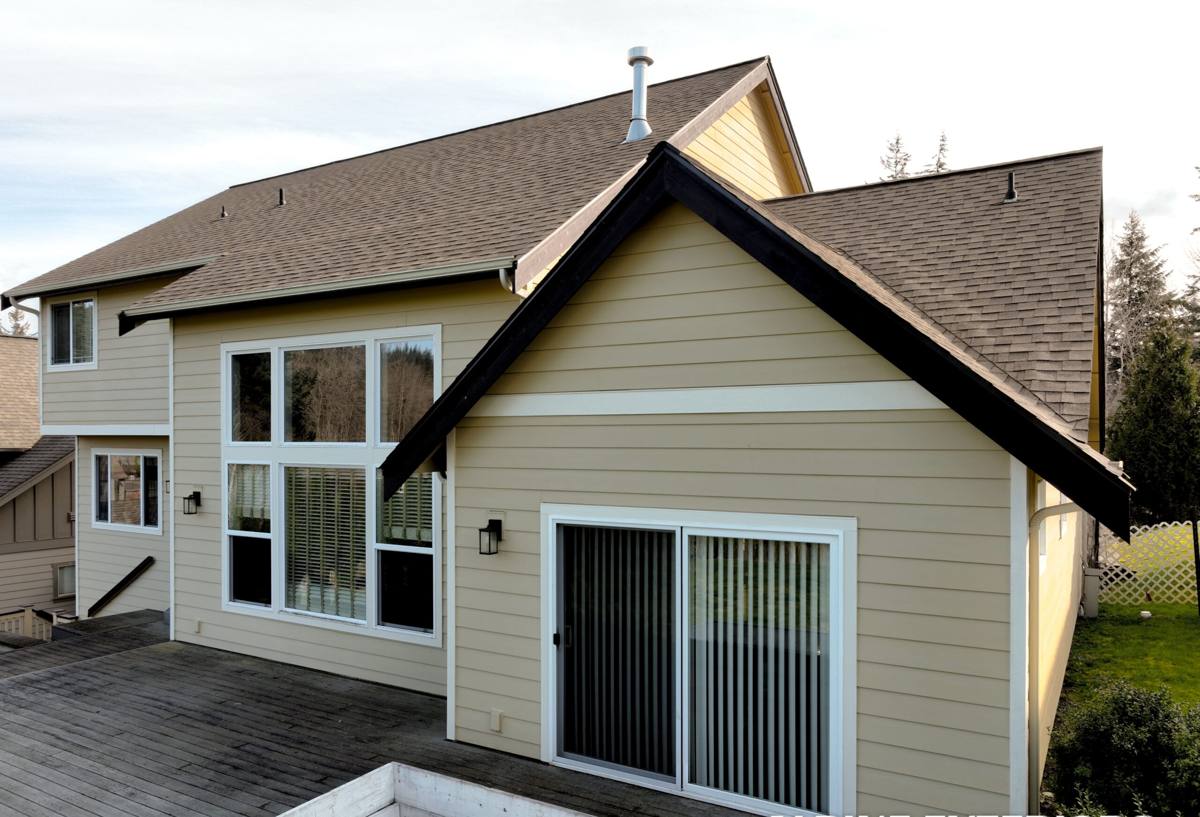
What "Energy-Efficient" Actually Means for This Neighborhood
Manufacturers throw around efficiency ratings that mean very little without local context. For Sunnyland homes, the two numbers that matter most are U-factor (how well the window resists heat loss) and SHGC, or solar heat gain coefficient (how much solar warmth passes through). In a marine climate like ours, where winters are damp and cool but summers stay mild, you generally want a low U-factor to hold heat in and a moderate SHGC that lets in some free solar warmth without turning a west-facing room into a greenhouse on the rare sunny afternoon.
Frame Materials That Handle Salt Air
Frame choice matters more here than in drier inland climates. Vinyl frames handle moisture and salt exposure well and don't corrode, which is a real advantage this close to the water. Fiberglass frames are more dimensionally stable through temperature swings and hold paint well if you want a custom color, at a higher price point. Wood frames, even clad ones, need more attention in this climate — the combination of salt air and constant damp accelerates wear on any exposed wood or hardware, so if you want a wood interior look we'll talk through the maintenance commitment honestly before you commit to it.
Glass Packages Worth Paying For
Double-pane, argon-filled glass with a low-E coating is the practical baseline for this area — it's the point where efficiency gains start to clearly outweigh the added cost. Triple-pane glass adds another layer of insulation and sound dampening, which some Sunnyland homeowners value given proximity to Fairhaven's more trafficked streets, but the marginal efficiency gain over a good double-pane low-E unit is smaller than most people expect. We'll walk through the actual difference for your specific home rather than defaulting to the upsell.
Signs Your Current Windows Are Losing the Battle
Because of the salt air and rain exposure here, window failure often shows up earlier and differently than it would in a drier climate. Watch for these signs:
- Fogging or a milky haze between the panes — the seal has failed and the insulating gas has escaped
- Corrosion or pitting on hardware, hinges, or locks, especially on windows facing the water
- Soft or discolored wood at the sill or frame corners, often with moss or algae growth starting
- Noticeable drafts or a cold wall feeling near the window even when it's shut
- Difficulty opening, closing, or locking a window that used to operate smoothly
- Visible gaps in old caulking or weatherstripping that's gone stiff and cracked
- Condensation forming on the inside of the glass regularly through the winter
Any one of these on its own might just mean a repair. Several together, especially on an older single-pane or early dual-pane window, usually means replacement is the more honest recommendation.
What a Correct Installation Actually Involves
Window replacement done right is mostly about what happens before and around the glass, not the glass itself. In a climate that sends rain sideways during a winter storm, flashing and sealing details determine whether a window lasts fifteen years or fails in five.
Removal and Inspection
We remove the old window carefully and inspect the rough opening for hidden water damage, soft framing, or prior flashing mistakes before anything new goes in. This step gets skipped by crews trying to move fast, and it's usually where problems that show up two winters later actually started.
Flashing and Water Management
Proper flashing directs any water that gets behind the siding back out, rather than letting it pool at the sill. Given how much driving rain this area sees off the water, we treat flashing as non-negotiable, not an optional upgrade. Sill pan flashing, correctly lapped house wrap, and weep paths that actually work are standard on every install, not an add-on.
Sealing and Insulation
Low-expansion foam or backer rod and sealant fill the gap between the window frame and rough opening, closing off drafts without bowing the frame out of square. Exterior caulking uses a sealant rated for marine, high-UV, salt-exposed conditions, and we tool every joint rather than relying on the bead alone.
Interior and Exterior Finish
Trim gets reinstalled or replaced, and any disturbed siding is properly re-flashed and re-fastened before we call the job done — a window install that leaves siding vulnerable to water intrusion isn't finished, regardless of how the window itself looks.
How Our Process Works in Sunnyland
We keep the process the same whether it's one window or a whole-house replacement, because consistency is how we avoid mistakes.
- On-site assessment — we look at each window's current condition, orientation, and exposure to wind and rain, since a window on the water-facing side of a Sunnyland home often needs different attention than one on a sheltered wall.
- Honest recommendation — we tell you which windows genuinely need replacing now, which can wait, and which just need a proper repair or reseal.
- Product selection — we walk through frame and glass options against your budget and the specific exposure of each opening, not a one-size-fits-all package.
- Scheduling around the weather — we plan installs for reasonable weather windows and protect the opening the moment the old window comes out.
- Installation — full removal, inspection, flashing, insulation, and finish work as described above.
- Final walkthrough — every window gets tested for smooth operation and a clean seal before we consider the job complete.
Comparing Window Options for a Marine Climate
| Option | Salt Air / Moisture Handling | Maintenance | Relative Cost |
|---|---|---|---|
| Vinyl, double-pane low-E | Very good — won't corrode or rot | Low | Lower |
| Fiberglass, double-pane low-E | Excellent — very stable in swings of damp and cold | Low | Mid to higher |
| Vinyl or fiberglass, triple-pane | Excellent, plus added sound dampening | Low | Higher |
| Wood or clad-wood | Fair — exposed wood needs regular attention here | Higher | Higher |
| Aluminum | Poor in this climate — prone to corrosion and condensation | Higher | Lower upfront, costlier long-term |
We generally steer Sunnyland homeowners toward vinyl or fiberglass for most openings, reserving wood-look interiors for rooms where the maintenance tradeoff makes sense to the homeowner. Aluminum-framed windows, while inexpensive, tend to struggle with corrosion and interior condensation in this level of salt air and dampness, which is why we don't recommend them for exposed elevations here.
Living With Windows in a Moss-and-Salt Climate
Even a well-installed window needs some seasonal attention in this environment. A light annual cleaning of tracks and weep holes keeps moss, algae, and salt residue from building up and blocking drainage paths. Hardware benefits from an occasional check for stiffness or corrosion, particularly on windows facing prevailing wind and rain. None of this is heavy maintenance — it's the kind of thing that takes an afternoon once a year and adds real years to the life of the window. We're happy to walk any homeowner through what to check and how often, whether or not we did the original install.
Why a Crew That Already Works in Sunnyland Matters
Window installation looks similar on paper everywhere, but the details that actually matter — how much flashing overlap a given wall assembly needs, which sealants hold up against this specific combination of salt air and rain, how a particular home's exposure to wind off the bay affects product choice — come from having done the work in this exact neighborhood, not from a generic install checklist. A crew that's replaced windows elsewhere in Fairhaven and across Whatcom County has already seen how local houses were originally built, what's common in older construction here, and where past shortcuts tend to cause problems. That local pattern recognition is worth more than any brochure spec sheet.
It also means someone is nearby if a question comes up after the fact — a stuck lock, a question about condensation, or wanting an honest opinion on whether a repair or a replacement makes more sense for one remaining window.
Get a Straightforward Estimate
If you're dealing with drafty, foggy, or hard-to-operate windows in Sunnyland, we're glad to take a look and give you a straight answer on what actually needs doing — no pressure, no upsell for its own sake. Use the form below to request a free estimate and we'll go from there.