 Fairhaven Siding
 Composite Decking Built for Sunnyland's Conditions
Sunnyland sits close enough to Bellingham Bay that salt-laden air, wind-driven rain, and shade from mature evergreens are just part of owning a home here. Add in Whatcom County's long wet season and the moss and algae growth that comes with it, and a deck in this neighborhood works harder than a deck almost anywhere else in the state. Composite decking has become the go-to answer for homeowners who are tired of stripping, sanding, and re-sealing wood every year or two, but "composite" is not one product — it is a category with real differences in how boards handle moisture, UV, and biological growth over time. Getting the right product, installed correctly for our climate, is what separates a deck that looks good for twenty years from one that starts showing problems in five.
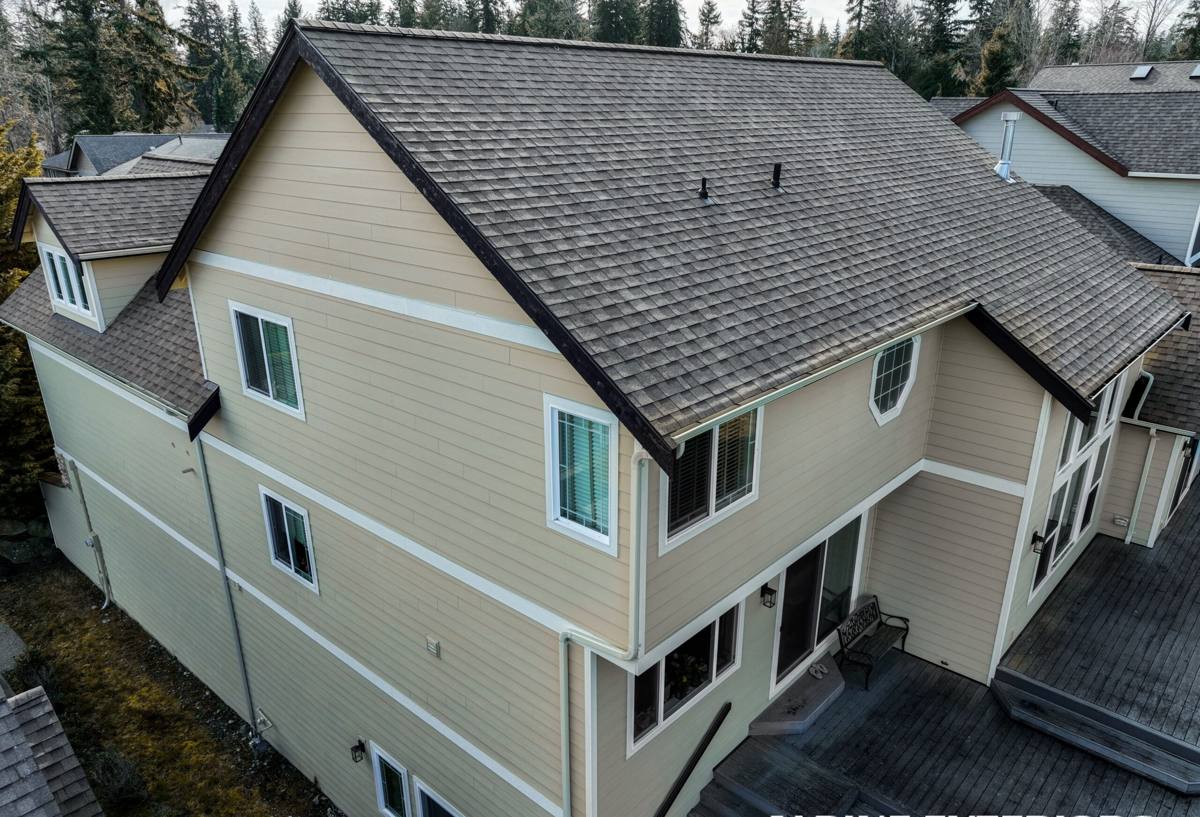
What This Climate Actually Does to a Deck
Before talking about materials, it helps to understand the specific stresses a Sunnyland deck faces:
- Salt air corrosion: proximity to the bay accelerates rust on exposed fasteners, brackets, and lower-grade hardware.
- Driving rain: wind-blown rain gets pushed sideways into ledger connections, board end cuts, and railing posts — areas that stay dry in calmer climates.
- Moss and algae: shaded, north-facing, or tree-covered decks stay damp for long stretches, which is exactly what moss needs to establish and what turns boards slick underfoot.
- Freeze-thaw cycling: our winters aren't extreme, but repeated freezing and thawing still works moisture into any gap or crack that wasn't sealed properly.
- Prolonged shade: tree cover common in this neighborhood keeps decking surfaces wetter, longer, than a deck out in the open.
None of these are dealbreakers for composite decking — they're just the design problems a correct installation has to solve.
Choosing the Right Composite for a Coastal, Shaded Lot
Capped vs. Uncapped Composite
Older, uncapped composite boards are a wood-plastic blend with no protective outer layer, which means the exposed wood fibers can absorb moisture and are more prone to mold and mildew staining — a real liability in a climate as damp as ours. Capped composite boards have a polymer shell wrapped around that core, which sheds water, resists staining, and holds up far better against the moss and algae growth that shaded Sunnyland lots tend to produce. It's why we install capped composite as our standard, not uncapped.
PVC as an Alternative
Fully cellular PVC decking contains no wood fiber at all, so it's essentially immune to rot and moisture absorption. It costs more than composite and has a different look and underfoot feel — some homeowners prefer the wood-grain realism of composite, others prefer PVC's lighter weight and total moisture immunity. We'll walk through both honestly based on your lot's shade, drainage, and budget rather than pushing one product line.
What a Correct Composite Deck Build Involves
The decking boards themselves get the attention, but most deck failures we get called out to inspect in this area trace back to what's underneath and behind them, not the boards. A proper build addresses each of these:
Ledger Attachment and Flashing
Where the deck ties into the house is the single most common source of hidden water damage. Correct flashing — installed so water sheds outward and down, never behind the siding or house wrap — is non-negotiable, especially with the driving rain this neighborhood sees off the bay.
Joist Framing and Spacing
Composite boards flex differently than wood and often require tighter joist spacing than a traditional lumber deck, particularly on angled or picture-frame layouts. Installing composite at standard wood-deck spacing is a common shortcut that leads to bounce and premature sagging.
Fasteners and Hardware
Given the salt air, we use stainless steel or coated, corrosion-resistant fasteners and structural hardware throughout — not just at the visible surface, but at every joist hanger, post base, and ledger bolt. Hidden fastener clip systems also give a cleaner surface with fewer penetration points for water to find.
Airflow and Drainage Underneath
Ground-level and low-clearance decks are common on Sunnyland's lots, and without adequate airflow underneath, moisture gets trapped and moss and mildew take hold on the underside of boards where you can't see it happening. We grade and vent the substructure so air and water can actually move through.
Board Layout and Ventilation Gaps
Proper gapping between boards allows for expansion and drainage. Too tight, and water pools and moss gets a foothold; too loose, and debris collects. This is a detail that's easy to rush and hard to fix after the fact.
Our Process, Start to Finish
- On-site assessment: we look at sun/shade exposure, existing framing condition, drainage slope, and how close the deck sits to grade or the house.
- Material walkthrough: we go over capped composite vs. PVC options in person, with samples, based on what your specific lot needs.
- Structural plan: joist layout, ledger flashing detail, and hardware spec get worked out before any demo begins.
- Permit handling: most new or rebuilt decks in Whatcom County require a permit — we handle that process rather than leaving it on you.
- Demo and framing: old decking and any compromised framing are removed and replaced; framing is inspected and corrected before decking goes down.
- Decking, fascia, and railing install: boards, hidden fasteners, fascia trim, and railing system are installed to manufacturer spec.
- Final walkthrough: we go over the finished deck with you, including basic care specific to your board choice and exposure.
Comparing Your Decking Options
| Material | Moisture & Moss Resistance | Maintenance | Typical Lifespan Here |
|---|---|---|---|
| Pressure-treated wood | Absorbs moisture; needs sealing to resist moss and rot | Annual cleaning, periodic staining/sealing | 10–15 years before major repair |
| Uncapped composite | Moderate; wood fiber core can still stain and absorb moisture | Regular cleaning, more prone to mildew staining | 15–20 years |
| Capped composite | Strong; polymer shell sheds water and resists staining | Occasional washing, no sealing or staining | 25+ years |
| Cellular PVC | Excellent; no wood fiber, essentially moisture-proof | Minimal; occasional washing | 25–30+ years |
These lifespans assume correct installation — flashing, fastener choice, and airflow underneath matter as much as the board itself, especially in a climate that gives moisture this many chances to find a weak point.
Living With a Composite Deck in a Salt-Air, Moss-Prone Yard
Composite decking cuts maintenance dramatically compared to wood, but "low-maintenance" isn't "no-maintenance," particularly here. A simple seasonal routine keeps a Sunnyland deck performing the way it should:
- Rinse or sweep debris off the surface regularly, especially leaves and needles that trap moisture in shaded spots.
- Wash the deck surface a couple of times a year with a soft-bristle brush and a mild composite-safe cleaner to prevent moss and algae film from establishing.
- Check railing posts, stairs, and ledger areas periodically for any signs of water staining or soft framing underneath.
- Keep gutters and downspouts near the deck clear so runoff isn't dumping directly onto or under the structure.
- Trim back overhanging branches where possible to cut down on shade and debris buildup on north-facing sections.
Signs It's Time to Replace, Not Repair
Homeowners often ask whether an existing deck can be patched instead of rebuilt. A few signs point toward replacement:
- Soft, spongy, or visibly rotted framing under the decking boards.
- Persistent moss or algae growth that returns within weeks of cleaning.
- Ledger board separation, rust staining, or visible gaps at the house connection.
- Boards that are cupping, splintering, or delaminating at the surface.
- A structure built without permits or to outdated code, especially on stairs and railings.
Permits, Railings, and Whatcom County Code
Decks above a certain height typically require guardrails, specific baluster spacing, and stair details that meet current building code — and in Whatcom County, most new decks and full rebuilds need a permit and inspection. This isn't paperwork for its own sake; it's what keeps a structure safe over decades of use in wet, sometimes icy conditions. We build to code as a baseline, not an upsell, and handle the permit process as part of the job rather than leaving homeowners to navigate it alone.
Why a Crew That Already Works This Neighborhood Matters
A deck built to a generic spec sheet, without accounting for shade patterns, salt exposure, or how water actually moves across a specific lot, is more likely to develop problems in exactly the ways described above. A crew that already works in Sunnyland and the greater Fairhaven area has a working knowledge of how homes here sit relative to the bay, which yards hold shade and moisture longest, and where drainage tends to be a problem before the first shovel goes in the ground. That local pattern recognition shows up in the small decisions — flashing details, fastener grade, joist spacing, drainage grading — that determine whether a deck is still performing well in year fifteen or needing repair in year six.
If you're planning a new composite deck or replacing one that's showing its age, we're happy to come take a look and talk through honest options for your specific lot. Use the form below to request a free, no-pressure estimate.