 Fairhaven Siding
 Why Sunnyland Roofs Wear Differently Than Roofs Inland
Sunnyland sits close enough to Bellingham Bay and the open water around Fairhaven that its roofs deal with a combination most inland Whatcom County homes don't: salt-laden air, wind-driven rain that comes in sideways off the water, and a moss season that can run eight months or longer. None of these on their own is unusual for Western Washington. Together, on the same roof, year after year, they shorten the life of a shingle roof that wasn't installed with those specific stresses in mind.
We work on roofs in this neighborhood regularly, and the failure patterns we see are consistent: fasteners and flashing that corrode faster than they should, moss colonies that take hold in shaded, north-facing slopes and slowly lift shingle edges, and water that finds its way under improperly lapped flashing during the kind of horizontal rain that blows off the bay in a fall or winter storm. A correct install anticipates all three. A generic install, done to a minimum-code standard with no regard for where the house actually sits, usually doesn't.
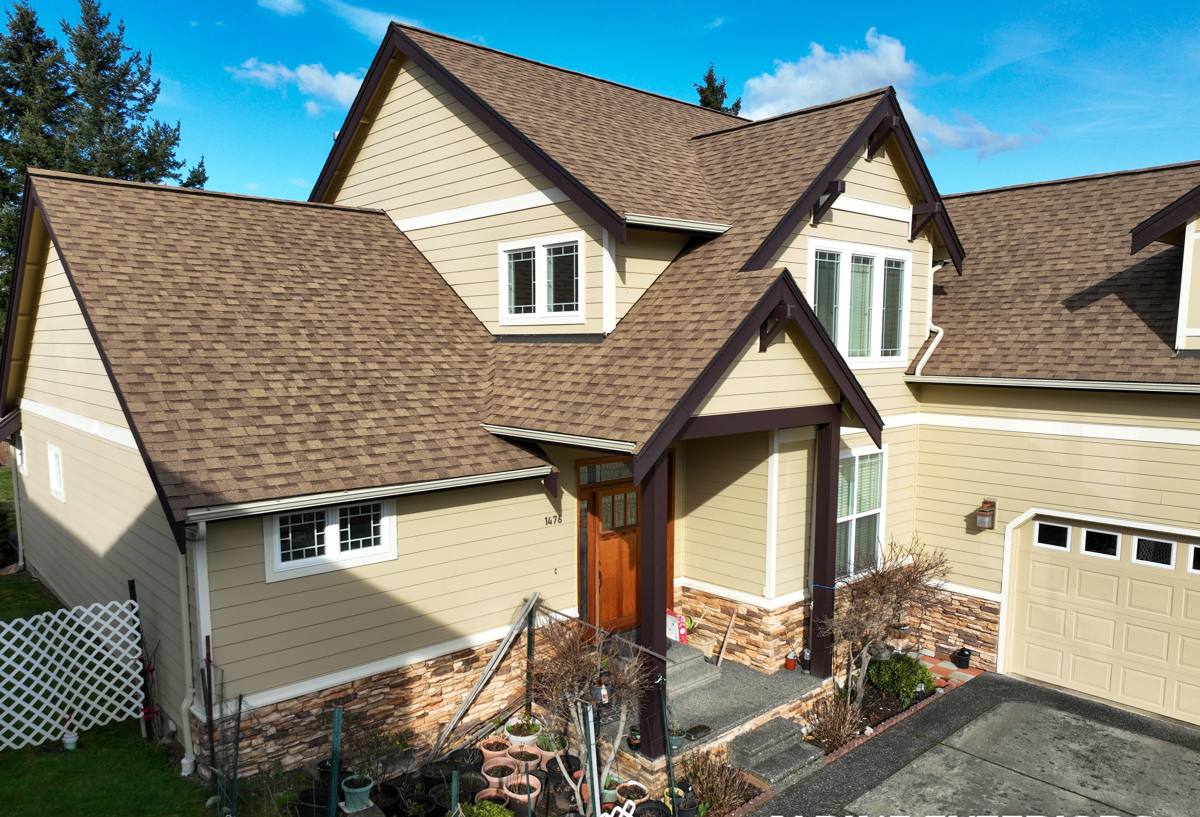
What a Correct Asphalt Shingle Job Involves Here
Asphalt shingle roofing looks straightforward from the ground, and a lot of the work that determines whether it lasts 15 years or 30 happens underneath the shingles, not on top of them. For a Sunnyland roof, we pay particular attention to a few things that matter more here than they would on a dry-climate roof.
Underlayment and Water Barrier
Synthetic underlayment across the full roof deck, with self-adhering ice-and-water shield at the eaves, valleys, and any roof-to-wall transitions. In a neighborhood that gets sustained wind-driven rain, the eaves and valleys are where water backs up under shingles during a hard storm — that's exactly where the extra membrane layer needs to be, not just as a code minimum but as real protection.
Flashing
Step flashing at every wall intersection, counterflashing where a roof meets siding or a chimney, and properly lapped valley flashing. We use corrosion-resistant metal for this — galvanized steel is fine inland, but this close to the water we typically recommend upgrading to a heavier-gauge or coated flashing that won't rust out at the fastener holes in 8-10 years.
Fasteners
Hot-dip galvanized or stainless roofing nails, driven correctly (not overdriven, not underdriven), at the nailing pattern the shingle manufacturer specifies for high-wind zones. Standard electro-galvanized nails corrode faster in salt air and can eventually let shingles work loose in wind.
Ventilation
Balanced intake at the soffits and exhaust at the ridge, sized to the attic square footage. This is a moisture-control issue as much as a temperature one — a poorly vented attic in a wet climate traps moisture, which shortens the life of the deck from underneath even if the shingles above look fine.
Moss and the Long Wet Season
Whatcom County's wet season isn't just about total rainfall — it's about how long surfaces stay damp between rain events. On shaded or north-facing slopes, especially under overhanging trees, that dampness is exactly what moss needs to establish itself. Once moss gets a foothold, it holds moisture against the shingle surface, grows under shingle tabs, and physically lifts them, which is when granule loss and leaks start.
What Actually Slows Moss Down
- Zinc or copper strips installed near the ridge, which release trace metal ions that wash down the roof with rain and inhibit moss and algae growth
- Algae-resistant (AR) shingles, which have copper-infused granules built in — worth the modest upgrade cost on a shaded roof
- Keeping tree limbs trimmed back from the roofline so slopes get more sun and airflow
- Gentle, low-pressure moss removal on a maintenance schedule rather than letting it establish for years
We'll tell you plainly if a particular slope on your house is a moss-prone spot before we ever propose a shingle package — it changes what we recommend.
Salt Air and Coastal Corrosion
Salt air accelerates corrosion on anything metal on a roof: nails, flashing, vent boots with metal collars, and drip edge. It's a slower process than storm damage, so it's easy to overlook, but it's the reason a roof installed with inland-grade materials can start showing rust streaks and small leaks around metal components years before the shingles themselves are worn out. For Sunnyland homes we default to corrosion-resistant hardware throughout, not just at the visible edges, because the failure usually starts at fasteners you can't see from the ground.
Our Process on a Sunnyland Roof
1. Inspection and Honest Assessment
We walk the roof, check the attic for ventilation and moisture signs, and look specifically for the wear patterns common in this area — moss on shaded slopes, corrosion at flashing and fasteners, and any soft decking near valleys or eaves. You get a straight answer on whether you need a full replacement, a repair, or nothing at all.
2. Tear-Off and Deck Check
Full tear-off to the deck on replacement jobs. This is the only way to actually see and replace any rotted or delaminated sheathing before it gets covered up again — a shortcut here causes problems that don't show up for years.
3. Underlayment, Flashing, and Shingle Install
Ice-and-water membrane at vulnerable points, synthetic underlayment across the field, new corrosion-resistant flashing, then shingles installed to the manufacturer's high-wind nailing pattern — relevant given the open exposure to weather off the bay.
4. Ventilation Check
We confirm intake and exhaust venting are balanced before we close the job out, not left as an afterthought.
5. Cleanup and Walkthrough
Magnetic sweep for stray nails, full site cleanup, and a walkthrough so you know exactly what was done and what to watch for going forward.
Choosing the Right Shingle for This Location
| Shingle Tier | Typical Lifespan | Best Fit For |
|---|---|---|
| 3-tab (standard) | 15-20 years | Budget-conscious jobs on sunnier, less exposed slopes |
| Architectural / dimensional | 25-30 years | Most Sunnyland homes — better wind rating and appearance |
| Algae-resistant (AR) architectural | 25-30 years | Shaded, north-facing, or tree-covered slopes prone to moss/algae |
| Premium / designer | 30+ years | Homes prioritizing appearance and maximum wind/impact rating |
For most homes in this neighborhood, we steer people toward an architectural shingle with algae resistance built in — the wind rating and moisture resistance earn their keep here in a way they might not further inland.
What Drives Cost on a Job Like This
| Factor | Why It Matters Here |
|---|---|
| Roof pitch and access | Steeper or harder-to-access roofs take longer and need more safety setup |
| Deck condition | Rotted sheathing found at tear-off adds material and labor |
| Flashing complexity | Valleys, chimneys, and multiple roof planes mean more custom flashing work |
| Shingle tier chosen | AR and premium shingles cost more upfront but reduce moss and reroof frequency |
| Ventilation upgrades | Adding or correcting intake/exhaust venting if the current setup is undersized |
We won't quote a job without seeing the roof — anyone who does is guessing. What we can say honestly is that most straightforward asphalt shingle replacements on a typical Sunnyland home fall into a broad mid-range cost, with the specifics above moving that number up or down.
Maintenance That Actually Extends Roof Life Here
- Trim back overhanging branches to cut down shade and debris on the roof
- Clear gutters and valleys before the fall rains start, and again mid-winter if needed
- Have moss treated or removed gently before it spreads, not after it's established
- Check attic ventilation isn't blocked by insulation at the soffits
- After a significant windstorm, do a visual check from the ground for lifted or missing shingles
- Get a roof looked at every few years by someone who'll tell you the truth, not just try to sell a replacement
Why It Matters That We Already Work in Sunnyland
A crew that mostly works dry, inland roofs will default to standard materials and a standard install, because that's what works where they usually build. A crew that works this neighborhood regularly already knows which slopes hold moss, how hard the wind off the bay hits certain roof orientations, and which fasteners actually hold up in salt air over a decade instead of five years. That's not a marketing point — it changes real decisions on material selection, flashing detail, and where we spend the extra effort on your specific roof.
If you're weighing a repair against a full replacement, or just want an honest read on how much life is left in your current shingle roof, we're happy to take a look. Reach out for a free, no-pressure estimate using the form below.