 Fairhaven Siding
 Why Silver Beach Siding Wears Differently Than Homes Inland
Silver Beach sits close enough to Bellingham Bay that homes here take on a different kind of weather load than a house a few miles inland in Whatcom County. Salt-laden air moves in off the water and settles on every exterior surface, siding included. Combine that with Fairhaven's long, wet fall-through-spring stretch of driving rain, and you get an exterior that's under near-constant moisture pressure for eight or nine months of the year. Add a moss season that can run just as long, and it's easy to see why siding in this neighborhood ages faster than the manufacturer's brochure numbers suggest.
None of this means Silver Beach homes need exotic materials or unusual construction. It means the ordinary parts of a siding job — the water-resistive barrier, the flashing details, the caulk lines, the material itself — have to be done right, every time, because there's very little margin for a shortcut here. A siding job that would coast along fine in a drier climate can fail in half the time this close to the water.
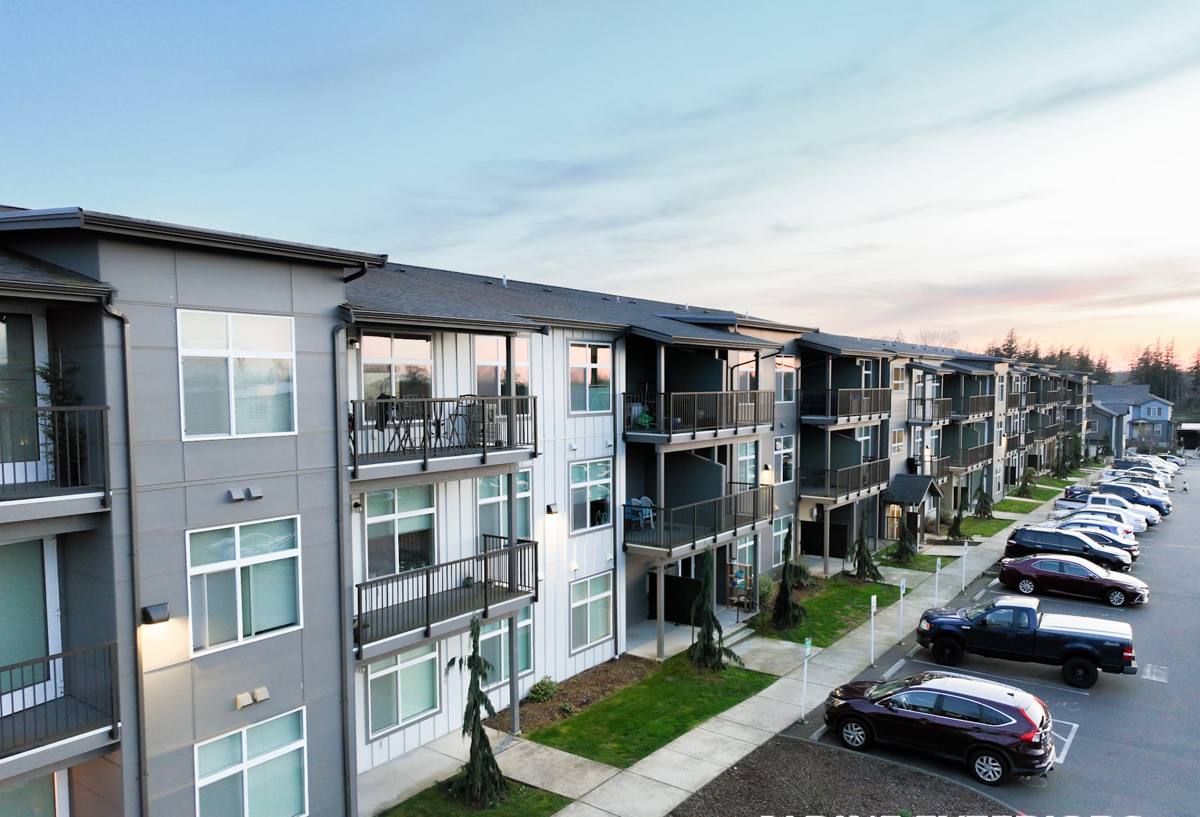
How Salt Air, Rain, and Moss Actually Damage Siding
Salt Air
Airborne salt is corrosive to metal fasteners, flashing, and trim, and it accelerates the breakdown of paint films and lower-grade composite products. Over years, homes closer to the water tend to show chalking, fading, and edge deterioration sooner than homes set back from it.
Driving Rain
Wind-driven rain doesn't just fall straight down — it gets pushed sideways into laps, seams, and butt joints. If those details weren't installed with the right overlaps, gaps, and flashing, water finds its way behind the siding and into the wall assembly, where it can sit for weeks before anyone notices a problem.
Moss and Sustained Moisture
Whatcom County's moss season isn't limited to roofs. On siding, moss and algae take hold anywhere moisture lingers — under eaves, on north-facing walls, along the bottom courses near grade. Beyond the cosmetic issue, sustained dampness under a moss layer keeps the substrate wet longer, which matters a lot if that substrate is a material that swells, delaminates, or softens when it stays wet.
Signs a Silver Beach Home Needs Siding Replacement, Not Just Repair
Not every issue calls for a full tear-off. But in a coastal-influenced neighborhood like this one, problems tend to be more widespread than they first appear, because the whole exterior has been exposed to the same conditions for the same number of years. Here's what tells us we're past the point of patching:
- Soft, spongy, or crumbling spots when you press on the siding, especially near the bottom courses or under windows
- Persistent moss or dark staining that returns within a season or two of cleaning
- Visible cupping, buckling, or gaps opening up at the laps and butt joints
- Paint that's failing across large areas rather than one or two boards
- Soft or discolored sheathing visible when a section of siding is pulled back
- Siding that's original to a home built more than 20-25 years ago, especially wood-based products
- Interior signs — musty smell, peeling interior paint, or damp drywall on exterior walls
If you're only seeing one or two of these on an otherwise solid exterior, a targeted repair may be the honest answer. If several of them show up together, that's usually the water intrusion talking, not just the siding's surface finish.
What a Correct Siding Replacement Actually Involves
The material on the wall gets most of the attention, but the layers behind it are what actually keep Silver Beach homes dry. A replacement done right includes:
Full Tear-Off and Substrate Inspection
We remove the old siding entirely rather than installing over it. That's the only way to actually see the sheathing, framing, and water-resistive barrier underneath — which matters a great deal in a neighborhood where hidden moisture damage is common.
Water-Resistive Barrier and Flashing
A new, continuous water-resistive barrier goes on before any siding, with proper flashing at every window, door, deck ledger, and penetration. This is the layer doing the real work of keeping wind-driven rain out of the wall assembly — the siding itself is the second line of defense, not the only one.
Correct Fastening and Clearances
Fastener type, spacing, and depth all matter for long-term performance, along with keeping proper clearance between the siding's bottom edge and grade, decks, and roof lines. Skipping these details is one of the most common ways a siding job fails early, regardless of the material used.
Trim, Caulking, and Finish Work
Corner boards, trim, and caulk joints get finished to shed water, not trap it. In a high-moisture climate, the small finish details are often the difference between a wall that dries out after a storm and one that stays damp.
Material Comparison: Why We Only Install James Hardie
Silver Beach's combination of salt exposure, sustained rain, and moss pressure is a tough environment to put a siding material through year after year. Here's how the common options actually hold up under those specific conditions:
| Material | Moisture Behavior | Salt Air Durability | Long-Term Maintenance |
|---|---|---|---|
| James Hardie Fiber Cement | Non-combustible, engineered for wet climates; doesn't swell or rot | Holds up well; factory ColorPlus finish resists chalking and fading | Low — occasional wash, repaint only if not ColorPlus |
| Vinyl | Doesn't absorb water, but seams and gaps can let it behind the panel | Can become brittle and fade faster with UV and salt exposure over time | Low upfront, but limited repair options if damaged |
| LP SmartSide (engineered wood) | Wood-based core is vulnerable to swelling if edges or cuts aren't sealed | Moisture combined with salt air accelerates edge deterioration | Moderate to high — edge sealing and paint upkeep are critical |
| Cedar / Primed Spruce | Natural wood; absorbs moisture, prone to rot without diligent upkeep | Salt air speeds up weathering and finish breakdown | High — regular refinishing and moisture monitoring required |
We standardized on James Hardie fiber cement because it's engineered specifically for climates like this one. It's non-combustible, it doesn't swell or delaminate the way wood-based products can when they take on moisture, and the factory-applied ColorPlus finish is built to hold color and resist the chalking that salt air and UV exposure cause in painted products. Hardie also backs it with a strong transferable warranty, which matters on a coastal-influenced property where the siding is working harder than it would inland. We're not going to tell you vinyl or engineered wood can't function here — plenty of it is on the market and in use. We just won't install products where the maintenance burden or moisture risk doesn't match what we think a Silver Beach home needs from its siding for the next several decades.
Our Process for a Silver Beach Siding Replacement
- On-site assessment — we walk the exterior, check for soft spots and moisture signs, and look at exposure direction relative to the water and prevailing weather
- Scope and product selection — we recommend the Hardie product line and profile that fits the home's style and exposure, and walk through ColorPlus color options
- Tear-off and substrate repair — old siding comes off, and any damaged sheathing or framing found underneath gets addressed before anything new goes on
- Weather barrier and flashing installation — the water management layer goes in first, with attention to every window, door, and penetration
- Hardie installation — installed to manufacturer fastening and clearance specifications, not shortcuts
- Final trim, caulking, and walkthrough — finish details completed and reviewed with the homeowner before we call the job done
What Affects the Cost of a Siding Replacement Here
| Factor | Why It Matters |
|---|---|
| Home size and wall complexity | More corners, gables, and dormers mean more cutting, trim, and labor time |
| Substrate condition | Hidden rot or damaged sheathing found during tear-off adds repair work before siding can go on |
| Product line and profile | Hardie's lines (lap, shingle, panel) and HZ climate-engineered options vary in material cost |
| Trim and detail scope | Extensive trim, corner boards, and accent work add labor beyond the field siding |
| Access and site conditions | Slopes, tight lot lines, and staging limitations near the water can affect labor time |
We give real numbers after we've actually seen the house — broad estimates based on square footage alone tend to miss the substrate condition, which is often the biggest variable on an older Silver Beach home.
Why Hiring a Crew That Already Works Silver Beach Matters
Siding installation isn't identical everywhere in Whatcom County. A crew that mostly works drier, inland jobs may not think twice about details that are non-negotiable this close to the bay — flashing laps, clearance at grade, or how a wall handles months of sustained dampness under moss growth. A crew with actual experience in this neighborhood already knows which walls take the worst of the weather, what substrate condition to expect on homes of a certain age, and how to sequence a tear-off so the house isn't sitting open to the weather longer than necessary during a wet stretch.
That local pattern-recognition is hard to substitute for. It shows up in small decisions throughout a project — how flashing gets lapped at a deck ledger, which walls get extra attention during tear-off, how a schedule gets adjusted around an incoming rain system — and those small decisions are exactly what determines whether a siding job is still performing well in fifteen years or showing problems in five.
Caring for New Siding After Installation
A correctly installed James Hardie exterior is low-maintenance, but "low" isn't "none," especially in this climate. A simple annual routine keeps it performing as designed:
- Rinse the exterior once or twice a year to clear salt residue, pollen, and early moss growth
- Keep gutters clear so overflow doesn't run down the siding face
- Trim back vegetation and maintain airflow along shaded, north-facing walls where moss takes hold fastest
- Check and refresh caulk joints at trim and penetrations every few years
- Address any impact damage or loose trim promptly rather than letting water find a way in
If you're seeing early signs of wear, dealing with an aging original exterior, or just want a straight answer on what your Silver Beach home's siding actually needs, we're happy to take a look. Fill out the form below for a free, no-pressure estimate.