 Fairhaven Siding
 Silver Beach Sits in a Tougher Weather Lane Than Most of Fairhaven
Silver Beach homes face Bellingham Bay directly, and that changes what siding has to survive year to year. A house a half-mile inland in Fairhaven still deals with Pacific Northwest rain and moss, but it isn't taking the same steady dose of salt-laden air off the water, and it usually isn't catching wind-driven rain at the same angle or intensity. Waterfront and near-waterfront exposure is its own category of siding job, and we treat it that way from the first site visit.
That doesn't mean Silver Beach needs an exotic product. It means the install has to be done with more discipline in a few specific places: water management behind the siding, fastening into the framing correctly, and keeping the right clearance at grade, decks, and roof lines. Get those details right and a good siding system will handle this exposure for decades. Skip them, and even a premium product will fail early.
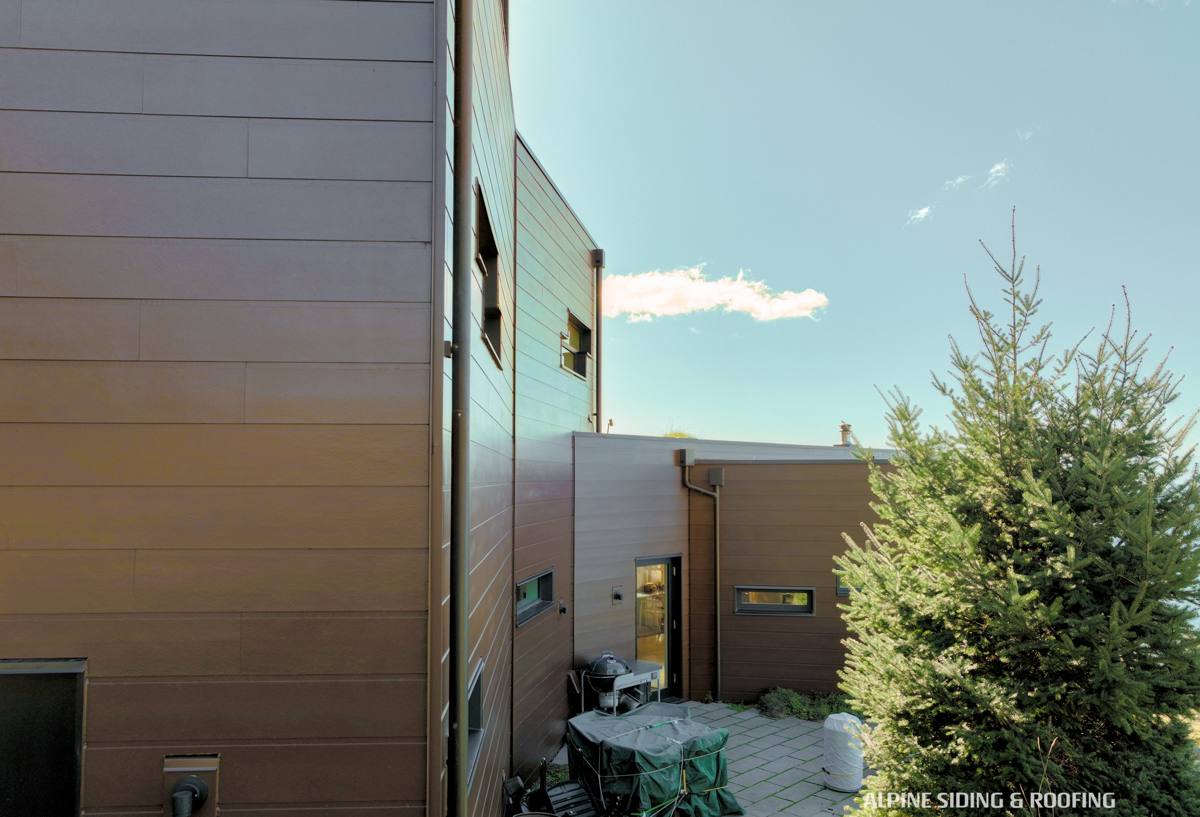
What Salt Air, Driving Rain, and a Long Moss Season Actually Do
Three separate stresses stack up on a Silver Beach exterior, and they don't act alone — each one makes the others worse.
Salt Air
Airborne salt from Bellingham Bay settles on exterior surfaces and accelerates corrosion of exposed metal — fasteners, flashing edges, hose bibs, light fixtures — anything not properly protected or of the wrong material for coastal exposure. Over time it also breaks down paint films faster than the same product would wear inland, which is one reason factory-applied, baked-on finishes hold up better here than field-applied paint.
Driving Rain
Storms coming off the water don't just fall straight down — wind pushes rain sideways into wall assemblies, seams, and trim joints that a calmer inland rain would never reach. Any gap in the water-resistive barrier, any lap that isn't shedding water the way it should, becomes an entry point. This is the exposure that separates a house that stays dry from one that develops hidden rot behind the cladding.
Moss and Sustained Moisture
Whatcom County's damp season runs long, and shaded, north-facing, or tree-close walls in Silver Beach can stay damp for weeks at a stretch. Moss and algae don't just look bad — they hold moisture against the siding surface, which is exactly the condition that causes trouble for any cladding that can absorb water or swell when saturated for extended periods.
Why This Company Installs Only James Hardie Fiber Cement
We made a standing decision to install James Hardie fiber cement siding exclusively, and we don't install vinyl, LP SmartSide, Cemplank, Allura, primed spruce, or cedar. That's not a knock on every homeowner who has one of those products on their house today — it's a professional standard we hold ourselves to, based on how these materials perform under exactly the conditions Silver Beach delivers.
Vinyl is affordable and low-maintenance in mild climates, but it's a petroleum-based product that can warp under heat and become brittle in cold, and it relies on loose-fit installation to allow for expansion — which means it's not built to be a tight, monolithic water barrier the way fiber cement can be. Engineered wood products like LP SmartSide use a wood-strand substrate that performs well when installation and maintenance are perfect, but any breach at a cut edge, fastener, or seam gives moisture a path into a wood-based core — a real risk on a site that gets sustained damp exposure. Cedar and primed spruce are natural wood: beautiful, but they need ongoing refinishing, and they're the most vulnerable of the group to sustained moisture, rot, and insect activity without disciplined upkeep. Cemplank and Allura are also fiber cement and share Hardie's core moisture resistance, but we standardized on Hardie specifically for its ColorPlus factory finish, its HZ climate-engineered product lines, and the depth of its installed track record and warranty support in this region.
James Hardie fiber cement is non-combustible, doesn't swell or rot the way wood-based products can, and its ColorPlus finish is baked on at the factory rather than applied on site — which matters directly for salt-air fade and wear resistance. Hardie also engineers its siding by climate zone, and the Pacific Northwest falls under the HZ10 line, formulated for the moisture and freeze-thaw conditions common in this part of Washington. That's the product we put on Silver Beach homes, and it's the only one we stand behind with our installation.
What HZ10 Specifically Addresses
- Engineered moisture and impact resistance tuned to Pacific Northwest weather patterns
- A factory-applied ColorPlus finish designed to resist fading, chipping, and cracking longer than field-applied paint
- A product formulation matched to the region rather than a one-size-fits-all national spec
- A transferable limited warranty that follows the home, which matters to buyers when a waterfront-area property eventually sells
What a Correct Installation Involves in Silver Beach
The siding itself is only part of the system. Everything happening underneath it and around it determines whether the house stays dry for the next 30 years or develops a moisture problem in five.
Water Management Behind the Cladding
A weather-resistive barrier goes on correctly lapped, shingle-style, so water is always directed outward and down — never into a seam. Every penetration (hose bibs, vents, light fixtures, electrical) gets properly flashed and sealed before the siding ever goes on. On walls that take direct rain exposure, we pay particular attention to head flashing above windows and doors and to proper kick-out flashing where roof lines meet walls, since that junction is one of the most common failure points on homes exposed to driving rain.
Fastening and Clearance
Fasteners are placed and driven to Hardie's specification — not just any nail in any spot, but correct type, spacing, and depth so the siding performs as engineered and isn't prone to popping or splitting at the board. We also hold proper clearance between the bottom edge of the siding and grade, decks, patios, and roof surfaces, since tight clearance is one of the most common ways moisture and debris get trapped against the bottom course of siding on waterfront properties.
Trim, Caulking, and Joints
Butt joints and trim transitions are treated as places where water wants to get in, not just cosmetic seams. We use the sealants and gaps Hardie's install guide calls for rather than over-caulking, which can actually trap moisture instead of shedding it.
Our Process From Estimate to Final Walkthrough
- Site walk and assessment: We look at wall exposure, existing moisture damage, trim condition, and any problem areas specific to the home's orientation toward the water.
- Written estimate: A clear scope covering tear-off (if applicable), water-resistive barrier, flashing detail work, Hardie product and color selection, and fastening plan — no vague allowances.
- Prep and moisture check: Any existing sheathing damage is identified and addressed before new siding goes on. We don't cover up a wet wall.
- Installation to spec: Barrier, flashing, siding, and trim installed per Hardie's published fastening and clearance requirements.
- Final walkthrough: We review the finished work with the homeowner, including care and cleaning guidance suited to a salt-air, moss-prone site.
Cost Factors for a Silver Beach Siding Project
| Factor | Why It Matters Here |
|---|---|
| Existing wall condition | Hidden moisture or rot behind old siding adds repair scope before new siding can go on correctly |
| Wall exposure to wind-driven rain | Waterfront-facing walls often need more careful flashing detail at windows, doors, and roof intersections |
| Trim and detail complexity | Homes with more corners, dormers, or roof-to-wall transitions take more flashing and labor time |
| Siding profile and color | Lap width and ColorPlus color selection affect material cost, though not installation difficulty |
| Access and site conditions | Slopes, retaining walls, and limited staging space near the water can affect labor time |
Signs a Silver Beach Home May Need New Siding Soon
- Persistent moss or algae growth that returns quickly after cleaning
- Soft spots, bubbling, or visible warping anywhere on the siding surface
- Paint that's peeling or failing faster than it used to, especially on water-facing walls
- Visible gaps opening up at seams, trim, or corner boards
- Rust staining running down from fasteners or metal trim pieces
- Interior signs like musty smells, peeling interior paint, or soft drywall near exterior walls
Any one of these on its own isn't necessarily an emergency, but a combination is usually a sign that moisture has been getting behind the cladding for a while.
Why It Matters That This Crew Already Works Silver Beach
A crew that regularly works Silver Beach and the rest of Fairhaven already knows which walls take the worst of the weather off the bay, where moss tends to come back fastest, and what flashing details actually hold up under this specific combination of salt air, driving rain, and Whatcom County's long damp season. That's not something you get from a general read of a manufacturer's install manual — it comes from having installed and later inspected work on homes in this exact exposure. A crew unfamiliar with waterfront conditions may build to a generic spec that would be fine forty miles inland but leaves gaps here.
It also means the crew is accountable locally. We're not driving in from out of the region for one job and moving on — we're installing a product and a warranty on a home we can come back and stand behind.
If your Silver Beach home's siding is showing wear, or you're planning ahead of a remodel, we're glad to walk the exterior with you and give you a straightforward, no-pressure estimate. There's a form below to get started.