 Fairhaven Siding
 Roofing in Silver Beach Comes With Its Own Set of Rules
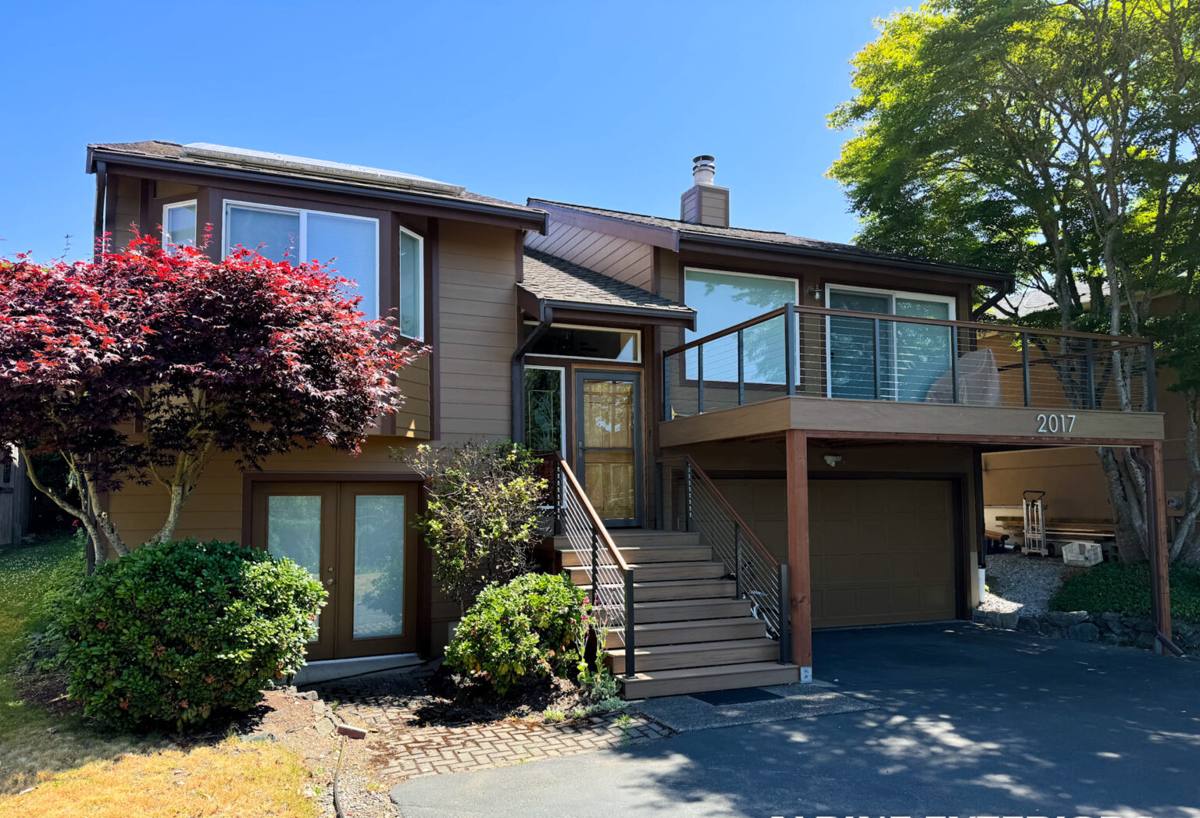
Silver Beach sits close enough to Bellingham Bay that salt air is part of daily life, and that changes what a roof needs to survive here compared to a roof twenty miles inland. Add Whatcom County's long wet season, driving rain off the water, and a moss season that can run eight months out of the year, and you've got a roofing environment that punishes shortcuts. A roof that's correctly installed for this neighborhood isn't just about keeping water out on day one — it's about how the assembly handles decades of salt exposure, sustained moisture, and organic growth without the homeowner having to think about it.
We install new roofs on Silver Beach homes regularly, and the patterns repeat: older roofs failing early from moss root intrusion, fasteners corroding faster than they should near the water, and ventilation that was never sized for how much moisture this area actually holds in the air. A new roof installation here is a chance to fix all three at once, not just replace shingles.
What Silver Beach's Climate Actually Does to a Roof
Salt Air and Metal Fatigue
Homes within a mile or two of Bellingham Bay get airborne salt on every surface, roofs included. Standard electro-galvanized fasteners and flashing can corrode noticeably faster in this zone than the same materials would twenty minutes inland. It's not dramatic — it's slow, quiet degradation that shows up as rust streaking, weakened fastener holding power, and flashing that fails years before it should.
Driving Rain Off the Water
Storms moving in off the Sound don't just drop rain straight down — wind-driven rain gets pushed sideways under shingle tabs, around poorly lapped flashing, and into any gap in the underlayment. A roof detailed for a drier climate, with minimal ice-and-water shield and loose flashing tolerances, will leak here that wouldn't leak somewhere with less wind-driven exposure.
Moss Season
Whatcom County's combination of shade, moisture, and mild temperatures gives moss a long growing window. Moss doesn't just sit on top of a roof — it holds moisture against the shingle surface and works its rhizoids under shingle edges and into granule loss areas, which accelerates wear and can lift shingle tabs enough to let wind-driven rain in.
What a Correct New Roof Installation Involves Here
A roof built for Silver Beach conditions isn't a different product line — it's the same core system, installed and detailed with this climate in mind. The difference shows up in the specifics:
- Corrosion-resistant fasteners and flashing rated for coastal exposure, not standard-grade hardware
- Extended ice-and-water shield coverage at eaves, valleys, and any low-slope transitions where wind-driven rain collects
- Properly lapped and sealed step flashing at every wall intersection, chimney, and dormer
- Balanced intake and exhaust ventilation sized for the actual moisture load this area holds, not a generic calculation
- Zinc or copper strips at the ridge on shaded roof sections to slow future moss regrowth
- Underlayment rated for extended exposure, since Whatcom County weather can delay a roof from being dried in as fast as a crew would like
None of this is exotic. It's standard, well-understood roofing practice — the issue is that a lot of installs skip the coastal-grade hardware or shortcut the flashing details because they don't visibly matter on day one. They matter in year six.
Our Installation Process
1. Roof and Attic Assessment
Before we talk materials, we look at the whole system: current roof condition, decking condition underneath, existing ventilation, and any moss or moisture staining that tells us where past problems started. On homes near the water we also check flashing and fastener condition closely, since that's usually where salt exposure shows up first.
2. Tear-Off and Deck Inspection
Full tear-off lets us actually see the decking, not guess at it. Any soft, delaminated, or moisture-damaged plywood gets replaced before anything new goes down — installing a new roof over compromised decking just guarantees a shorter lifespan for the whole system.
3. Underlayment and Ice-and-Water Shield
This is where a lot of the coastal-specific work happens. We extend ice-and-water shield further into vulnerable areas than a minimum-code install would, because wind-driven rain off the bay doesn't respect standard eave coverage.
4. Flashing
All flashing — step, valley, chimney, wall — gets installed fresh, not reused. Reused flashing is one of the most common causes of early leaks in re-roofs, and it's not worth the risk to save a day of labor.
5. Roofing Material Installation
Installed to manufacturer spec with corrosion-resistant fasteners throughout. Nail placement, exposure, and sealing all matter more in wind-exposed coastal conditions than they do in calmer inland settings.
6. Ventilation Check
We confirm intake and exhaust are balanced for the home's actual attic volume. Under-ventilated attics trap moisture, which accelerates decking rot and can shorten shingle life from the underside — a failure mode that's easy to miss because it's invisible from the ground.
7. Final Walkthrough
We walk the finished roof and the attic with the homeowner, point out what was done, and explain any maintenance that will help the roof perform long-term in this climate — mainly moss management and gutter clearing given how much debris this area sees.
Choosing Roofing Materials for a Coastal Whatcom County Home
There's no single "best" roofing material for Silver Beach — the right choice depends on budget, roof slope, and how much long-term maintenance the homeowner wants to take on. Here's how the common options actually compare in this specific climate:
| Material | Salt Air Performance | Moss Resistance | Typical Lifespan Here |
|---|---|---|---|
| Architectural asphalt shingle | Good with coastal-grade fasteners | Moderate — benefits from zinc strips | 20–30 years |
| Standing seam metal | Excellent with proper coating | High — sheds moss more effectively | 40–50+ years |
| Composite/synthetic shingle | Good | Moderate to high depending on product | 30–40 years |
| Cedar shake | Fair — requires more upkeep near salt air | Low without regular treatment | 20–25 years with maintenance |
We don't push one material over another as a blanket recommendation. What we will tell you honestly is where a given product's maintenance burden or moisture sensitivity might be a poor fit for a specific roof's exposure — for example, a heavily shaded, low-slope section of roof is a tougher environment for any material that needs airflow to stay dry.
Why Hiring a Crew That Already Works Silver Beach Matters
A roofing crew that hasn't worked this specific stretch of coastline will often default to standard-climate details — because that's what works most places. The problem is Silver Beach isn't most places. A crew that already knows the salt exposure levels, the typical moss patterns on shaded lots, and how wind-driven rain behaves coming off the bay will make different, better decisions at every stage: fastener selection, flashing extension, underlayment coverage, and ventilation sizing. Those decisions are invisible on the finished roof and completely obvious ten years later, in whether the roof needs a repair call or not.
Local familiarity also matters for timing. Whatcom County's wet season creates real scheduling constraints for roofing work — a crew that plans installs around this area's weather patterns is less likely to leave a roof partially exposed during a stretch of driving rain.
What to Check Before You Hire
Whether you go with us or another contractor, a few things are worth confirming before signing anything for a roof replacement in this area:
- Are they licensed and insured to work in Washington State, with proof available on request?
- Do they specify coastal-grade or corrosion-resistant fasteners and flashing, or just "standard" hardware?
- Will decking be inspected and replaced as needed, not just covered over?
- Do they explain their ventilation plan, or just replace the roofing surface?
- Is the workmanship warranty written down, separate from the manufacturer's material warranty?
- Can they explain, specifically, what they'd do differently for a roof near the water versus inland?
That last question tends to separate contractors who genuinely understand this environment from ones who are just installing the same roof they'd install anywhere.
Maintenance That Extends a New Roof's Life Here
Even a well-installed roof benefits from a little seasonal attention in this climate. Keeping gutters clear so water isn't backing up under the eave line, having moss physically removed rather than just treated when it builds up, and keeping an eye on flashing around chimneys and walls after major storms all go a long way. None of this is difficult, and a roof installed correctly to begin with needs far less of it than one that was installed with generic, non-coastal details.
Get a Straightforward Estimate
If you're weighing a new roof for a Silver Beach home, we're happy to come take a look, walk you through what your roof specifically needs given its exposure and slope, and give you a straightforward estimate — no pressure, no upsell script. Fill out the form below and we'll get you scheduled.