 Fairhaven Siding
 Why Silver Beach Decks Take More Abuse Than Most
Silver Beach sits close enough to the water that homes here deal with a different set of conditions than decks built further inland in Fairhaven or elsewhere in Whatcom County. Salt-laden air corrodes hardware faster, driving rain off the water finds its way into any gap or seam that isn't detailed correctly, and the shaded, damp stretches of the season give moss and algae months to get established on any surface that holds moisture. A deck built without those three factors in mind will show problems early — usually within the first two or three winters.
Composite decking exists specifically to resist this kind of wear better than wood, but "composite" isn't a single material with one behavior. How it's installed matters just as much as which product you choose. A correctly built composite deck in this neighborhood should shed water, resist moss colonization, and keep its fasteners and framing protected from the salt air for the long haul. A poorly built one will still look fine for a season before problems surface underneath.
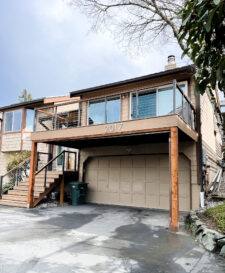
What a Correct Installation Actually Involves
Composite boards are more forgiving than wood in some ways and less forgiving in others. They don't rot, but they can trap moisture against a substructure that does, and they expand and contract with temperature in ways that punish sloppy fastening. For a Silver Beach property, we treat the framing, the fastening, and the drainage as equally important as the decking material itself.
Substructure and Ground Contact
Most of the failures we get called out to fix aren't in the composite boards themselves — they're in what's underneath. Joists that sit too close to grade, ledger connections that were never flashed properly, or framing that was never rated for the moisture load in this area. Before a single board goes down, we look at joist spacing (tightened up from typical wood-deck spacing since composite needs more support), ledger flashing, and whether the substructure itself is treated or protected for a wet coastal climate.
Fastening and Board Spacing for Wet Climates
Board gapping has to account for both composite expansion and drainage. Too tight, and boards buckle or trap standing water between them during driving rain; too loose, and debris and moss-friendly grit collects in the gaps. We also use fasteners and hidden clip systems rated for coastal exposure — standard hardware corrodes noticeably faster this close to salt air, and a rusting fastener under a composite board is a hidden problem you won't see until it fails.
Rail, Stair, and Transition Details
Railing posts, stair stringers, and any point where the deck meets the house are where water intrusion actually starts. These transitions need proper flashing and sealing details that a lot of quick-turnaround installs skip because they don't affect how the deck looks on day one. We treat these as the parts of the job that determine whether the deck is still tight in ten years, not just this summer.
Composite vs. Other Decking Materials for This Location
Homeowners in Silver Beach often ask us to weigh in on composite versus wood versus PVC. Here's an honest comparison based on how each performs in this specific environment, not a generic materials chart.
| Material | Moisture & Salt Air Behavior | Moss/Algae Resistance | Long-Term Maintenance |
|---|---|---|---|
| Composite (capped) | Resists moisture absorption well; hardware is the main vulnerability | Good, especially with textured or streaked colors | Occasional cleaning; no staining or sealing |
| Composite (uncapped) | More prone to surface moisture absorption over time | Fair; needs more regular cleaning | Periodic cleaning; more attention at board ends |
| Pressure-treated wood | Absorbs moisture readily; prone to swelling and checking near the water | Poor without regular treatment | Annual staining/sealing recommended |
| PVC | Excellent moisture resistance; fully synthetic | Good, similar to capped composite | Low; can look more plastic in appearance |
Capped composite is what we recommend for most Silver Beach projects. It gives you the moisture and moss resistance that this climate demands without the fully synthetic look some homeowners want to avoid, and it holds up to salt air far better than untreated or uncapped products.
Moss, Algae, and Salt Residue — What Actually Works
A long moss season is one of the defining features of decking maintenance in this part of Whatcom County, and Silver Beach's tree cover and proximity to the water make it worse in shaded areas. The good news is that a properly installed capped composite deck resists moss far better than wood, but "resists" doesn't mean "immune." Moss and algae still need organic debris and standing moisture to get a foothold, so the two things that matter most are drainage under the deck (so moisture doesn't sit) and periodic cleaning of the surface, especially in shaded corners and along the north-facing sides of the house.
Salt residue is a separate issue from moss but gets treated the same way: it builds up gradually and is easiest to manage with routine rinsing rather than letting it accumulate into something that needs aggressive cleaning later. Pressure washing composite is fine at low pressure with the right nozzle, but high pressure can damage the cap layer, so this is one area where "more aggressive" is not "more effective."
Our Process From First Look to Final Walkthrough
We keep the process straightforward because most of what determines a good outcome happens in the planning and framing stage, not in how fast the boards go down.
- On-site assessment of the existing structure (if replacing a deck) or the site conditions (for new builds), including grade, drainage, and sun/shade exposure
- Framing plan review — joist spacing, ledger condition, and any substructure repairs needed before decking begins
- Material selection based on your home's exposure, budget, and appearance preferences, with an honest recommendation on capped vs. uncapped composite for your specific location
- Installation, including hidden fastening systems and coastal-rated hardware where framing and boards meet
- Rail, stair, and transition detailing with proper flashing at the house connection
- Final walkthrough covering drainage, board gapping, and a basic maintenance overview specific to your deck's exposure
Cost Factors Worth Understanding Before You Get Quotes
Composite decking costs vary widely based on a handful of factors that matter more in a coastal neighborhood like Silver Beach than they would elsewhere.
| Factor | Why It Matters Here |
|---|---|
| Substructure condition | Existing framing near the water often needs more repair or upgrading before new decking can go down |
| Board grade (capped vs. uncapped) | Capped composite costs more upfront but needs less attention against moisture and moss over time |
| Hardware and fastener rating | Coastal-rated hardware costs more than standard fasteners but avoids hidden corrosion problems |
| Deck size and complexity | Multiple levels, built-in seating, or custom railing add labor beyond straight square footage |
| Site access | Some Silver Beach lots have limited access for material delivery, which can affect labor time |
We give a straightforward, itemized quote so you can see where the money is going rather than a single lump number — that's especially useful when substructure repair is part of the conversation.
Maintenance Checklist for Silver Beach Composite Decks
Composite decking is lower-maintenance than wood, not maintenance-free. Here's what actually keeps a deck in this location performing well year over year:
- Sweep debris out of board gaps every few weeks during fall, when leaf litter is heaviest
- Rinse salt residue and grime off the surface periodically, especially after storms with wind off the water
- Clean shaded or north-facing areas more often, since these hold moisture longer and are where moss establishes first
- Check that drainage under the deck hasn't been blocked by landscaping, debris, or settled soil
- Inspect railing posts and stair connections annually for any looseness, which can signal a fastener or framing issue underneath
- Use a soft-bristle brush and low-pressure rinse rather than a high-pressure washer directly on composite boards
Why Hiring a Crew That Already Works Silver Beach Matters
A lot of decking problems we get called to fix weren't caused by bad composite boards — they were caused by an installer who built the deck the same way they'd build one anywhere else, without accounting for the salt air, the rain patterns, or the moss season that this part of Whatcom County deals with for months at a time. Framing details, fastener selection, and drainage planning that are optional elsewhere aren't optional here.
Working regularly in Silver Beach and the surrounding Fairhaven area means we've already seen how decks in this specific setting age — which details hold up and which corners cause callbacks two winters later. That's the difference between a deck that needs attention every year and one that just needs the basic upkeep above.
If you're planning a new composite deck or replacing an aging one in Silver Beach, we're happy to take a look and give you a straightforward, no-pressure estimate — just fill out the form below to get started.