 Fairhaven Siding
 Building a Deck That Actually Holds Up in Sunnyland
Sunnyland sits close enough to Bellingham Bay that salt-laden air reaches every deck in the neighborhood, even the ones tucked back under fir and maple canopy. Add Whatcom County's long wet season, driving rain that comes in sideways off the water, and the extended stretch of shade and dampness that keeps moss growing well past what most of the country would call "winter," and you get a climate that is genuinely hard on outdoor wood structures. A deck built to a generic national spec shows it within a few years — soft spots near the ledger board, rusted-out fastener heads, boards that stay slick with moss from October through April. A deck built for this specific stretch of Whatcom County holds up for decades instead.
We're a Fairhaven-based crew, and Sunnyland is inside our regular service area, not a stretch assignment. That distinction matters more for decks than for almost any other exterior project, because so much of what makes a deck last or fail is buried — footings, framing, flashing, fastener choice — decisions made before a single visible board goes down.
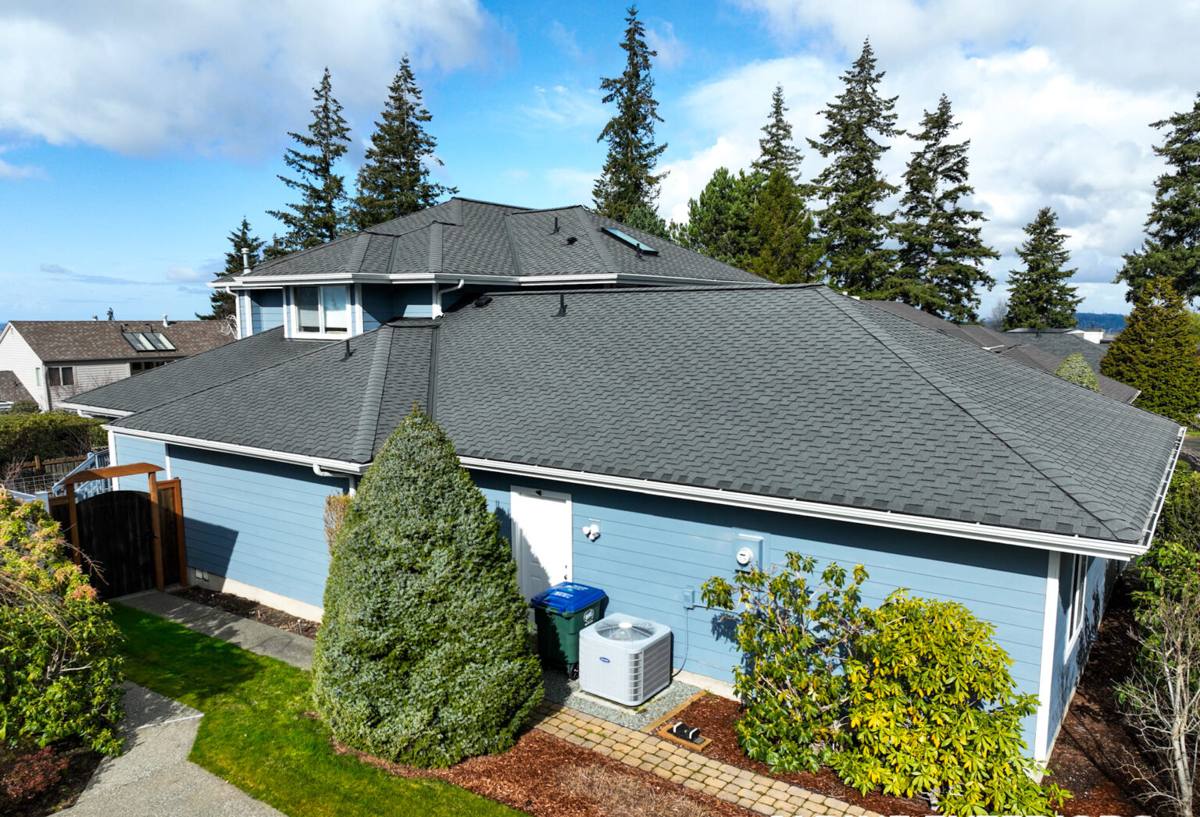
What Salt Air, Rain, and Moss Actually Do to a Deck
Salt Air and Metal Hardware
Salt in the air accelerates corrosion on anything metal — joist hangers, screws, bolts, post bases. Standard electro-galvanized hardware that would last decades further inland can start showing rust streaks and pitting in a fraction of that time this close to the water. Once a fastener corrodes, it loses holding strength long before it looks bad enough to notice on a casual walk-through, which is exactly why hardware grade matters more here than in most parts of the country.
Standing Water and Wood Rot
Driving rain doesn't just fall on a deck, it drives into every joint, seam, and cut edge. Wood rot in this climate almost always starts at end grain — the cut ends of joists, the underside of a ledger board, the top of a post — because that's where water gets absorbed fastest and dries slowest. A deck with poor drainage or tight, unventilated framing stays damp for days after a storm, and damp wood sitting in the 40s and 50s for months at a stretch is exactly the environment rot fungus needs to take hold.
Moss, Algae, and Slippery Surfaces
Shade, moisture, and mild temperatures are also exactly what moss and algae need to spread. On a deck surface that combination is a real safety issue, not just a cosmetic one — moss-covered boards get slick fast, and on stairs or a raised deck that's not a minor inconvenience. Moss also holds moisture against the wood underneath it, so a mossy deck is usually a deck that's staying wetter, longer, than it looks from a distance.
Choosing the Right Decking Material
There's no single "best" decking material — the right choice depends on budget, how much upkeep you want to do, and how much shade and moss exposure the specific spot on your property gets. Here's how the common options compare for a Sunnyland yard:
| Material | Moisture & Rot Resistance | Moss/Algae Grip Risk | Maintenance | Relative Upfront Cost |
|---|---|---|---|---|
| Pressure-treated pine | Good, if sealed regularly | Moderate — needs cleaning | Annual cleaning and re-sealing | Lower |
| Cedar | Naturally rot-resistant, softer wood | Moderate | Periodic cleaning and finish | Mid |
| Composite / capped composite | Excellent — doesn't absorb water | Lower — smoother surface, cleans easily | Occasional washing, no sealing | Higher |
We install all three depending on what a homeowner wants and what the budget allows. Where we won't compromise is on attention to airflow underneath the decking and drainage away from the frame — that's what actually determines lifespan in this climate, more than which surface material sits on top.
What's Underneath Matters More Than What's On Top
Footings and Frost Depth
Deck footings need to be set below frost depth on solid, well-draining soil — not just deep enough to pass a quick glance. In Whatcom County's wet, clay-heavy soils, a footing that's too shallow or sitting in a low spot that collects water can shift over a few wet seasons. That shows up later as a deck with a slight lean, a step that's gone uneven, or a squeak that wasn't there when it was built.
Ledger Board Attachment and Flashing
The ledger board — the piece that attaches the deck to the house — is the single most common failure point on decks in wet climates, because it's bolted directly into the house's wall framing right where wall and deck meet. Correct flashing at that connection, installed so water sheds away from the house rather than tracking in behind the ledger, is not optional trim work. It's the difference between a deck that stays structurally sound and one that quietly rots the rim joist and wall framing behind it while the surface still looks fine.
Joist Spacing and Airflow
Tight joist spacing and boards installed with no gap can look clean on day one, but in a climate this wet, airflow underneath the decking is what lets the frame actually dry out between storms. We space and gap for drying, not just for appearance, because a frame that never fully dries is a frame that's slowly rotting no matter what surface material sits above it.
Drainage, Slope, and Moss Prevention by Design
Most moss and rot problems on Sunnyland decks aren't a materials problem — they're a design problem that gets baked in on day one and shows up years later. A few things we build in from the start:
- A slight slope away from the house so water doesn't pool against the ledger board
- Consistent gapping between boards so water drains through instead of sitting on the surface
- Enough clearance and airflow underneath the deck for the framing to fully dry out between storms
- Post and beam placement that avoids trapping water against untreated cut ends
Working With Shade Instead of Against It
We can't control how much shade a lot gets, and we're not going to tell anyone to cut down mature trees just to build a deck. What we can control is design — board orientation, surface texture, and gap sizing — so a shaded deck sheds water and dries as fast as the site allows instead of holding moisture and growing moss all winter.
How We Build a Sunnyland Deck
Site Visit and Design
We start on-site, not over the phone. Slope, drainage, sun and shade exposure, tree cover, and how the deck will tie into the house all get walked and measured in person before we talk materials or price. A deck design that ignores the specific drainage pattern of the lot is a design problem waiting to surface in a few years.
Permitting
Most new decks and many deck replacements in the City of Bellingham require a building permit, particularly anything attached to the house or built above a certain height off grade. We handle the permit application and inspections as part of the job. That's not an upsell — it's part of doing the work correctly, and it protects you later if you ever sell the house and a buyer's inspector asks whether the deck was permitted.
Construction and Finishing
Framing goes in first and gets inspected before the decking closes it up — that inspection step exists for a reason, and a crew that skips it or works around it is how hidden framing problems happen. Decking, railing, and any sealing or finishing come after framing is signed off, not before.
Permits and Local Rules to Expect
Sunnyland falls within the City of Bellingham, and deck projects here generally go through the city's standard building permit process rather than a separate county process. Exact requirements — setbacks, guardrail height, stair geometry, whether an existing deck's footprint is grandfathered — depend on your specific lot and the scope of the project, so we always confirm current requirements with the city rather than assuming a past job's rules still apply. If your project is a simple low-to-grade replacement, requirements may be lighter; if it's attached to the house, elevated, or new construction, plan on a permit and an inspection or two along the way.
Keeping a Sunnyland Deck in Good Shape
A well-built deck still needs some seasonal attention in this climate. None of it is complicated, but skipping it is how a twenty-five-year deck turns into a fifteen-year deck:
- Sweep leaves and debris off the surface and out from between boards each fall, before the wet season sets in
- Clean moss and algae off the surface at least once a year — sooner on heavily shaded decks
- Check and re-seal wood decking on a regular schedule, not just when it starts to look dry or gray
- Inspect the ledger board flashing and anywhere the deck meets the house for gaps, cracks, or staining
- Keep gutters and downspouts near the deck clear so runoff isn't dumping extra water onto or under it
- Check visible fasteners and hardware periodically for rust streaks or loosening, especially on the water-facing side of the house
Why a Crew That Already Works in Sunnyland Matters
Anyone can frame a deck. Framing one that's still sound in fifteen or twenty years, in a climate that drives rain sideways and grows moss for half the year, takes knowing how this specific area behaves — which lots hold water, how much shade is typical on a given street, what the city actually asks for at permit review, and which construction details actually matter here versus which are just upsells elsewhere. We work in Fairhaven and the surrounding Bellingham neighborhoods, including Sunnyland, often enough that none of that is a guess for us.
If you're planning a new deck or need to replace one that's showing its age, we're happy to take a look and give you a straightforward, no-pressure estimate — just what the project actually needs and what it will take to do right. Use the form below to get started.