 Fairhaven Siding
 Why Siding Installation in Happy Valley Is Its Own Job
Happy Valley sits close enough to the water and the tree line that its homes take a specific kind of beating year-round. Salt-laden air off the bay works into fasteners and cut edges. Driving rain off Bellingham Bay hits walls sideways, not straight down, which changes where water actually collects. And the shaded, moisture-heavy stretches of the neighborhood support a moss and algae season that runs longer than it does just a few miles inland. Siding installation here isn't just "put boards on a wall" — it's a decision about how a wall system will handle wind-driven moisture, organic growth, and salt exposure for the next thirty-plus years.
A siding job that would hold up fine in a dry, inland part of Whatcom County can fail early in Happy Valley if it wasn't built with this specific exposure in mind. That's the gap this page is meant to close: what your home actually needs here, what a correct installation involves, and what to look for when you're hiring someone to do it.
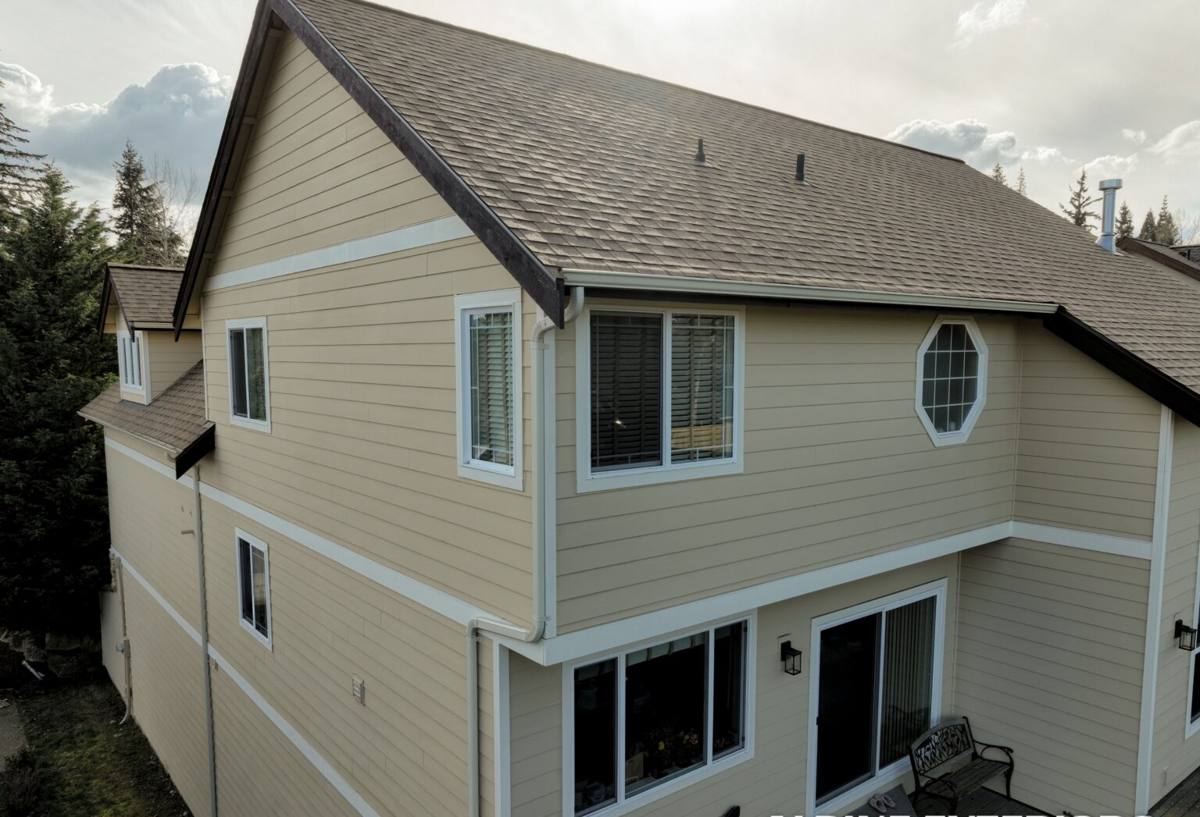
What the Local Climate Does to a Wall
Salt Air
Salt doesn't just corrode; it's hygroscopic, meaning it pulls moisture out of the air and holds it against whatever surface it lands on. Over time that means fasteners, trim, and any exposed cut edges are sitting wetter, longer, than they would inland. Materials and fastening hardware that aren't rated for coastal exposure corrode faster, and corroded fasteners are one of the more common causes of siding panels working loose years before they should.
Driving Rain
Wind off the water pushes rain sideways into wall assemblies, not just down. That means water finds its way behind laps, into unsealed seams, and up under trim in ways a calm-weather install wouldn't anticipate. The wall's drainage plane — the water-resistive barrier and flashing system behind the siding — has to be able to move that water back out before it reaches the sheathing.
Moss and Algae Season
Shaded lots, tree cover, and consistent moisture mean Happy Valley's moss and algae season runs longer than drier parts of the county. Any siding material that's porous or that holds surface moisture gives organic growth a foothold. That growth isn't just cosmetic — moss holds water against the surface, extending the time siding stays wet after every rain event.
What a Correct Installation Actually Involves
The siding itself is only part of the system. A correct install in this climate depends on several layers working together, and skipping or rushing any one of them is where premature failures start.
- Weather-resistive barrier: A continuous, properly lapped water-resistive barrier behind the siding, installed shingle-style so water sheds outward rather than getting trapped.
- Flashing at every penetration: Windows, doors, hose bibs, light fixtures, and any other wall penetration need flashing that directs water out, not into the wall cavity.
- A drainage gap: Space between the siding and the water-resistive barrier lets any water that does get behind the cladding drain and dry, instead of sitting against the sheathing.
- Correct fastening: Fasteners rated for coastal/corrosive exposure, driven to the manufacturer's specified depth and pattern — not just "close enough."
- Proper clearances: Siding held up off decks, patios, and grade per code and manufacturer spec, so it isn't sitting in standing moisture.
- Sealed, caulked joints where specified — and left open where the system is designed to breathe, since sealing the wrong joint traps moisture instead of releasing it.
Any one of these done wrong can undercut an otherwise good material. This is why we treat installation quality as inseparable from the product choice — a great siding material installed poorly will still fail early in a climate like this one.
Why We Install Only James Hardie Fiber Cement
We standardized on James Hardie fiber cement siding for every home we work on, including in Happy Valley, and it comes down to how the material behaves under exactly the conditions this neighborhood produces:
- Non-combustible: Fiber cement doesn't burn, which matters as wildfire smoke and dry-season risk have become a bigger part of Pacific Northwest summers.
- Engineered for moisture, not just painted over it: Hardie's HZ5 product line is formulated for the freeze-thaw and moisture cycling common to this region, rather than a generic national spec.
- Factory-applied ColorPlus finish: The finish is baked on at the factory under controlled conditions, which holds up better against UV and moisture than field-applied paint, and resists the chalking and fading that field-painted products are more prone to.
- Resists moss and algae better than wood-based products: Fiber cement doesn't feed organic growth the way wood fiber siding can, which matters directly in a neighborhood with a long moss season.
- Strong transferable warranty: A meaningful, transferable warranty backing the product matters to resale value, not just to the current owner.
We don't install LP SmartSide, vinyl, Cemplank, Allura, or primed wood species like spruce or cedar. Each of those has legitimate uses and real strengths in the right application — this isn't a claim that they're bad products. It's that, weighed against what Happy Valley's salt air, wind-driven rain, and moss season demand over a multi-decade lifespan, we don't think they hold up as consistently as Hardie fiber cement does, and we'd rather stand behind one system we know inside and out than install several we have reservations about.
How the Common Siding Options Compare in This Climate
| Material | Moisture Behavior | Salt Air / Coastal Exposure | Moss Resistance | Finish Durability |
|---|---|---|---|---|
| James Hardie fiber cement | Engineered drainage system; dimensionally stable when wet | Rated for coastal exposure with correct fasteners | Resists organic growth better than wood-based options | Factory ColorPlus finish, long repaint interval |
| Vinyl siding | Can warp or buckle with heat and temperature swings | Fasteners and trim pieces still exposed to corrosion | Can trap moss/algae in overlaps and J-channels | Color is through-body but can chalk and fade over time |
| LP SmartSide / engineered wood | Wood-based core is more sensitive to sustained moisture exposure | Edge sealing becomes more critical near salt air | More susceptible to moss/algae than fiber cement | Field or factory finish; edges need consistent maintenance |
| Primed cedar / spruce | Natural wood movement; needs consistent maintenance to stay sealed | Requires diligent upkeep in coastal exposure | Most susceptible to moss, algae, and rot without upkeep | Field-painted; shortest repaint cycle of the group |
Our Process for a Happy Valley Installation
1. Site and Exposure Assessment
We look at how your specific lot sits — tree cover, sun exposure, wind direction, and how close you are to the water — because that shapes decisions on drainage detailing and trim.
2. Tear-Off and Sheathing Check
Old siding comes off and we inspect the sheathing underneath for any moisture damage before anything new goes up. This step gets skipped by crews trying to move fast, and it's exactly where hidden problems get missed.
3. Weather Barrier and Flashing Installation
This is the layer that does the real water-management work. We install it to shed water outward and flash every penetration before a single piece of siding goes up.
4. Hardie Installation to Manufacturer Spec
Panels or lap siding go up with the fastener type, spacing, and clearances James Hardie specifies — not a generalized approach applied to every job the same way.
5. Trim, Caulking, and Final Detailing
Trim and joints get sealed where the system calls for it, and left to breathe where it doesn't. This is a detail that's easy to get backwards and hard to notice until problems show up years later.
6. Walkthrough
We walk the finished job with you so you understand what was done and why, and what upkeep — if any — it needs going forward.
Signs Your Current Siding Is Already Struggling
Homes in Happy Valley tend to show climate-related siding wear in similar ways. Worth a look if you're seeing:
- Persistent moss or algae staining that comes back shortly after cleaning
- Soft or spongy spots when you press on the siding, especially near the bottom courses
- Fastener heads showing rust or staining streaks below them
- Paint that's peeling, bubbling, or chalking heavily in one particular direction-facing wall
- Gaps opening up at seams, trim, or corners
Any of these can point to a moisture problem behind the siding, not just a cosmetic one — worth having looked at before it spreads.
What to Ask a Contractor Before You Hire Them for This Neighborhood
Not every siding crew has real experience with wind-driven coastal moisture and long moss seasons. Before hiring anyone for a Happy Valley home, it's worth asking:
- Do you have recent work in this specific area, and do you understand how the exposure here differs from inland Whatcom County?
- What weather-resistive barrier and flashing details do you use, specifically, and why?
- Are your fasteners rated for coastal/corrosive exposure?
- Are you a certified installer for the product you're proposing, and can you explain the manufacturer's installation spec, not just recite that you "follow it"?
- What does your warranty cover, and is it transferable if you sell the home?
A contractor who answers these in specifics, not generalities, is one who's actually thought about what this climate does to a wall.
Maintenance After Installation
Correctly installed Hardie siding is low-maintenance, but "low" isn't "zero" in a neighborhood with a long moss season. A periodic gentle wash to keep organic growth from establishing, an annual look at caulked joints and trim, and prompt attention to any impact damage will keep the system performing the way it's designed to for the long haul.
Get a Straight Answer on Your Home
If you're weighing a siding replacement or repair in Happy Valley, we're happy to take a look and give you an honest read on what your home actually needs — no pressure, no inflated scope. Reach out for a free estimate using the form below.