 Fairhaven Siding
 Why Sehome Homes Need Siding Built for This Climate
Sehome sits close enough to Bellingham Bay and the broader Salish Sea that salt-laden air is a daily fact of life, not an occasional weather event. Add in the driving rain that blows sideways off the water during winter storms, and a moss season that can stretch from late fall well into spring, and you have a combination that punishes ordinary siding faster than most homeowners expect. Whatcom County's marine climate keeps humidity high for months at a time, and that moisture doesn't just sit on the surface of a wall — it works its way into seams, fastener holes, and any spot where paint has started to crack.
Siding in Sehome isn't just a cosmetic layer. It's the first line of defense against wind-driven rain intrusion, the surface that has to shed salt spray without corroding or staining, and the material that determines whether moss and algae take hold within a year or stay off the wall for a decade. Homes here need a product and an installation approach that were actually built with this kind of exposure in mind — not a general-purpose siding that happens to be sold in the Pacific Northwest.
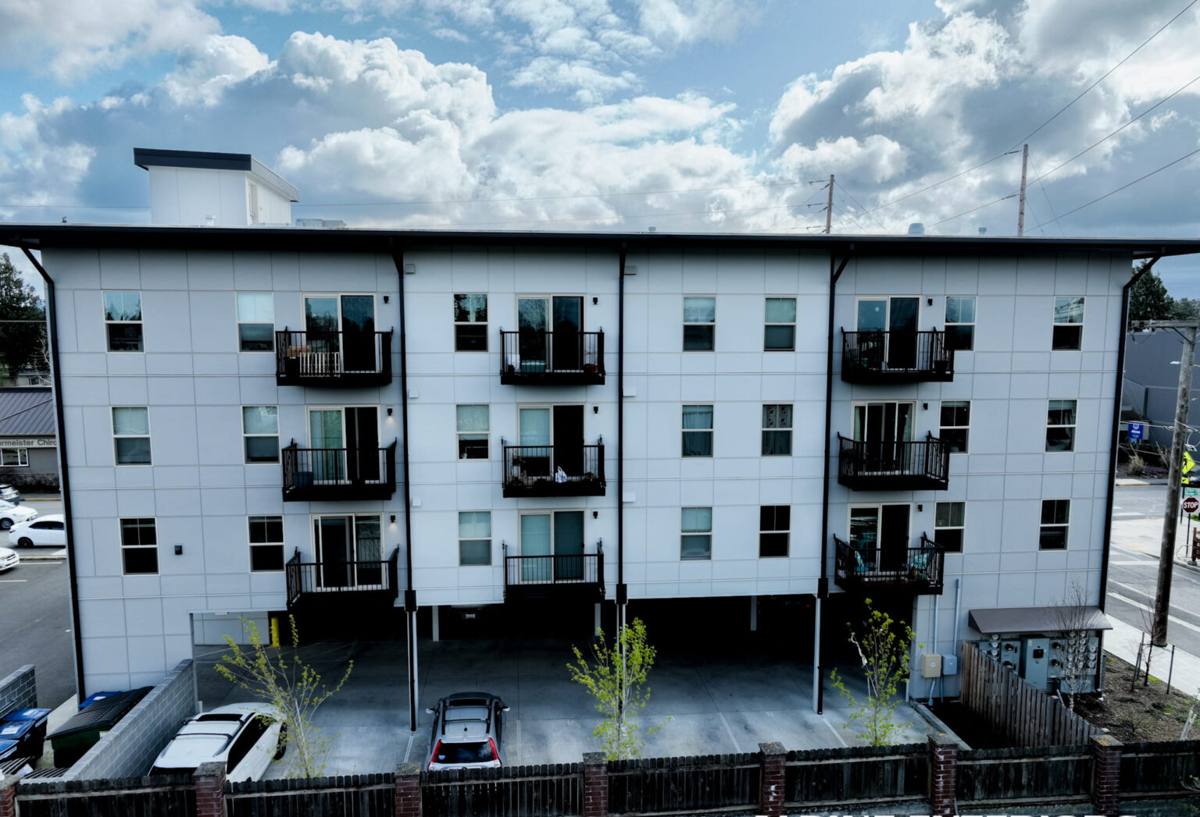
Why We Only Install James Hardie Siding
We made a deliberate decision to install James Hardie fiber cement exclusively — no vinyl, no LP SmartSide, no Cemplank, no Allura, no primed spruce or cedar. That's not a marketing angle; it's a standard we hold because of what we've seen these materials do over time in exactly this kind of climate.
Fiber cement is non-combustible, which matters increasingly as wildfire smoke and ember exposure become part of Pacific Northwest summers even in coastal counties. It doesn't feed on moisture the way wood-based products can, and it doesn't warp, expand, or contract with humidity swings the way vinyl does. James Hardie also builds region-specific product lines engineered for different climate zones, and their HZ5 line is formulated for climates like ours — places with sustained moisture exposure and freeze-thaw cycling. That's a level of climate-specific engineering that most competing products simply don't offer.
What We're Not Saying
We're not claiming other siding materials are junk. Vinyl is inexpensive and easy to install. LP SmartSide has real fans and a lower material cost. Cedar has a look some homeowners love. Our position is narrower and more practical: given what salt air, driving rain, and moss season do to a house in Sehome over 20-plus years, we don't think those trade-offs make sense for our clients, and we'd rather stand behind one product system we trust completely than offer several we have reservations about.
What a Correct James Hardie Installation Actually Involves
The siding itself is only half the equation. Fiber cement siding installed incorrectly can trap moisture behind it just as easily as any other material — arguably worse, since a poorly flashed Hardie installation can look fine on the surface while rot builds underneath.
Moisture Management Details
- Weather-resistive barrier installed and lapped correctly behind the siding, with all penetrations sealed
- Proper flashing at every window, door, and roofline transition — the most common failure point we find on older installs
- Correct starter strip placement so the bottom course sheds water away from the foundation
- A minimum clearance gap maintained between siding and grade, decks, patios, and roof surfaces
- Rain screen or drainage plane detailing in areas with heavier wall exposure to wind-driven rain
Fastening and Fit for Wind-Driven Rain
James Hardie's own installation guidelines specify fastener type, spacing, and placement, and those specs exist for a reason — under-driven or over-driven nails, wrong fastener spacing, or panels installed too tight against each other can all create paths for water intrusion during the kind of sideways rain Sehome sees several times a winter. Butt joints need to be caulked and, where possible, backed with flashing rather than relying on caulk alone, since caulk is a maintenance item, not a permanent seal.
Choosing the Right Hardie Product and Finish
James Hardie makes several distinct product lines, and the right choice depends on the home's style and how much of the wall faces prevailing weather.
| Product Line | Best Suited For | Climate Consideration |
|---|---|---|
| HardiePlank lap siding | Traditional and craftsman-style homes | Most common choice; performs well with proper lap and flashing detail |
| HardieShingle | Accent gables, dormers, Craftsman detailing | Good for architectural interest without sacrificing durability |
| HardiePanel | Modern facades, board-and-batten looks | Requires careful joint and batten flashing in high-exposure walls |
| ColorPlus factory finish | Any line, all homes | Baked-on finish resists fading and holds up better against salt air than field-applied paint |
We push most Sehome clients toward the ColorPlus factory finish rather than field-painted siding. A factory-applied finish is cured under controlled conditions and holds color and adhesion far better in salt air than paint applied on-site, which means fewer repaint cycles over the life of the siding.
How We Approach Every Job
Our process is the same whether we're re-siding a small rambler or a larger two-story home, and it's built around not letting anything get missed at the details that actually cause failures later.
- On-site inspection of the existing siding, sheathing, and any signs of moisture damage or rot
- Honest assessment of what's underneath — sometimes sheathing repair is needed before new siding goes on, and we tell you before we start, not after
- Product and color selection, including ColorPlus options suited to the home's exposure
- Written estimate with a clear scope, so there's no ambiguity about what's included
- Removal of old siding and correction of any weather barrier or flashing issues found underneath
- Installation to James Hardie's published specifications, including fastener schedule and clearances
- Final walk-through so you can see the finished work and ask questions before we consider the job done
Living With James Hardie Siding in a Salt Air, Moss-Prone Climate
One of the practical advantages of fiber cement in this environment is how little it demands from homeowners year to year. It won't rot if moss holds moisture against it the way wood siding can, and it won't corrode from salt exposure the way some metal trims and fasteners do if the wrong hardware is used. That said, a few habits go a long way toward keeping it looking good for decades:
- Rinse the exterior periodically to clear salt residue and organic buildup, especially on north-facing walls that stay damp longest
- Keep gutters clear so overflow doesn't run down the face of the siding and feed moss growth
- Trim back vegetation and tree cover that keeps walls shaded and damp longer than necessary
- Have caulking at trim and joints inspected every few years, since caulk is the one component that does wear out before the siding itself
What Affects the Cost of a Sehome Siding Project
| Factor | Why It Matters |
|---|---|
| Home size and wall complexity | More corners, gables, and dormers mean more cutting, flashing, and labor time |
| Condition of existing sheathing | Rot or moisture damage found during tear-off adds repair scope before new siding goes on |
| Product line and finish | Lap, panel, and shingle styles carry different material costs; ColorPlus finishes cost more upfront than a primed-only option |
| Site access | Tight lots, retaining walls, or limited staging area can add time to material handling |
| Trim and accessory work | Corner boards, window trim, and fascia work are often bundled with a full siding project |
We give every homeowner a written estimate with a clear scope before any work starts, so cost factors specific to your home are spelled out rather than left as a vague allowance.
Why Hiring a Crew That Already Works in Sehome Matters
Installation quality is what separates a James Hardie project that lasts 30-plus years from one that develops problems within a decade, and that quality comes down to crews who understand this specific climate. A crew that mostly works drier inland climates may not default to the flashing and clearance details that matter most where wind-driven rain and sustained moisture are the norm. Working regularly in Fairhaven and the surrounding Whatcom County neighborhoods means we're not guessing at how a wall assembly needs to handle salt air and a long wet season — it's the baseline we build to on every job.
If you're considering new siding for a home in Sehome or elsewhere in Fairhaven, we're happy to take a look and walk you through what your home specifically needs. There's no pressure and no obligation — just a straightforward assessment and a written estimate you can use to make the decision that's right for your house.