 Fairhaven Siding
 Sehome's Siding Challenge: Shade, Slope, and Salt Air
Sehome sits close enough to Bellingham Bay to catch salt-laden air off the water, and close enough to Sehome Hill's tree cover to live in shade for long stretches of the year. That combination is harder on exterior siding than either factor alone. Salt air accelerates corrosion on fasteners and trim metal. Tree cover keeps roofs, gables, and north-facing walls damp long after a storm has passed, which is exactly the environment moss and algae need to take hold. Add Whatcom County's driving winter rain, often coming in sideways off the water, and you have siding conditions that punish anything not built and installed specifically for them.
Homes on sloped, wooded lots near the arboretum also deal with more standing shade and slower drying times than homes in open, sun-exposed parts of Bellingham. That changes what "correct" siding looks like here. It's not just about picking a durable material — it's about installation details that manage moisture in a spot where the sun isn't doing much of the drying work for you.
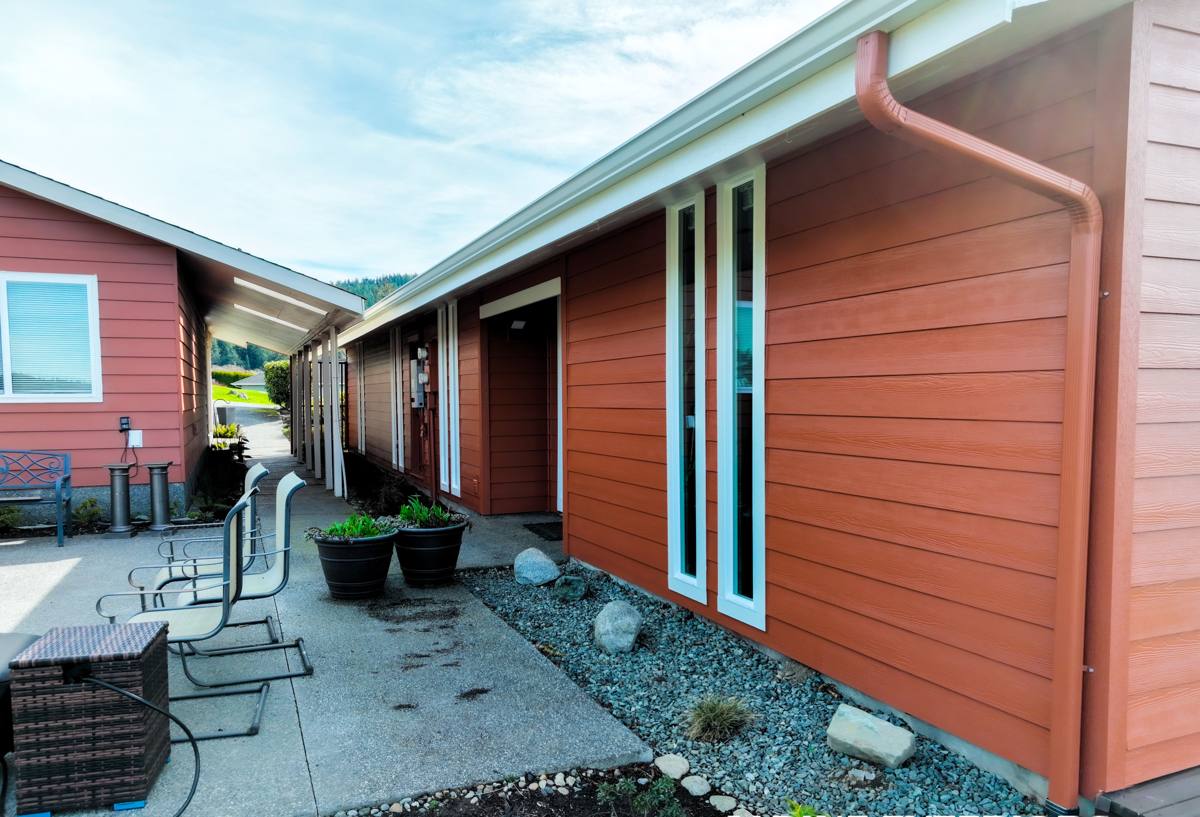
Why Fiber Cement Is the Right Call for This Neighborhood
Wood-based siding products — cedar, primed spruce, LP SmartSide — all share one vulnerability that matters more in Sehome than almost anywhere else in Whatcom County: they're made from wood fiber, and wood fiber absorbs moisture. In a shaded, damp microclimate, that means more frequent recoating, more edge-swelling at butt joints, and a shorter realistic lifespan before rot becomes a real risk. Vinyl siding handles moisture fine but doesn't hold up as well against the freeze-thaw cycling and impact stress this region sees, and it can't be repainted if a homeowner wants to update the color down the road.
Fiber cement is cement, sand, and cellulose fiber, cured into a rigid board that doesn't absorb water the way wood does and doesn't distort in the cold the way vinyl can. That's why we've standardized on it exclusively for every home we side, and why we don't install LP SmartSide, vinyl, cedar, or primed spruce even when a homeowner asks — we'd rather explain the trade-offs upfront than install something we know won't hold up to a Sehome winter.
Not All Fiber Cement Is the Same
Within fiber cement, brand and manufacturing matter. We install James Hardie exclusively, not because it's the only fiber cement product on the market, but because it's the one we trust after years of working in this exact climate. Hardie's HZ5 product line is engineered specifically for regions with freeze-thaw cycles and sustained moisture exposure, which describes Whatcom County well. The ColorPlus factory finish is baked on under controlled conditions rather than field-painted, which matters in a neighborhood where humidity and shade can slow down or compromise an on-site paint cure.
What a Correct Installation Actually Involves
Fiber cement siding fails early almost always because of installation mistakes, not the material itself. In a shaded, wet environment like Sehome, the margin for error is smaller. A correct job includes:
- A drainage plane (weather-resistive barrier) installed behind the siding so any moisture that gets past the surface has somewhere to go
- Rainscreen furring or proper gapping where wall assemblies call for it, so siding isn't sitting flush against a wet sheathing surface
- Correct flashing at every window, door, and roofline intersection — the majority of moisture intrusion we find starts at these transitions, not on flat wall sections
- Fasteners driven to Hardie's specification (not overdriven, not underdriven), in corrosion-resistant material appropriate for near-coastal exposure
- Proper board clearance from grade, decks, and roof lines so splash-back and ponding don't sit against the bottom course
- Factory-cut and field-cut edges sealed per manufacturer spec, since an unsealed cut edge is the fastest way for a fiber cement board to take on water it wasn't designed to absorb
Skip any one of these and you can still end up with moisture problems behind siding that looks fine from the street — which is part of why we don't cut corners on the parts nobody sees after the job is done.
Our Process on a Sehome Home
Assessment and Walkthrough
We start by walking the exterior with the homeowner, looking at drainage paths, tree overhang, existing moisture damage, and any areas where past siding has already shown moss growth or soft spots. Shaded walls and areas near mature trees get extra attention, since those are the sections most likely to need drainage upgrades during the reside.
Tear-Off and Sheathing Check
Once old siding comes off, we inspect the sheathing underneath. This is often the first time a homeowner sees the actual condition of their wall assembly, and in older Sehome homes it's not unusual to find areas that need repair before new siding goes on. We won't cover up compromised sheathing — that just locks a problem behind a new, better-looking surface.
Weather Barrier and Drainage
We install the weather-resistive barrier and drainage plane appropriate to the wall assembly, paying particular attention to shaded and north-facing elevations where drying time is slowest.
Installation
Hardie boards, trim, and accessories go on to manufacturer spec — fastening pattern, clearances, and sealed cut edges included. We flash every penetration and transition as we go, not as an afterthought.
Final Walkthrough
We walk the finished job with the homeowner, checking caulking lines, paint touch-up at any field cuts, and clearances at grade and rooflines.
Cost Factors for a Sehome Siding Project
Every home is different, but these are the main factors that move the price on a fiber cement reside in this neighborhood:
| Factor | Why It Matters Here |
|---|---|
| Home size and wall complexity | More corners, dormers, and trim details mean more cut edges and flashing points to seal correctly |
| Existing sheathing condition | Shaded, damp walls are more likely to need sheathing repair discovered during tear-off |
| Drainage plane upgrades | Homes without a rainscreen gap may need furring added, which affects labor and material cost |
| Trim and accessory package | Hardie trim, soffit, and fascia to match the field siding add cost but keep the whole system consistent |
| Access and site conditions | Sloped lots and mature tree cover common in Sehome can affect staging, scaffolding, and cleanup time |
Signs a Sehome Home May Need New Siding Soon
Because of the shade and moisture profile here, some warning signs show up earlier or look different than they would on a sunnier lot. Watch for:
- Persistent moss or dark streaking on north-facing or tree-shaded walls that comes back shortly after cleaning
- Soft or spongy spots when you press on siding near the bottom courses or under windows
- Paint that's peeling or bubbling in patches rather than fading evenly
- Visible gaps or separation at butt joints and corner boards
- A musty smell near exterior walls, especially in rooms on shaded sides of the house
- Fastener heads showing rust or "bleeding" stains down the face of the siding
Why Hiring a Crew That Already Works in Sehome Matters
A siding crew that mostly works drier, sunnier parts of the county can do a fine job on a wall that gets full sun most of the day. That same crew, working on a shaded Sehome lot for the first time, may not automatically adjust drainage detailing for a wall that stays wet three times as long after a storm. We work this neighborhood regularly, which means we already know which elevations need extra drainage attention, how tree cover on a given lot affects drying time, and where moss and algae tend to reestablish if the underlying moisture path isn't corrected during the reside — not just painted or pressure-washed away.
Local, repeat experience also means fewer surprises during permitting and inspection, since Bellingham's requirements and typical older-home conditions in this part of Whatcom County are familiar territory rather than something we're learning on your project.
Maintenance After Installation
Correctly installed Hardie siding is low-maintenance, not no-maintenance. In a shaded, damp neighborhood like Sehome, a periodic gentle rinse to keep organic growth from establishing on north-facing walls is worth doing, along with an annual visual check of caulking at trim joints and window flashing. ColorPlus finish means you're not repainting on a routine schedule the way you would with wood siding, but keeping gutters clear and trimming back tree cover that keeps a wall constantly wet will extend the life of any siding system, fiber cement included.
If your Sehome home is due for new siding, or you want a second opinion on a wall that's showing early trouble signs, we're happy to take a look. Reach out for a free, no-pressure estimate — there's a form below to get started.