 Fairhaven Siding
 Decking Built for Sehome's Weather, Not Just Sehome's Style
Sehome sits close enough to Bellingham Bay and the rest of Whatcom County's marine climate that any outdoor structure has to deal with the same three things year-round: salt-laden air off the water, long stretches of driving rain, and a moss season that can run from October well into spring. A deck in Sehome doesn't fail because the design was wrong. It fails because the materials and the installation details weren't matched to what this specific climate throws at them, month after month, year after year.
This page is about one job in one place: composite decking installation for homes in and around Sehome. We're not going to give you a generic decking pitch. We're going to walk through what actually holds up here, what a correct installation looks like, and why the details matter more in this climate than they would somewhere dry.
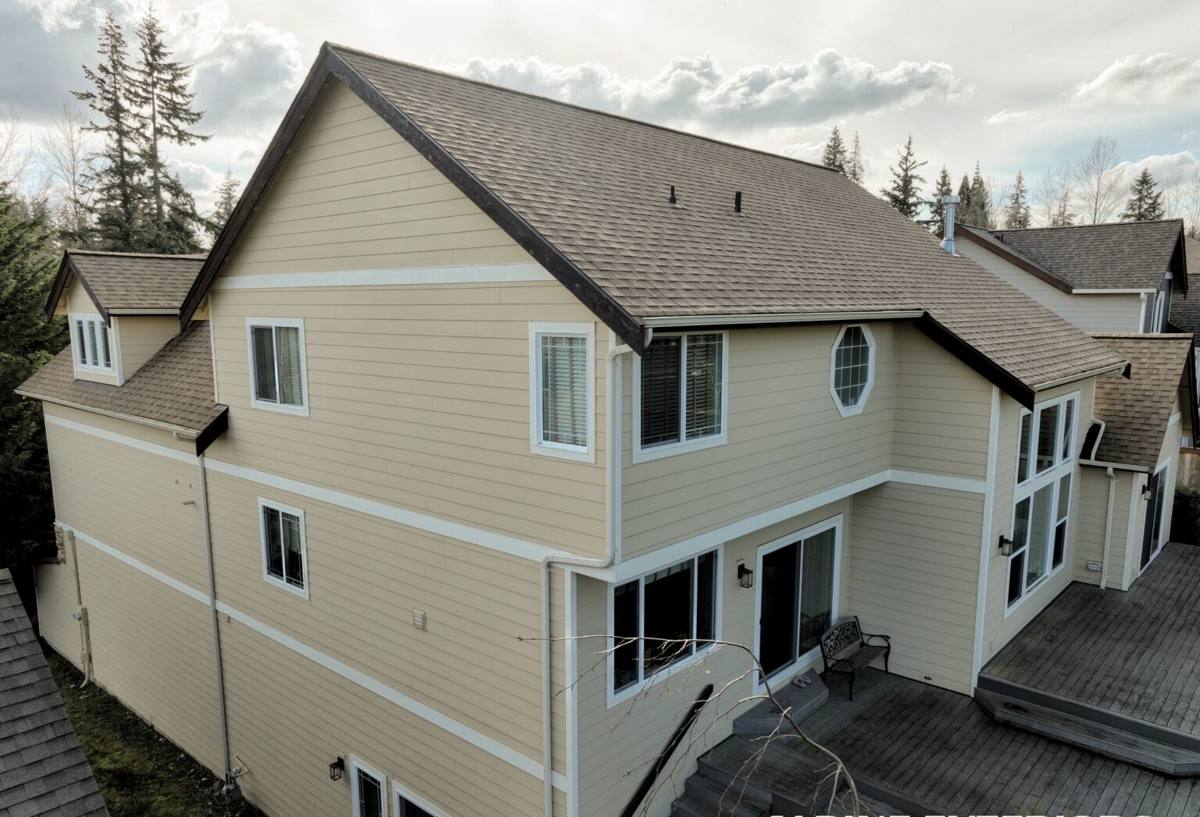
What Salt Air, Rain, and Moss Actually Do to a Deck
Salt Air and Metal Fatigue
Proximity to the water means airborne salt settles on every exterior surface, including decks that aren't visibly near the shoreline. Salt accelerates corrosion in fasteners, joist hardware, and railing brackets. On a lot of decks we've replaced, the boards were still serviceable, but the hidden hardware underneath had corroded to the point of being a real safety concern. Salt exposure doesn't announce itself until a fastener finally lets go.
Driving Rain and Standing Water
Whatcom County rain isn't just frequent, it's often wind-driven, which pushes water into joints, gaps, and end cuts that a calmer rain would never reach. Any decking material that absorbs water at the board's core, or any substructure that doesn't shed water quickly, ends up holding moisture for days after a storm has passed. That sustained dampness is what actually causes rot, not the rain event itself.
Moss Season
A long moss season means organic growth gets a real foothold on any deck surface that stays shaded or damp for extended periods, especially under tree cover or on the north side of a house. Moss holds moisture against the board surface, and on softer materials it can work into the wood grain itself. On a deck with poor drainage or airflow underneath, moss isn't a cosmetic problem, it's an early sign of a moisture problem that will get worse.
Why Composite Decking Fits This Climate
Composite decking, when it's a genuine capped composite product, resists the specific failure modes Sehome's climate produces:
- The cap layer sheds water instead of absorbing it, so boards don't swell, cup, or hold moisture at the surface.
- Composite doesn't provide the same food source for moss and algae that raw wood grain does, which makes cleaning easier and regrowth slower.
- There's no seasonal sealing or staining required, which matters when your maintenance window between rain systems can be short.
- Consistent material density means the board performs the same at the coast-facing side of the house as it does anywhere else on the property.
None of that means composite is maintenance-free or immune to problems. It means the material itself isn't the weak link if everything underneath and around it is done correctly, which is where most decking problems in this climate actually start.
Where Decks Actually Fail: The Installation, Not the Boards
The Substructure
Composite boards are only as good as the frame underneath them. Joists that aren't protected with a proper joist tape or flashing will absorb water at every fastener penetration, and in a climate with this much sustained rain, untreated or unprotected joists are often the first thing to fail, well before the decking surface shows any wear.
Fasteners and Hardware
Given the salt air issue described above, fastener selection isn't a minor spec. Stainless steel or coated fasteners rated for coastal exposure cost more upfront but avoid the corrosion failures that show up in five to eight years with standard hardware.
Ledger Attachment and Flashing
Where the deck meets the house is the single most common point of water intrusion we see on deck failures generally, and it's worse in a climate with driving rain. Correct ledger flashing, proper counterflashing under the siding, and a real gap for water to escape are non-negotiable, not upgrades.
Drainage and Airflow Underneath
Ground-level and low-clearance decks need real attention to grading and airflow, or the space underneath becomes a permanently damp, shaded environment where moss and mildew take hold and never fully dry out between rain events.
Board Spacing
Composite boards need consistent gapping to allow for expansion and for water to drain through rather than pool on the surface. Too tight, and you get standing water and premature wear at the edges. Too loose, and the deck feels unfinished and can trap debris.
Choosing a Board: What Actually Differs
Homeowners in Sehome asking about decking are usually choosing between composite, pressure-treated wood, and PVC. Here's an honest comparison based on how each performs in this specific climate, not in a showroom.
| Factor | Composite | Pressure-Treated Wood | PVC/Vinyl |
|---|---|---|---|
| Moisture resistance | Strong with a capped product | Moderate, depends on sealing upkeep | Very strong, fully synthetic |
| Moss/algae resistance | Good | Poor without regular treatment | Good |
| Maintenance | Periodic washing | Annual sealing/staining | Periodic washing |
| Upfront cost | Mid to upper-mid | Lowest | Highest |
| Typical lifespan here | 25-30+ years | 10-15 years before major repair | 25-30+ years |
| Look and feel underfoot | Wood-like texture and color range | Natural wood grain | Smoother, less wood-like |
We install composite as our standard recommendation for most Sehome homes because it balances upfront cost against long-term performance in this climate better than the alternatives, but the right choice depends on your budget, how the deck will be used, and how much time you want to spend on upkeep.
What Drives the Cost of a Composite Deck in Sehome
| Cost Factor | Why It Matters Here |
|---|---|
| Board tier | Entry-level vs. premium capped composite affects both price and long-term fade/stain resistance |
| Substructure condition | Existing framing may need replacement if prior moisture damage is found once decking is removed |
| Fastener and hardware spec | Coastal-rated hardware costs more but avoids early corrosion failures |
| Railing style | Composite, aluminum, and cable railing all price differently and handle moisture differently |
| Deck height and access | Elevated decks require more structural work and code-compliant guardrails |
| Permitting | Most new or rebuilt decks in Bellingham require a permit, which affects timeline and inspection steps |
We'll always walk you through these line items before work starts so there are no surprises once the old decking comes up and we can see what's actually underneath.
Our Process for a Sehome Composite Deck
- On-site assessment: We look at the existing deck or space, check drainage, sun/shade exposure, and proximity to the house's siding and roofline.
- Material walkthrough: We go over board options and hardware specs suited to this climate, with straight talk about trade-offs and cost.
- Permitting: We handle the permit process where required so the work is inspected and compliant, not something you have to untangle later during a home sale.
- Demo and substructure check: If we're replacing an existing deck, we inspect framing and ledger conditions before covering anything back up.
- Build: Framing, flashing, fastening, and board installation done to the spec we agreed on, with attention to spacing and drainage throughout.
- Final walkthrough: We go over the finished deck with you, including what maintenance it actually needs going forward.
Living With a Composite Deck Through a Whatcom County Winter
Composite decking is low-maintenance, not no-maintenance. In a climate with this much moss and rain, a few habits keep a well-built deck performing for decades:
- Sweep debris and leaves off the surface regularly, especially in fall, so organic matter doesn't sit and hold moisture against the boards.
- Rinse or wash the deck a couple of times a year to clear early moss growth before it establishes.
- Keep gutters and downspouts near the deck clear so runoff isn't dumping extra water onto or under the structure.
- Check railing hardware and fastener heads periodically for early signs of corrosion, especially on decks with more direct exposure to marine air.
- Confirm underdeck ventilation isn't blocked by stored items or overgrown landscaping.
Signs an Existing Deck Needs Attention
- Soft or spongy spots underfoot, which usually point to substructure moisture, not a surface issue.
- Persistent moss or algae that returns quickly after cleaning.
- Visible rust staining around fastener heads or hardware.
- Gaps or separation where the deck meets the house.
- Railings that feel loose or flex more than they used to.
Why a Local Crew Matters More Than a Low Bid
A contractor who works in Fairhaven and Sehome regularly already knows how this specific stretch of Whatcom County behaves: how close a given lot is to salt air exposure, how bad moss season gets on shaded lots, and what the local permitting process actually requires. That's not something a crew traveling in from another region picks up on their first job here. It shows up in the small decisions, flashing details, fastener choice, drainage slope, that separate a deck that lasts 25 years from one that needs major repair in eight.
If you're considering a new deck or replacing one that's showing its age, we're happy to come take a look and talk through what makes sense for your home. There's no pressure and no obligation, just a straight assessment and a free estimate based on what we actually see on your property.