 Fairhaven Siding
 Board & Batten Siding Built for Sehome's Climate
Sehome homeowners live with a specific mix of weather that most siding products were never designed around: salt-laden air drifting in off the water, long stretches of driving rain, and a moss season that can run half the year on shaded north- and west-facing walls. Board and batten siding — with its bold vertical lines and deep shadow reveals — is one of the most popular exterior styles for craftsman, farmhouse, and modern homes in this part of Whatcom County. But the style only holds up if the material underneath it is built for this climate. We install board and batten in one material: James Hardie fiber cement. This page walks through what that means specifically for a Sehome home.
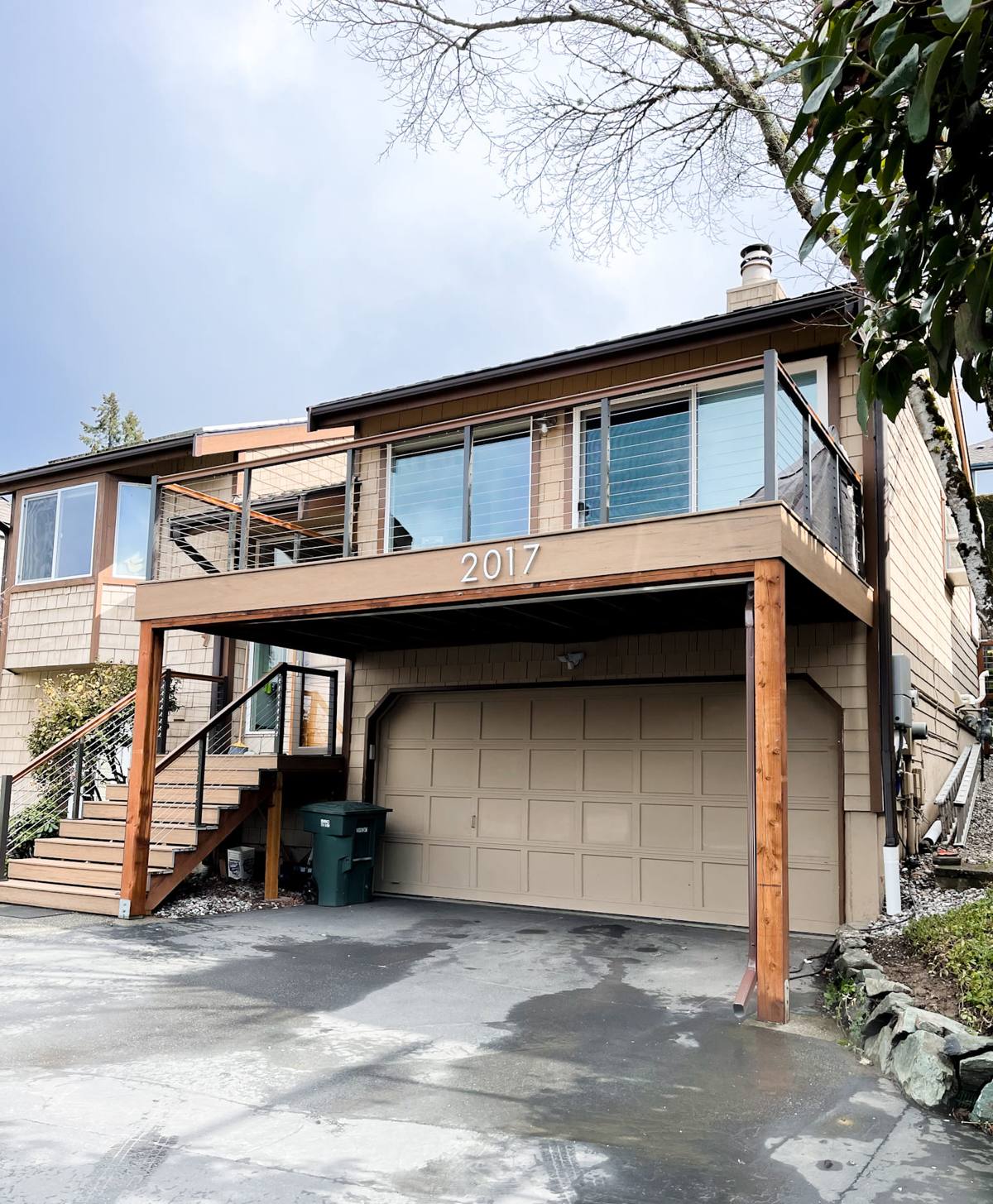
Why Sehome's Climate Is Tougher on Siding Than It Looks
Fairhaven and the surrounding Whatcom County neighborhoods sit close enough to Bellingham Bay that salt air is a real factor on exterior materials, not a theoretical one. Salt-laden moisture accelerates corrosion on fasteners and hardware, and it works into any gap in a coating system faster than plain rainwater does. Combine that with the Pacific Northwest's driving, wind-pushed rain — which hits vertical board and batten seams at an angle, not straight down — and you get a siding system that's under real pressure at every joint and batten strip.
Then there's moss. Shaded, damp wall sections in this region grow moss and algae readily, and once it takes hold on a porous or improperly sealed surface, it holds moisture against the wall for weeks at a time. On wood-based sidings, that trapped moisture is exactly what leads to soft spots, rot, and paint failure. On board and batten in particular — where battens create dozens of extra seams and shadow lines per wall — every one of those seams is a potential entry point if the material and installation aren't right.
What This Means for Board & Batten Specifically
Board and batten has more linear feet of seam per square foot of wall than lap siding does, simply because of the vertical battens. That's part of what gives it the striking look, but it also means more places for water to test the system. In a climate like Sehome's, the material choice and the installation detailing at those seams matter more here than they would on a drier, more sheltered site.
Why We Only Install James Hardie for This Style
We don't install board and batten in vinyl, LP SmartSide, primed spruce, cedar, or other fiber cement brands. That's a deliberate standard, not a lack of options. Here's the honest reasoning:
- Non-combustible core: James Hardie fiber cement is engineered from cement, sand, and cellulose fiber — it doesn't feed a fire the way wood-based products can.
- Built for wet, coastal climates: Hardie's HZ5 product line is specifically engineered for regions with prolonged moisture exposure, which describes Whatcom County's rain and marine air well.
- Factory-applied ColorPlus finish: the color and topcoat are baked on in a controlled factory environment, giving better adhesion and UV resistance than field-applied paint on wood battens, and it holds up better against salt air exposure over time.
- Dimensionally stable: fiber cement doesn't swell, cup, or split the way wood battens can when they take on and release moisture season after season.
- Transferable warranty: Hardie's warranty structure is one of the strongest in the industry and can transfer to a new owner, which matters to buyers when a Sehome home eventually sells.
To be fair to the alternatives: primed wood and engineered wood products can look very similar on day one, and cedar has genuine appeal for homeowners who want a natural material. The trade-off is long-term maintenance — repainting cycles, moisture monitoring, and vigilance against the exact rot and moss conditions this area produces. We'd rather put a product on your home that's engineered to shrug off those conditions than one that needs to be actively defended against them.
What a Correct Board & Batten Job Actually Involves
Board and batten looks simple from the curb — vertical boards, battens over the seams — but the installation detailing underneath is what determines whether it lasts 10 years or 40. A correct install includes:
- Water-resistive barrier and proper flashing behind the entire field, lapped correctly at every horizontal and vertical transition.
- Correct fastener spacing and type — corrosion-resistant fasteners matter even more near salt air, and Hardie's install specs are explicit about spacing to prevent buckling.
- Proper gapping at butt joints so panels have room to move seasonally without stressing the caulk joint.
- Batten placement over structural framing where possible, so the fastening is solid and consistent, not just decorative.
- Correct clearance at grade, decks, and roof lines — siding that sits too close to soil, patios, or roofing traps moisture and invites the exact rot and moss growth this region is known for.
- Caulk and sealant only where Hardie's install guide calls for it — over-caulking traps moisture just as effectively as gaps do.
Any one of these done wrong won't necessarily show up in year one. It shows up in year five or eight, usually as a soft spot, a streak of moss that won't scrub off, or a batten strip that's started to separate. That's the gap between "installed" and "installed to spec."
Our Process for a Sehome Board & Batten Project
1. On-Site Assessment
We walk the home and look specifically at the conditions that matter most locally: shaded walls prone to moss, areas exposed to prevailing wind-driven rain, grade clearance, and any existing moisture damage on the current siding or trim.
2. Product and Reveal Selection
We help you choose board width, batten spacing, and reveal depth to match the home's architecture, then confirm the HZ5 product specification is right for the exposure on each elevation.
3. Tear-Off and Sheathing Check
Old siding comes off and we inspect the sheathing underneath for hidden moisture damage before anything new goes up — this is the point where past problems get caught, not covered over.
4. Water Management Installation
House wrap, flashing, and any needed drainage plane details go in first, with particular attention to window and door transitions and any wall section that will sit in shade for most of the day.
5. Board & Batten Installation
Panels and battens go up to Hardie's fastening and clearance specifications, with joints staggered and gapped correctly.
6. Final Inspection and Walkthrough
We check caulking, touch-up paint at cut edges, clearances, and overall finish before walking the job with you.
Comparing Siding Options for a Sehome Home
| Material | Moisture/Moss Resistance | Maintenance | Fire Resistance | Typical Lifespan |
|---|---|---|---|---|
| James Hardie fiber cement (HZ5) | Engineered for wet coastal climates | Low — factory finish, occasional wash | Non-combustible | 30+ years to warranty |
| Cedar board & batten | Vulnerable without diligent upkeep | High — periodic refinishing, moisture checks | Combustible | Varies with maintenance |
| Primed wood/engineered wood | Moderate; sensitive to trapped moisture | Moderate to high — repainting cycles | Combustible | Varies with product and upkeep |
| Vinyl board & batten | Doesn't rot but can trap moisture behind panels | Low, but limited repair options | Can soften/warp under heat | 20-40 years, fades over time |
Signs Your Current Siding Is Losing the Fight Against This Climate
- Dark streaking or moss buildup that returns quickly after cleaning
- Soft, spongy panels or battens, especially near the bottom of walls or around windows
- Paint that's peeling, bubbling, or chalking faster than expected
- Visible gaps opening up at batten seams or panel joints
- Corroded or rust-streaked fasteners
- Warping or cupping on wood-based boards
If you're seeing any of these, it's worth having the wall opened up and assessed rather than just repainting over the symptoms.
Why Hiring a Crew That Already Works in Sehome Matters
Board and batten installation isn't uniform across the country — the right details shift based on regional exposure. A crew that regularly works Fairhaven and the surrounding Whatcom County neighborhoods already knows which elevations in this area tend to hold moss, how far local rain typically drives horizontally against a wall, and where salt air exposure calls for extra attention to fasteners and flashing. That local pattern recognition is different from general fiber cement experience, and it shows up in the small decisions made on-site — not just in the spec sheet.
Get a Free, No-Pressure Estimate
If you're considering board and batten siding for a home in Sehome or the surrounding Fairhaven area, we're happy to take a look, talk through what your specific walls need given sun exposure and moisture patterns, and give you a straightforward estimate — no pressure, no scare tactics. Use the form below to get started.