 Fairhaven Siding
 Roof Replacement in Ferndale: Built for Whatcom County Weather
Ferndale sits close enough to the water and to the timber that its roofs take a specific kind of beating: salt-laden air off the Strait, driving rain that comes in sideways more often than straight down, and a moss season that can run eight or nine months out of the year under the tree cover common in this part of Whatcom County. A roof that would hold up fine in a dry inland climate can start failing early here if it wasn't specified and installed with these conditions in mind. This page is about what a correct roof replacement looks like for a Ferndale home, not roofing in general.
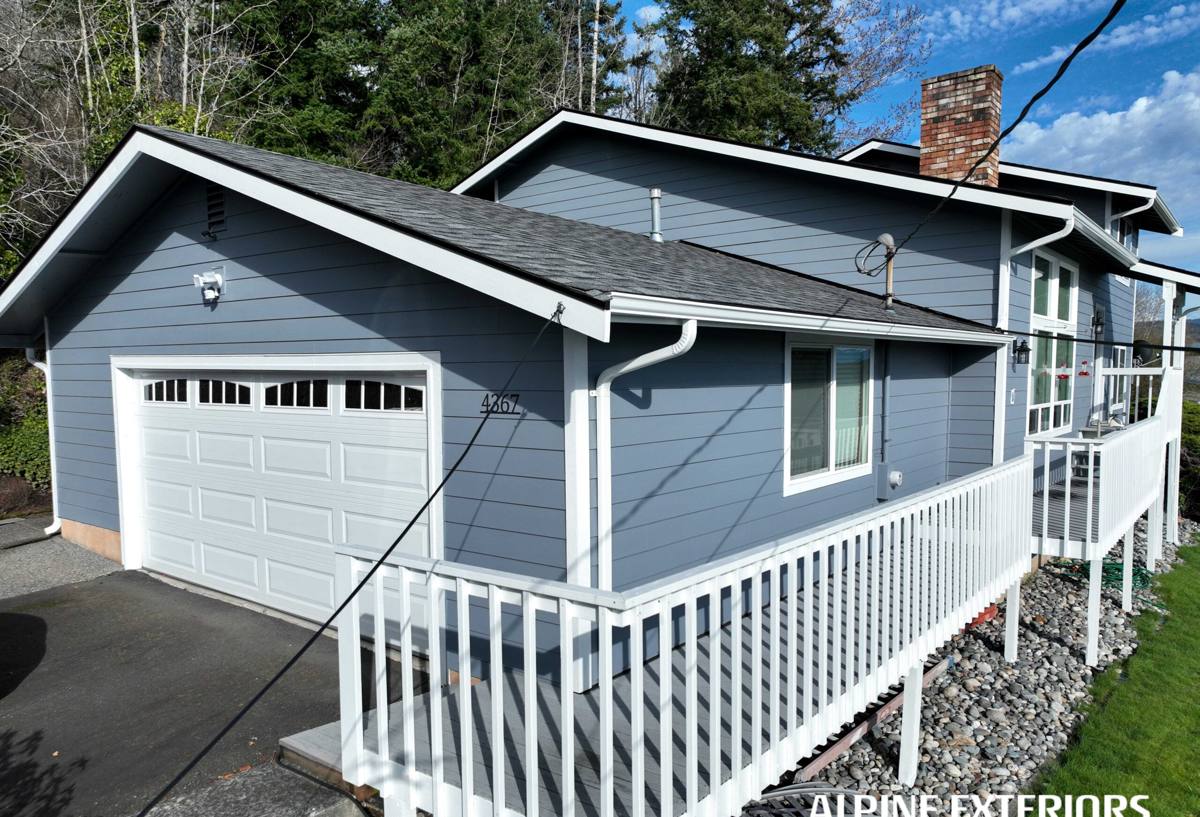
What Ferndale's Climate Actually Does to a Roof
Salt Air and Corrosion
Homes closer to Bellingham Bay and the Strait of Georgia deal with airborne salt that settles on metal flashing, fasteners, and any exposed hardware. Over years, uncoated or poorly rated fasteners corrode, flashing seams weaken, and small leaks start at the metal-to-shingle transitions long before the field of the roof shows wear. This is one of the most common causes of a "surprise" leak on an otherwise young-looking roof in this area.
Driving Rain
Wind-driven rain doesn't just fall on a roof, it gets pushed under laps, into nail heads, and along ridge and valley lines that weren't detailed tightly. A roof system that relies on gravity alone to shed water — rather than proper underlayment, sealed laps, and correctly lapped flashing — will eventually let water find its way in during a strong Pacific storm.
Moss and Moisture Retention
Whatcom County's tree cover and damp shoulder seasons make moss growth close to a given on north-facing slopes and shaded roof planes. Moss holds moisture against the roofing material, degrades granule surfaces on asphalt shingles, and can work its way under shingle tabs and lift them over time. A roof designed with moss in mind — proper ventilation, the right underlayment, and materials that resist moss anchoring — ages noticeably slower than one that isn't.
Signs a Ferndale Roof Needs Replacing, Not Patching
- Granule loss showing as bald patches or heavy grit in gutters and downspouts
- Curling, cupping, or lifted shingle edges, especially on south and west-facing slopes
- Soft or spongy decking felt underfoot in the attic or from a ladder inspection
- Daylight visible through the roof deck from inside the attic
- Repeated leaks in different spots after previous patch repairs
- Heavy, established moss growth that keeps returning after cleaning
- Rusted, cracked, or missing flashing around chimneys, vents, and valleys
- A roof approaching or past the manufacturer's rated service life for our climate
Not every one of these means a full tear-off is the only option, but when several show up together, patch repairs usually end up costing more over a few years than doing the job right once.
What a Correct Roof Replacement Involves Here
Tear-Off and Deck Inspection
We remove the old roofing down to the deck rather than layering over it. This lets us actually see the sheathing condition, which matters a lot in Ferndale — moisture that's been working under an aging roof for years often shows up as soft or delaminated decking that has to be replaced before new roofing goes down. Skipping this step is the single most common reason a "new" roof fails early.
Underlayment Suited to Wind-Driven Rain
Given how much of our weather comes in with real wind behind it, we don't treat underlayment as an afterthought. Synthetic underlayment with properly lapped and sealed seams, and self-adhered ice-and-water membrane at eaves, valleys, and roof penetrations, gives the roof a real second line of defense when wind pushes water past the surface layer.
Ventilation That Actually Works
Balanced intake and exhaust ventilation keeps attic moisture from condensing against the underside of the deck — a real risk in our damp climate — and it helps the roof shed heat and moisture evenly, which reduces the conditions moss thrives in. A roof replacement is the right time to correct ventilation problems, since the deck and vents are already exposed.
Flashing and Fasteners Rated for Salt Air
Around chimneys, skylights, valleys, and wall transitions, we use flashing and fastener materials chosen to hold up against airborne salt rather than the cheapest option available. This is a small cost difference at install time and a large difference in how long the details around the roof stay watertight.
Moss-Resistant Material Choices
Where moss pressure is heavy — shaded planes, north slopes, homes tucked under tree cover — we talk through material and, where appropriate, zinc or copper strip options that discourage regrowth. No roof is moss-proof forever, but the right choices at install noticeably slow how fast it comes back.
Roofing Material Options for Ferndale Homes
| Material | How It Handles Our Climate | Maintenance Reality |
|---|---|---|
| Architectural asphalt shingle | Good performance when paired with proper underlayment and ventilation; widely used and cost-effective | Periodic moss treatment recommended, especially on shaded slopes |
| Metal roofing (standing seam) | Sheds driving rain very well and resists moss anchoring better than shingles | Requires salt-tolerant fasteners and coatings near the water; higher upfront cost |
| Synthetic/composite shingle | Resists moisture absorption and holds up well to repeated wet-dry cycles | Moderate maintenance; product-specific warranty terms vary |
| Cedar shake | Traditional look but retains moisture longer, which accelerates rot and moss growth in our climate | Higher upkeep; we'll walk you through the honest trade-offs before you commit |
We don't push a single product on every home. The right call depends on your roof's exposure, slope orientation, tree cover, and budget, and we'll walk through that with you specifically rather than defaulting to whatever's easiest to install.
Our Process for a Ferndale Roof Replacement
- On-site inspection — we look at the deck, ventilation, flashing points, and the specific exposure your roof has to salt air, wind, and shade
- Written estimate — clear scope, material options, and pricing with no vague allowances
- Tear-off and deck repair — old roofing removed, any compromised sheathing replaced before anything new goes down
- Underlayment and flashing installation — detailed at every valley, penetration, and transition, not just the open field
- Roofing material installation — installed to manufacturer spec so warranty coverage stays intact
- Ventilation check and final walkthrough — we confirm intake/exhaust balance and walk the finished roof with you
- Cleanup — magnetic sweep for nails and full site cleanup before we consider the job done
Why a Locally Established Crew Matters for This
A roofing crew that already works Whatcom County knows which slopes in a given neighborhood tend to hold moss, how far inland salt exposure realistically matters, and how the local building department handles permitting and inspections for a full replacement. That's not a marketing point — it's the difference between a crew guessing at your roof's problems and a crew that's seen the same failure patterns on other Ferndale homes and knows how to build around them from the start.
Cost Factors for Ferndale Roof Replacement
| Factor | Why It Affects Cost |
|---|---|
| Roof size and pitch | More surface area and steeper pitches mean more material and labor time |
| Deck condition | Rotten or soft sheathing found during tear-off adds repair cost but is necessary to do right |
| Material choice | Asphalt, metal, and composite options carry different material and install costs |
| Number of penetrations | Chimneys, skylights, and vents each need individual flashing detail |
| Access and tear-off complexity | Steep roofs, multiple layers of old roofing, or tight site access add labor time |
| Ventilation upgrades | Correcting inadequate intake/exhaust ventilation is worth budgeting for at replacement time |
We won't quote a number without seeing the roof, but we'll always give you a written estimate that breaks these factors down so you know what you're actually paying for.
Simple Maintenance Checklist Between Replacements
- Clear moss growth on a regular schedule rather than letting it establish for years
- Keep gutters and downspouts clear so water isn't backing up under roof edges
- Trim back tree limbs that keep roof sections shaded and damp
- Have flashing points checked after major windstorms
- Address small leaks immediately rather than waiting for them to spread
If your roof is showing wear, has had repeated leaks, or you're just not sure how much life it has left, we're glad to come take a look. A free, no-pressure estimate is a good way to find out where things actually stand — use the form below to get started.