 Fairhaven Siding
 Roof Repair in Puget: A Job That Has to Account for the Weather
Puget sits close enough to the water that its roofs take a different beating than a roof twenty miles inland. Salt-laden air moves through fasteners, flashing, and vent boots faster than most homeowners expect. Driving rain off the Sound doesn't just fall straight down — it gets pushed sideways under wind, which means it finds every gap a roof has, not just the ones facing up. And Whatcom County's long, wet moss season keeps organic growth working on shingles and shakes for most of the year, not just a few weeks. A roof repair here has to be diagnosed and built with all three of those things in mind, or it fails again within a season or two.
This page is about roof repair specifically for homes in Puget — what tends to go wrong, what a repair actually needs to include to hold up, and how we approach the work when we're called out.
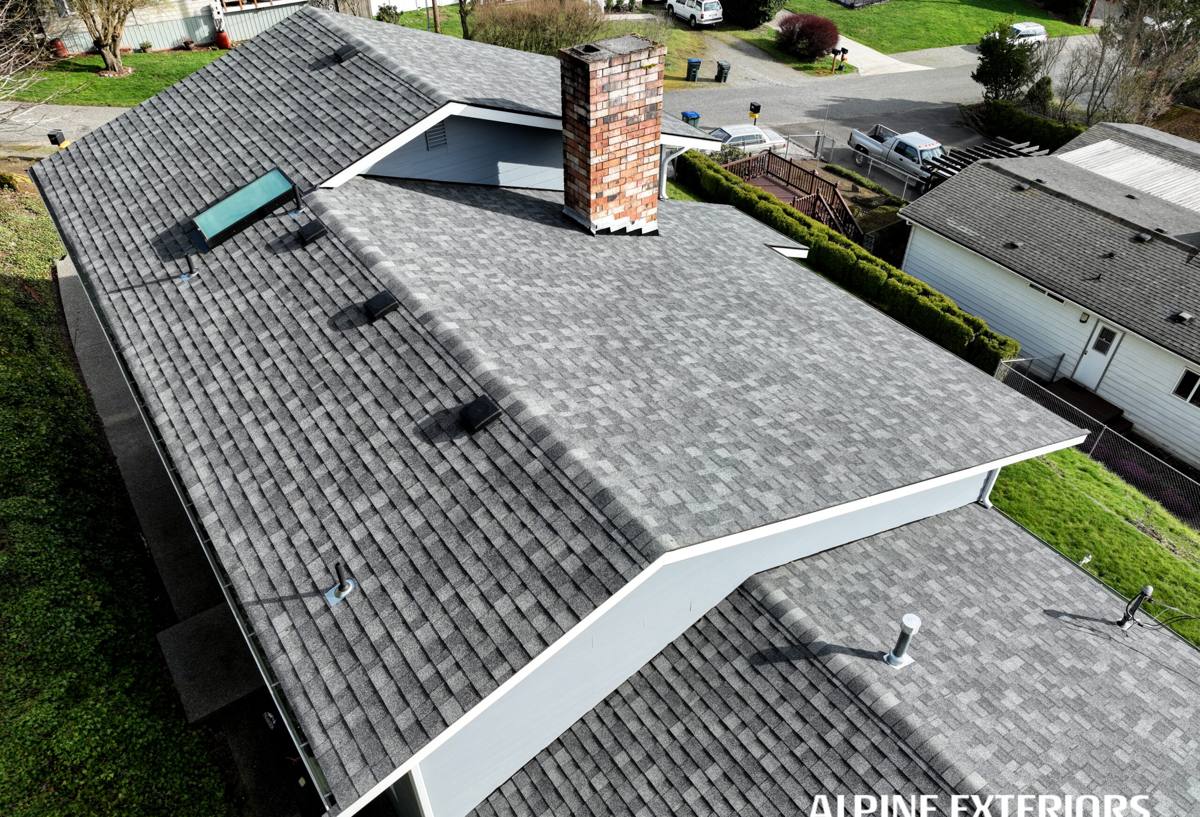
What Salt Air, Driving Rain, and Moss Do to a Puget Roof
Salt air and metal fatigue
Any exposed metal on a roof — nail heads, flashing, vent caps, gutter hangers — is in a slow fight with salt in the air. Standard galvanized fasteners can start to show rust streaks and pitting years before they would inland. Once a fastener corrodes, it loses its grip, and a shingle or piece of flashing that was watertight starts to lift slightly with every wind event. That small lift is usually where a leak starts.
Driving rain and wind-driven water
Puget gets weather off the water that doesn't behave like a typical rain shower. Wind pushes rain sideways and even slightly upward under eaves, which means water can get behind flashing and under shingle laps that would stay dry in a calmer climate. Roofs built or repaired without accounting for this — using minimum-code underlayment, short flashing runs, or gaps at penetrations — tend to develop leaks at valleys, chimneys, skylights, and wall-to-roof transitions first.
Moss season and moisture retention
Whatcom County's moss season runs long because the combination of shade, moisture, and mild temperatures rarely lets roofs fully dry out. Moss holds water against the roofing surface, which accelerates granule loss on asphalt shingles and rot on wood-based components. It also lifts shingle edges as it grows, creating small channels for water to travel under the roof covering instead of over it. A roof that looks "just cosmetically mossy" from the ground is often already compromised underneath.
Common Roof Repair Calls We See in Puget
- Flashing failure at chimneys, skylights, and where a roof meets a wall — usually corrosion or a seam that was never properly sealed and lapped
- Valley leaks where two roof planes meet and water volume is highest, especially after moss or debris has built up
- Wind-lifted or missing shingles along edges and ridges, where fastener corrosion has weakened the hold
- Moss-related shingle degradation — granule loss, curling, and soft spots on north-facing or shaded slopes
- Soffit and fascia rot from long-term moisture intrusion at the roof edge
- Vent boot cracking where rubber seals around plumbing stacks have dried and split, letting water track down into the attic
What a Correct Repair Actually Involves
A roof repair that holds up in this climate is more than swapping out a few shingles. Here's what we consider non-negotiable on a Puget repair:
1. Find the real source, not just the visible damage
Water travels. A stain on a ceiling or a soft spot in the decking can show up several feet from where the water actually entered the roof. We trace leaks back to their source — often a flashing detail or a fastener failure — instead of patching the spot where the damage happens to be visible.
2. Check the decking, not just the surface
If moisture has been getting in for a while, the plywood or plank decking underneath may be softened or delaminating. Repairing over compromised decking just hides the problem; it needs to be identified and replaced before new roofing goes down.
3. Rebuild flashing details properly
Flashing isn't a place to save time. Step flashing, counter-flashing, and valley metal need to be correctly lapped, fastened with corrosion-resistant materials, and sealed at the right points — not just caulked over as a shortcut.
4. Match materials and match them well
Weathered shingles rarely match new ones exactly. We're upfront about that before starting: a repair blends in reasonably well, but a roof that's five, ten, or fifteen years old will show some color difference at the patch. If a close match matters to you, we'll tell you honestly whether a repair or a broader replacement makes more sense.
5. Address the moss, not just the leak
If moss contributed to the failure, we clean the affected area and talk through options for slowing regrowth. Fixing the leak without addressing ongoing moss growth just means a repeat call in a year or two.
Our Process for a Puget Roof Repair
- Inspection and diagnosis — We get on the roof (weather permitting) and in the attic if needed, and trace the actual path of the water rather than guessing from the ground.
- Honest scope and estimate — You get a plain-language explanation of what's failing, what it will take to fix correctly, and a written estimate before any work starts.
- Repair or replace recommendation — If the roof is old enough or damaged enough that repair isn't the sound long-term choice, we'll say so rather than patch something that needs more.
- The repair itself — Decking replaced where needed, flashing rebuilt to shed water correctly, matching roofing material installed, and moss cleared from the work area.
- Walkthrough — We show you what was done and why, including anything we'd recommend keeping an eye on going forward.
Repair or Replace? What Actually Drives That Decision
Not every roof problem in Puget needs a full roof replacement, and not every leak is a quick fix. These are the factors that actually matter:
| Factor | Favors Repair | Favors Replacement |
|---|---|---|
| Roof age | Under roughly 12-15 years for asphalt | Nearing or past manufacturer's expected service life |
| Extent of damage | Localized — one valley, one flashing detail, a section of shingles | Widespread granule loss, multiple leak points, or moss damage across several slopes |
| Decking condition | Solid, no soft spots found | Soft, delaminated, or rotted in multiple areas |
| Material availability | Matching shingle/shake still reasonably close in color and profile | Discontinued product or heavy weathering makes matching impractical |
| History of repeat leaks | First occurrence at this location | Same area has been patched more than once already |
We'll walk you through where your roof falls on this table and give you a straight recommendation — not the most expensive option by default.
Our Standard for Materials on Repair Work
We don't cut corners on the parts of a repair that are hardest to inspect later. On Puget jobs, that means using corrosion-resistant fasteners and flashing metals suited to a coastal-influenced environment rather than whatever is cheapest at minimum code, and underlayment rated for wind-driven rain rather than a basic felt product. These choices cost a little more up front but are the difference between a repair that lasts and one that calls us back out in two winters. We're happy to explain the trade-offs of any product choice in plain terms before we start.
Why a Crew That Already Works in Puget Matters
Roofing generalists who don't work this specific stretch of Whatcom County often diagnose Puget leaks the way they would inland — assuming standard flashing and standard fasteners are enough. A crew that's already worked roofs in this neighborhood knows which details tend to fail here first, how aggressive the moss growth gets on shaded slopes near the water, and how wind-driven rain behaves on this coastline specifically. That local pattern recognition shortens the diagnosis and reduces the odds of a repair that misses the actual cause.
Signs You Should Have Your Roof Looked At
- Visible moss growth, especially thick or spreading patches on shaded slopes
- Granules collecting in gutters or at downspout outlets
- Any ceiling stain, even a small one, after a windy rainstorm
- Shingles that look lifted, curled, or missing along ridges and edges
- Rust streaks below metal flashing or vent caps
- Soft or spongy feeling on a walkable roof section
- Daylight visible through the roof deck from inside the attic
Catching any of these early usually keeps the fix to a repair instead of letting it grow into a replacement.
Get a Straight Answer on Your Roof
If you're dealing with a leak, moss buildup, or storm damage on a Puget roof, we'll come take a look, explain what's actually going on, and give you an honest read on repair versus replacement — no pressure either way. Fill out the form below for a free estimate.