 Fairhaven Siding
 Roof Repair Built Around Marietta's Coastal Conditions
Marietta sits close enough to the water that its roofs take a different kind of beating than homes further inland in Whatcom County. Salt-laden air off the bay, long stretches of driving rain, and a moss season that can run from fall through spring all combine to age a roof faster than the calendar suggests. A roof that would go another five years in a drier, more sheltered part of the county can already be showing real trouble here. Repairing roofs in this specific area means understanding that combination, not just patching whatever is visible from the ground.
This page covers roof repair specifically for the Marietta area — what local homes tend to need, what a correct repair actually involves, and how we approach the work as a crew that's already familiar with these conditions.
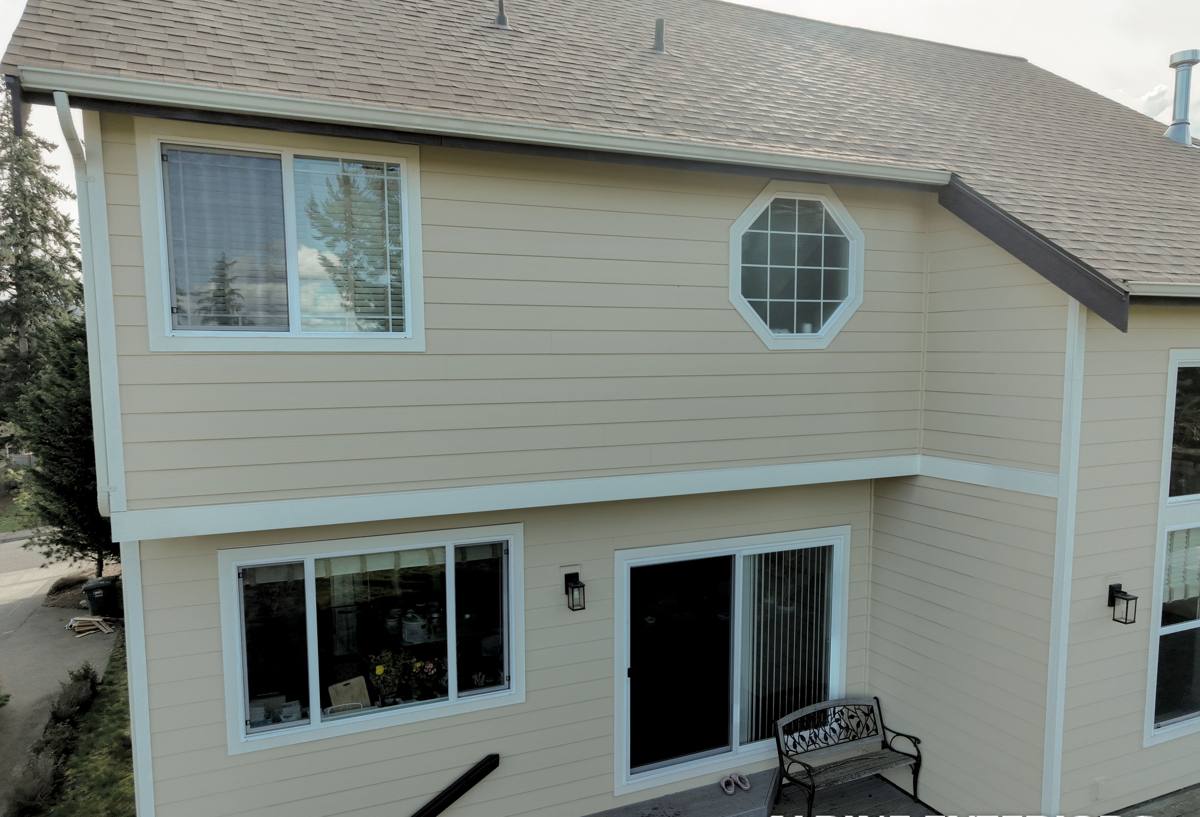
What Coastal Exposure Does to a Marietta Roof
Salt Air and Metal Fatigue
Salt in the air accelerates corrosion on anything metal on the roof — flashing, fasteners, vent caps, and gutter hardware. Galvanized fasteners that would last decades elsewhere can start rusting and backing out years early this close to the water. Once a fastener loosens or a flashing edge corrodes through, water has a direct path into the roof deck, usually well before any obvious leak shows up inside the house.
Driving Rain and Wind-Driven Moisture
Rain that comes in sideways behaves differently than rain falling straight down. It gets pushed up under shingle edges, into valleys, and around flashing that would otherwise shed water fine in calmer conditions. Roofs here need laps, seals, and flashing details that account for wind-driven rain, not just gravity drainage. This is one of the most common gaps we find on older repairs — work that was done correctly for a dry-climate roof but not for a coastal one.
Moss, Algae, and Extended Wet Season
A long moss season means organic growth has more time to establish itself on shaded slopes, north-facing sections, and anywhere debris collects. Moss doesn't just look bad — it holds moisture against the roofing material, lifts shingle edges as it grows, and works its way under laps over time. Left unaddressed, it turns a cosmetic issue into a moisture problem that shortens the life of the roof.
Signs a Marietta Roof Needs Repair, Not Just Cleaning
- Granules collecting in gutters or at downspout outlets, especially after a windy rain event
- Dark streaking or thick moss growth concentrated on shaded or north-facing slopes
- Soft spots, sagging, or discoloration on the interior ceiling below the roofline
- Rust staining running down from flashing around chimneys, vents, or skylights
- Lifted, curled, or missing shingles after a wind event
- Water stains in the attic near valleys, chimneys, or where two roof planes meet
- Visible daylight through the roof deck when viewed from inside the attic
Any one of these on its own might be minor. Two or more together, especially near flashing or valleys, usually means water has already found a way in and the repair needs to address the cause, not just the symptom.
Where Leaks Actually Start on Coastal Roofs
Most roof leaks in this area don't start in the open field of the roof — they start at transitions. Flashing around chimneys, skylights, and sidewalls; valleys where two slopes meet; and penetrations for vents and plumbing stacks are where wind-driven rain and moss growth do the most damage. A repair that only addresses the shingles in the open field while ignoring these transition points is a temporary fix at best.
Flashing Failure
Flashing is thin metal, and thin metal is exactly what salt air attacks fastest. Once flashing corrodes or a sealant joint fails, water tracks down behind it and can travel a surprising distance before showing up as a stain inside the house — which is why the leak location on the ceiling rarely matches the actual entry point on the roof.
Valley Wear
Valleys concentrate water flow from two roof planes into one channel, and in a driving rain they also concentrate wind pressure. Worn valley material, or valleys that were never properly woven or metal-lined for this climate, are a recurring repair point on older homes in the area.
Moss-Lifted Shingles
As moss colonies grow under and around shingle tabs, they physically lift the shingle edge. That gap is enough for wind-driven rain to get underneath, especially on the exposed, weather-facing side of a roof.
What a Correct Repair Involves
A proper roof repair in Marietta goes beyond swapping out a few damaged shingles. Our process typically includes:
- On-roof inspection — checking the actual repair area plus adjacent flashing, valleys, and penetrations, since coastal leaks rarely stay contained to one spot
- Attic check — looking for water staining, wood discoloration, or insulation damage that shows how far moisture has already traveled
- Moss and debris removal — clearing growth and organic buildup from the repair area and surrounding slopes before any patching begins
- Deck assessment — confirming the roof deck underneath is sound before new material goes down; soft or rotted decking gets replaced, not covered over
- Flashing and underlayment repair — replacing corroded or failed flashing with corrosion-resistant material and properly lapped underlayment suited to wind-driven rain
- Matching and finishing — installing repair materials that match the existing roof as closely as possible and sealing all transitions correctly
Skipping the deck check or the flashing work to save time is how a "repaired" roof leaks again within a year or two — often in the exact same spot.
Repair Approaches: Cost Factors and Trade-Offs
| Repair Scope | Typical Situation | What It Addresses | Trade-Offs |
|---|---|---|---|
| Spot shingle repair | Isolated wind or impact damage, roof otherwise sound | Localized leak or missing shingles | Lowest cost, but won't fix underlying flashing or moss issues nearby |
| Flashing replacement | Corroded or failed flashing at chimney, valley, or wall | Root cause of many hidden leaks | More labor-intensive than shingle work, but prevents recurring leaks |
| Moss treatment and removal | Heavy growth on shaded slopes, early-stage lifting | Ongoing moisture retention and shingle lifting | Needs periodic maintenance to stay ahead of regrowth in this climate |
| Section re-roofing | Widespread wear or repeated leaks in one area | Aging material across a full slope | Higher cost than a patch repair, but longer-lasting than repeated spot fixes |
Broad ranges only — every roof and access situation is different, which is why we look at the actual roof before quoting anything. The right approach depends on the roof's age, how localized the damage is, and whether the deck underneath is still sound.
Why a Locally Familiar Crew Matters Here
A crew that regularly works roofs in and around Fairhaven and Marietta already knows which slopes tend to hold moss the longest, how far wind-driven rain typically travels under a lifted shingle edge, and which fastener and flashing choices actually hold up against salt air over time. That familiarity shortens the diagnostic process — we're not guessing at what coastal exposure does to a roof, we're checking against what we've already seen on similar homes nearby.
It also means less back-and-forth. A crew unfamiliar with the area might treat a moss-lifted shingle as an isolated shingle problem and miss that it's part of a broader pattern across a shaded slope. Catching that pattern early is often the difference between a modest repair now and a much larger one in a few years.
Maintenance Between Repairs
Coastal conditions mean roof maintenance can't be a "once and done" task. A few habits go a long way toward extending the life of a repair:
- Clear gutters and downspouts before the heavy rain months so water isn't backing up under the roof edge
- Remove moss and debris from shaded slopes at least once a year, before it has a chance to establish
- Trim back overhanging branches that keep sections of the roof damp and shaded longer than the rest
- Have flashing and valleys visually checked after any major windstorm, not just after a leak appears
- Address small issues — a lifted shingle, a rust spot on flashing — while they're still small repairs
Get an Honest Look at Your Roof
If you're seeing moss buildup, staining, or a leak that's been slow to show itself, it's worth having someone look at the roof directly rather than guessing from the ground. We're happy to come out, walk the roof, check the attic side, and give you a straight answer on what's actually going on — no pressure, no upsell. Use the form below to request a free estimate for your Marietta home.