 Fairhaven Siding
 Storm Damage in Puget Isn't Like Storm Damage Inland
Puget sits close enough to Bellingham Bay and the open water that its roofs take a different kind of beating than homes ten miles inland. The wind doesn't just blow — it drives rain sideways under shingle tabs and flashing that would stay dry in a calmer spot. Salt-laden air corrodes fasteners and metal flashing faster than manufacturers account for in their standard warranty language. And the long, wet moss season here means a roof that's already carrying a layer of moss and organic buildup is more vulnerable when a real windstorm hits, because that buildup holds moisture against the roofing material and can lift shingles that are already loose.
When we get called out to Puget after a storm, the damage is rarely a single dramatic hole. It's usually a combination of things working together — a few lifted or torn shingles, a flashing seam that's been slowly failing for a season, and moss-softened decking underneath that made the whole assembly weaker than it looked from the ground.
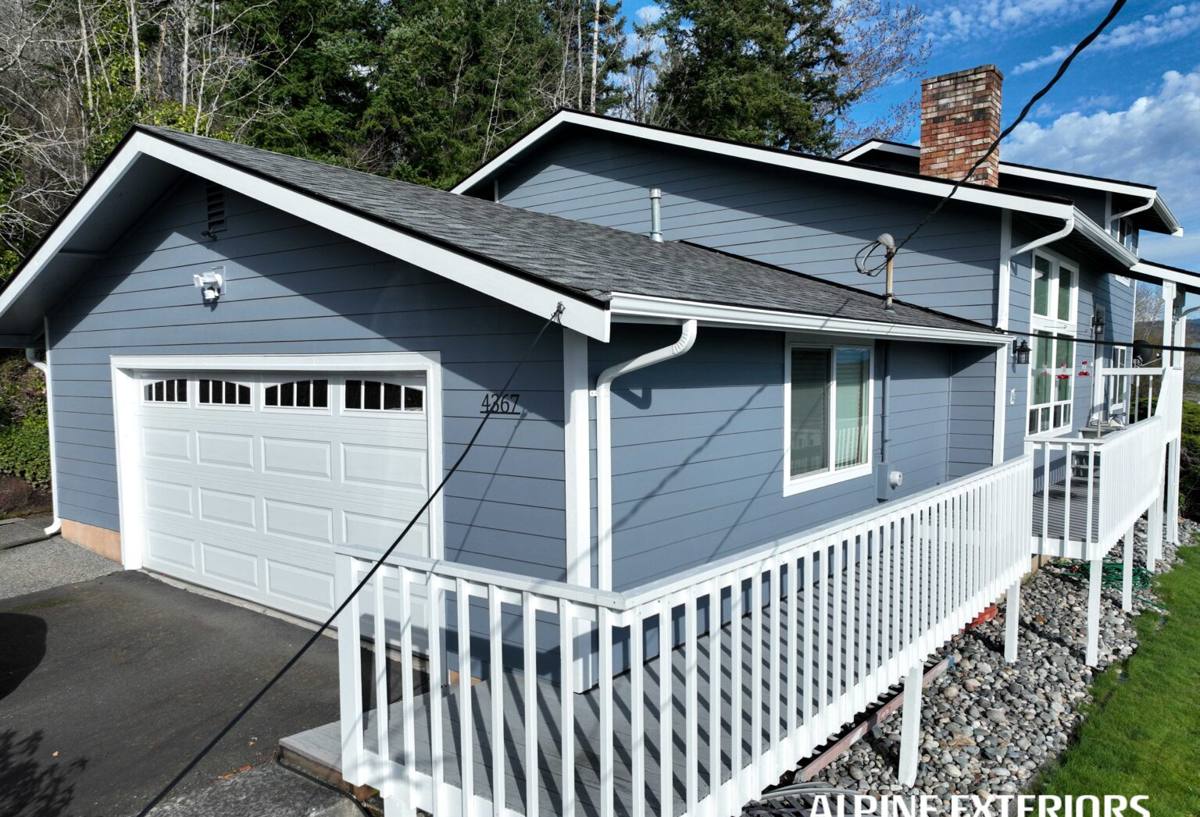
What Storm Damage Actually Looks Like on a Puget Roof
Wind-Driven Rain Intrusion
Whatcom County storms frequently bring sustained wind alongside rain, not just gusts. That sustained pressure pushes water uphill under shingle edges and around vent boots, chimney flashing, and valley metal — areas that handle straight-down rain fine but weren't designed for wind pressure from the side. This is the single most common cause of interior leaks we trace back to a storm event here.
Granule and Shingle Loss
High wind strips protective granules off asphalt shingles and can tear tabs loose entirely, especially on roofs that were already past their prime or installed with older nailing patterns. Bare or thin spots age the shingle faster and expose the underlayment directly to UV and moisture.
Moss-Related Lift and Softening
Fairhaven's moss season runs long compared to drier parts of the state. Moss mats hold water against the shingle surface and roof deck, and in a windstorm that moisture-softened material is more prone to tearing or lifting than a clean, dry roof. Storm damage and moss damage often show up in the same repair visit because they compound each other.
Flashing and Fastener Corrosion
Salt air off the bay accelerates corrosion on exposed metal — flashing, nail heads, gutter fasteners. A flashing seam that would last a decade elsewhere can start failing several years sooner this close to the water, and a storm is often what finally pushes a marginal seam into an active leak.
What a Correct Repair Involves
A storm damage repair that actually holds up in this environment isn't just "replace the shingles that blew off." It has to account for what's underneath and around the visible damage.
- Full inspection of the affected slope, not just the spot where the leak showed up inside — wind damage is often wider than the visible interior stain
- Check of decking condition under any lifted or missing shingles for soft spots, rot, or moss-related softening
- Inspection of flashing at every penetration nearby — chimneys, vents, valleys — since one failed seam is often a sign others are close behind
- Matching replacement shingles as closely as possible in color and profile so the repair doesn't stand out as a patch
- Re-sealing and re-nailing per manufacturer spec, not just tucking a shingle back down and calling it done
- Checking gutters and downspouts near the repair area, since storm debris often clogs drainage right where the damage occurred
Skipping the decking check is the most common shortcut we see from repairs that fail again within a season or two. If the deck underneath is soft from prior moisture, new shingles laid over it won't hold a proper nailing pattern and the repair won't seal correctly.
Our Process for a Puget Storm Repair
- Emergency assessment. If there's active water intrusion, we prioritize stopping it — tarping or temporary flashing to protect the interior while a full repair is scheduled.
- Full-slope inspection. We walk the entire affected roof plane, not just the reported leak spot, checking for wind lift, granule loss, and flashing condition.
- Documentation. Photos and a written summary of what we find, useful whether you're filing an insurance claim or just want a clear record of the roof's condition.
- Written scope and estimate. You get a plain explanation of what needs fixing, what it involves, and an honest range before any work starts.
- Repair. Matched materials, correct fastening and flashing detail work, and a check of adjacent areas that took wind stress even if they didn't fail yet.
- Final walkthrough. We show you what was done and flag anything worth watching, like a marginal flashing run nearby that held this time but is aging.
Repair or Replace? How We Help You Decide
Not every storm-damaged roof needs full replacement, and not every roof that "just needs a patch" is actually a good repair candidate. The right call depends on the roof's age, how widespread the damage is, and what condition the rest of the roofing system is in.
| Factor | Leans Repair | Leans Replacement |
|---|---|---|
| Roof age | Under 12-15 years, shingles otherwise intact | Nearing or past expected shingle lifespan |
| Damage extent | Isolated to one slope or a small area | Multiple slopes, widespread granule loss |
| Decking condition | Solid, dry decking under the damaged area | Soft, rotted, or moss-softened decking found |
| Flashing condition | Adjacent flashing still sound | Multiple flashing points corroded or failing |
| Moss history | Light, manageable moss growth | Heavy, long-term moss buildup across the roof |
We'll always tell you honestly which side of that line your roof falls on. A repair that's likely to need redoing again next storm season isn't a good use of your money, and we'd rather say so upfront.
What This Costs, in General Terms
Every roof and every storm is different, so exact pricing depends on what we find during inspection. As a general guide, isolated shingle and flashing repairs after a storm are typically a modest, contained expense, while repairs that involve deck replacement, multiple flashing points, or a larger affected area run higher. We'll never give you a number before we've actually looked at the roof, and we'll explain what's driving the estimate line by line.
Insurance Claims and Documentation
Wind and storm damage is often covered under homeowner's insurance, but claims move faster and more smoothly when the damage is documented clearly and promptly. We provide photo documentation and a written scope of damage that you can hand directly to your adjuster. We're happy to answer an adjuster's questions about what we found and why the recommended repair is what it is, but the claim itself is between you and your insurer — we stick to giving you an honest, accurate account of the roof's condition.
Why It Matters That We Already Work in Puget
A roofing crew that's worked this stretch of Fairhaven and the surrounding Whatcom County shoreline knows what to expect before we even get on the roof. We know that a flashing seam here needs to be checked more often than one further inland, that moss buildup on a north-facing slope in this climate is basically guaranteed without maintenance, and that a storm from the water direction stresses a roof differently than one from inland. That local pattern recognition means fewer surprises during the inspection and a repair that accounts for the next storm, not just the one that just happened.
After a Storm: What to Check
- Look for shingle pieces or granules collected in gutters or on the ground around the house
- Check ceilings and upper closets for new water stains, even faint ones
- Look at the roofline from the ground for obviously lifted, curled, or missing shingles
- Note any new drips, drafts, or musty smells in the attic if you have access
- Check that gutters and downspouts are draining freely, not backed up with storm debris
- Avoid climbing onto the roof yourself after a storm — wet, moss-covered surfaces are genuinely dangerous
If you're seeing any of these signs, it's worth having someone look before the next round of rain finds its way further into the structure.
Get an Honest Look at Your Roof
If a recent storm has you wondering about your roof's condition, we're glad to come out, take a real look, and give you a straight answer — whether that's a small repair, a larger fix, or just confirmation that things held up fine. The estimate is free, there's no pressure, and you'll get a clear explanation of whatever we find. Just fill out the form below to get started.