 Fairhaven Siding
 Puget's Exterior Walls Work Harder Than Most
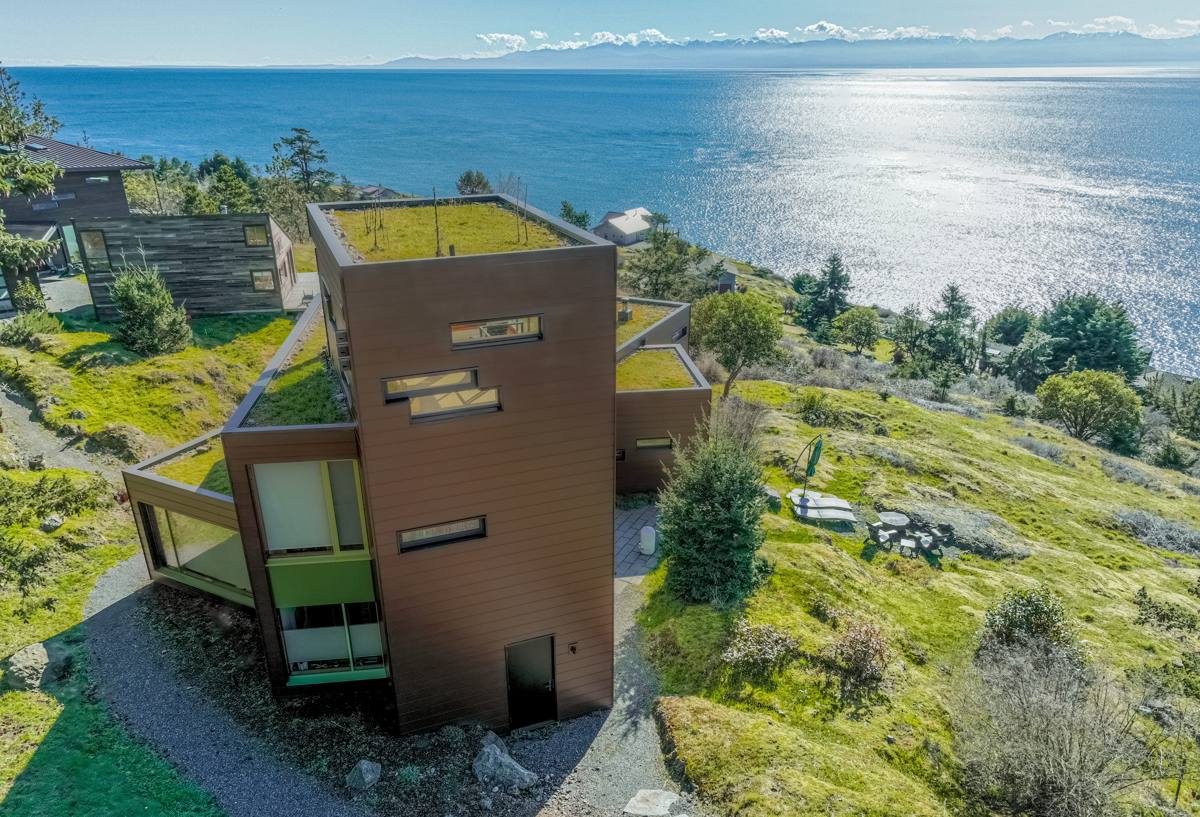
Puget sits close enough to Bellingham Bay that salt-laden air is part of daily life, and that changes what siding has to survive. Add Whatcom County's long wet season, driving rain that comes in sideways off the water, and a moss season that can stretch for most of the year in shaded yards, and you have an exterior envelope that never really gets a break. Homes here don't fail because of one bad storm. They fail slowly, from years of moisture finding the same weak seam, the same under-flashed window, the same spot where paint gave up first.
Fiber cement siding, installed correctly, is built for exactly this kind of grind. It doesn't rot, it doesn't feed insects, and it holds a factory finish far longer than field-applied paint on wood or engineered wood products. But "installed correctly" is doing a lot of work in that sentence, and it's the whole point of this page.
What Salt Air, Rain, and Moss Actually Do to Siding
Salt air
Airborne salt is corrosive to metal fasteners, trim flashing, and any exposed hardware. It also accelerates the breakdown of lower-grade paints and coatings, which is one reason a factory-cured finish matters more here than it would fifty miles inland.
Driving rain
Wind-driven rain doesn't just wet a wall surface — it tests every joint, seam, and penetration for a path inward. Siding that relies on caulk alone to keep water out will eventually let water in, because caulk is a maintenance item, not a permanent seal.
Moss and constant dampness
Shaded, north-facing, and tree-covered walls in Puget stay damp longer between dry spells. Moss and algae growth on siding isn't just cosmetic; the moisture it holds against the surface keeps the substrate wet longer, which is hard on any material that isn't inherently rot- and water-resistant.
Why We Only Install Fiber Cement Here
We get asked why we don't install vinyl, LP SmartSide, primed spruce, or cedar, and the honest answer is that all four ask a homeowner to accept a trade-off that doesn't make sense in this climate. Vinyl can warp and its seams rely on lap joints that aren't sealed, which matters when rain is coming in horizontally. Engineered wood products and primed wood siding depend on an intact factory or field coating to keep moisture out of a wood-based core — once that coating is compromised, the core is vulnerable in exactly the kind of damp, mossy conditions Puget produces. Cedar is a genuinely attractive natural material, but it needs regular refinishing to hold up to UV and moisture, and skipping that maintenance in a wet coastal climate shortens its life fast.
James Hardie fiber cement is cement, sand, and cellulose fiber — there's no wood core to rot and nothing for insects to eat. It's non-combustible, it doesn't expand and contract with moisture the way wood-based products do, and Hardie's ColorPlus factory finish is baked on and warrantied separately from the substrate. That combination is why it's the only product we put on homes.
What a Correct Fiber Cement Install Involves
Fiber cement siding is only as good as the assembly behind it. A good-looking job and a correct job aren't always the same thing, and the difference shows up years later as moisture damage that's expensive to trace and fix.
- A continuous water-resistive barrier (WRB) installed shingle-style so every layer drains down and out, not into the wall
- Properly lapped and sealed window and door flashing, integrated with the WRB rather than just caulked over it
- Correct fastener type, spacing, and depth per Hardie's published fastening schedules — over-driven or under-driven nails are a common source of premature failure
- Minimum clearance from grade, decks, and roof lines so siding doesn't sit in standing water or constant splash-back
- Rain screen or drainage gap furring where conditions call for it, so any moisture that does get behind the siding can actually drain and dry
- Factory-cut and factory-primed edges kept intact, with field cuts back-primed before installation
- Proper caulking at butt joints and penetrations — used as a secondary defense, not the only line of defense
Skip any one of these and you can still end up with a wall that looks right for a few years and fails behind the surface. This is the part of the job that doesn't show up in a photo, and it's the part that actually determines how the siding performs through a Puget winter.
James Hardie Product Lines That Fit This Climate
HZ5 climate engineering
Hardie engineers its siding to different climate zones, and the Pacific Northwest falls under the HZ5 designation, built for wetter, more moisture-exposed conditions. That's the baseline we install from — not a general-purpose product pulled from a warehouse shelf.
Lap siding vs. panel siding
Lap siding (in various exposure widths) is the most common choice for full-house applications and gives the classic horizontal shadow line. Panel siding is often used for accent sections, gable ends, or a more modern look, and can be paired with battens. Both are available in smooth or cedar-textured finishes.
ColorPlus factory finish
Rather than field-painting after install, ColorPlus siding arrives with a baked-on, UV-cured finish that resists fading and chipping better than site-applied paint, and it comes with its own finish warranty separate from the product warranty on the substrate. In a salt-air environment, that factory cure is a real advantage over paint applied on-site in variable weather.
How Siding Options Compare for Puget Conditions
| Factor | Vinyl | Engineered Wood / LP | Cedar | James Hardie Fiber Cement |
|---|---|---|---|---|
| Moisture / rot resistance | Won't rot, but seams leak | Depends on intact coating | Needs regular refinishing | No wood core to rot |
| Salt air durability | Can chalk and fade | Coating wears, exposes core | Weathers, needs upkeep | Factory finish holds up well |
| Fire resistance | Melts / not fire-rated | Combustible | Combustible | Non-combustible |
| Typical maintenance | Low, but seams degrade | Periodic recoating needed | Refinish every few years | Occasional wash, factory finish |
| Warranty structure | Varies by manufacturer | Varies, product-specific | None (natural material) | Substrate + finish warranties |
How Our Process Works in Puget
- On-site assessment — we look at drainage, sun and shade exposure, existing moisture damage, and how the current siding has actually performed on your specific lot.
- Tear-off and substrate check — old siding comes off and we inspect sheathing for hidden rot before anything new goes up. This is where problems from a prior install usually surface.
- WRB and flashing installation — the water-resistive barrier and all window, door, and penetration flashing go in first and get integrated properly, not layered as an afterthought.
- Fiber cement installation — Hardie lap or panel siding installed to manufacturer fastening and clearance specifications, with attention to drainage at every horizontal surface.
- Trim, caulking, and final inspection — joints sealed as a secondary barrier, trim finished, and a walk-through so you understand what was done and why.
Living With Fiber Cement Through a Puget Winter
One of the practical benefits of fiber cement in this climate is how little it asks of you day to day. It won't warp, and it doesn't need re-staining. That said, a few habits keep it looking and performing its best in a salt-air, high-moss environment:
- Rinse the siding once or twice a year to clear salt residue, pollen, and early moss growth before it takes hold
- Keep gutters clear so overflow doesn't run down the wall and stay against the base of the siding
- Trim back vegetation and tree cover where possible to reduce shaded, damp zones that encourage moss
- Check caulking at joints and penetrations every couple of years and re-caulk if it's cracked or pulling away
- Address any impact damage or chipped finish promptly rather than letting exposed substrate sit through a wet season
Why Local Experience in Puget Matters
A correct fiber cement install depends on decisions that are specific to the site: how much clearance a wall needs given its exposure to prevailing wind and rain, where a rain screen gap earns its keep versus where it's unnecessary, and how aggressively to detail flashing on a wall that gets more salt spray or more shade than the one next door. A crew that's worked houses in and around Puget and Fairhaven already knows how these conditions tend to show up on a wall, which cuts down on guesswork and callbacks. That local pattern recognition is worth more than a generic install checklist, because Whatcom County's coastal exposure doesn't behave like a drier inland market.
Cost Factors Worth Understanding Upfront
Every home is different, but the same variables tend to drive cost on a fiber cement project in this area: the amount of tear-off and substrate repair needed, wall complexity (gables, dormers, trim detail), whether a drainage plane upgrade is warranted for a particularly exposed elevation, and the siding profile and finish chosen. A home with existing moisture damage from a prior siding failure will cost more to correct properly than one starting from a sound substrate — which is one more reason a thorough tear-off inspection matters before any new siding goes up.
If you're weighing options for a Puget-area home, we're happy to walk the property, point out what your specific exposure is dealing with, and put together a free, no-pressure estimate for a correctly installed James Hardie system — just fill out the form below.