 Fairhaven Siding
 Why Metal Roofing Makes Sense in Bellingham
Bellingham sits right up against the Salish Sea, which means homes here deal with a different mix of weather stress than roofs inland. You get salt-laden air off the water, long stretches of steady rain, and winters mild enough that moss and moisture never really stop working on a roof surface. A metal roof, installed correctly, handles that combination better than most other roofing materials — but "installed correctly" is doing a lot of work in that sentence. A metal roof is only as good as the flashing, fastening, and underlayment details underneath it.
We work on homes throughout Bellingham and the surrounding Whatcom County area, and we see the same failure patterns over and over: panels that look fine from the street but are corroding at fastener heads, flashing that was never properly lapped, and moss holding moisture against seams that were never designed to sit wet. This page covers what a Bellingham home actually needs from a metal roof, what a correct installation looks like, and how we approach the job.
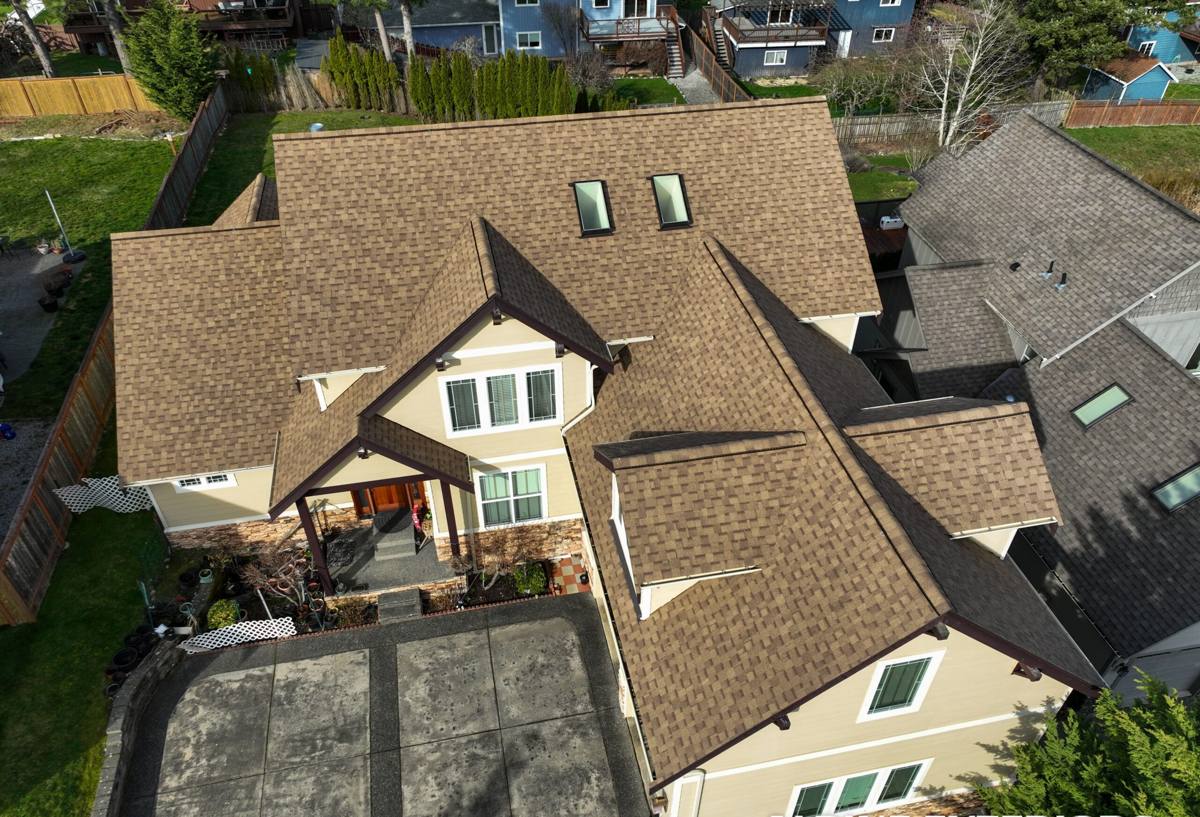
What Bellingham's Climate Puts a Roof Through
Salt Air and Corrosion
Homes within a mile or two of Bellingham Bay get a steady, low-grade dose of salt in the air. It's not the same exposure you'd see right on the open coast, but it's enough over years to accelerate corrosion at any point where a fastener, cut edge, or dissimilar metal is exposed. This is why fastener quality and coating selection matter more here than they would on a roof fifty miles inland — a cheap fastener or an unsealed cut edge is where rust starts first, and it starts years before it becomes visible from the ground.
Driving Rain and Wind-Driven Water
Bellingham doesn't get the heaviest rainfall totals in the state, but storms here often come with wind that drives rain sideways into laps, valleys, and wall-to-roof transitions. A roof that's fine in a straight-down rain can still leak in a wind-driven storm if the underlayment, flashing, and panel overlap weren't detailed for that condition. This is one of the most common reasons we get called out to older metal or shingle roofs that "never leaked before."
A Long Moss Season
Mild temperatures and consistent moisture mean moss and algae have a long growing window here — longer than most homeowners moving from drier climates expect. Moss doesn't just look bad; it holds water against a roof surface, works into seams and laps, and on organic materials like wood shakes it accelerates decay. Metal sheds moss more easily than most roofing materials because there's no rough surface for spores to take hold of, but it isn't immune, especially in shaded, north-facing sections of a roof that stay damp longer.
Panel Types and Finishes We Work With
Not all metal roofing is the same product wearing different colors. The panel profile, the metal itself, and the coating all affect how a roof performs in a marine climate like Bellingham's.
| Option | What It Is | Best Fit |
|---|---|---|
| Standing seam | Concealed fasteners; raised seams lock panels together | Most Bellingham homes — best water-shedding and longest service life near salt air |
| Exposed-fastener (screw-down) | Panels fastened through the face with exposed screws | Lower upfront cost; requires more maintenance on fastener seals over time |
| Metal shingle / shake profile | Interlocking panels styled to resemble shingles or shakes | Homeowners who want a traditional look with metal's durability |
| Steel (coated) | Strong, moderate cost, needs a quality protective coating | Most applications when properly coated and detailed |
| Aluminum | Naturally corrosion-resistant, lighter, costs more | Homes closest to the water where salt exposure is highest |
For most Bellingham homes we recommend standing seam over exposed-fastener systems specifically because of the climate here — concealed fasteners mean fewer penetration points for water and salt air to work on over the life of the roof. Exposed-fastener panels aren't a bad product, but the washers under those screws are a wear item, and in a marine climate they wear faster. We'll walk you through the honest tradeoffs for your specific roof rather than pushing one system for every job.
What a Correct Metal Roof Installation Actually Involves
The panels themselves get most of the attention, but the parts of the job that determine whether a metal roof lasts are mostly invisible once it's finished.
Underlayment and Ice-and-Water Protection
A synthetic underlayment goes down across the whole deck, with a self-adhering ice-and-water membrane at eaves, valleys, and anywhere water tends to concentrate. In a climate with as much sustained rain as Bellingham gets, this layer is the backup plan for the times wind pushes water somewhere the panels alone won't stop.
Flashing at Every Transition
Chimneys, skylights, dormers, and wall-to-roof intersections are where the vast majority of roof leaks actually start — not the flat field of panels. Flashing has to be formed and lapped correctly, sealed with compatible materials, and tied into the underlayment properly, not just caulked over.
Fastening and Metal Compatibility
Fasteners need to match the panel metal to avoid galvanic corrosion, and they need to be driven correctly — not overdriven, not underdriven — so the seal washer does its job without deforming. This is a detail that's easy to rush and hard to inspect once the roof is finished, which is exactly why it needs to be done right the first time.
Room for Thermal Movement
Metal expands and contracts with temperature more than most roofing materials. Panels and fastening systems need to allow for that movement, especially on standing seam roofs where clips — not direct fasteners — are what let the panel move without stressing the seams.
Ventilation
A metal roof over a poorly ventilated attic can trap moisture underneath it, which defeats a lot of the moisture-resistance benefit you're paying for. Ridge and soffit ventilation should be part of the plan, not an afterthought.
Our Process, Start to Finish
- On-site inspection of the existing roof, deck condition, and any problem areas — including a look at flashing details and ventilation, not just the roof surface.
- Honest recommendation on tear-off versus re-roofing over an existing layer, based on deck condition and local code — metal is often installed over an existing roof, but only when the deck and structure support it.
- A written estimate that spells out panel type, underlayment, flashing approach, and fastener specification, so you know exactly what's going on your home before work starts.
- Deck prep and repair of any soft or damaged sheathing found once the old roofing is off.
- Underlayment, flashing, and panel installation, with attention to the wind-driven rain and salt-air details covered above.
- Final walk-through and cleanup, including a magnetic sweep for stray fasteners around the property.
Cost Factors for a Bellingham Metal Roof
Metal roofing costs more upfront than an asphalt shingle re-roof, and the final number depends on enough variables that a flat quote without seeing your roof isn't worth much. Here's what actually moves the price up or down.
| Factor | Effect on Cost |
|---|---|
| Panel system (exposed-fastener vs. standing seam) | Standing seam runs higher due to labor and material |
| Metal type (steel vs. aluminum) | Aluminum typically costs more, pays off in salt-air durability |
| Roof complexity (valleys, dormers, penetrations) | More cuts and flashing detail means more labor |
| Tear-off vs. install over existing roof | Tear-off adds cost but lets us inspect and repair the deck |
| Roof access and pitch | Steep or hard-to-access roofs increase labor time |
| Coating and finish quality | Better coatings cost more but resist fading and corrosion longer |
We'd rather walk your roof and give you a real number than throw out a range that doesn't apply to your house. There's no cost or obligation to have us take a look.
Keeping a Metal Roof Working in a Moss-Prone, Salty Climate
Metal roofing is genuinely low-maintenance compared to most alternatives, but "low-maintenance" isn't the same as "no maintenance" in this climate. A short annual routine goes a long way:
- Clear leaves and debris from valleys and gutters each fall, before winter rains arrive.
- Check shaded, north-facing sections for moss or algae buildup where sunlight doesn't dry the surface as quickly.
- Look at flashing around chimneys, vents, and skylights for lifted edges or failed sealant.
- Trim back overhanging branches that keep sections of roof shaded and damp.
- After major windstorms, do a visual check for lifted or loose panels rather than waiting for a leak to show up inside.
None of this requires a specialist visit every year — most of it is a homeowner with a pair of binoculars and a ladder for the gutters. If something looks off, that's the time to call, before a small flashing issue turns into a deck repair.
Signs Your Current Roof Should Be Replaced, Not Patched
Not every roof problem in Bellingham means a full replacement, but there are signs that patching is just delaying the inevitable:
- Rust or corrosion spreading across a metal roof rather than staying isolated to one fastener or cut edge.
- Repeated leaks at the same flashing point after previous repairs.
- Heavy, sustained moss growth that keeps returning after cleaning, especially on wood shake or aging composition roofs.
- Soft or spongy roof decking discovered during inspection, a sign moisture has been getting through for a while.
- A roof original to a home over 20-25 years old, nearing or past its expected service life.
Why a Crew That Already Works Bellingham Matters
Roofing in a marine climate isn't the same trade as roofing somewhere dry, and a crew that mostly works inland projects can miss details that matter here — fastener selection for salt exposure, flashing details built for wind-driven rain, or simply which sections of a roof stay damp longest through a Whatcom County winter. We're based in Fairhaven and work Bellingham roofs regularly, which means we already know how wind comes off the water in different parts of town, how local permitting works, and what a roof actually has to survive here, not just in a spec sheet.
It also means we're not a crew that flew in for storm season and will be gone if a flashing detail needs a second look next year. A metal roof is a long-term investment in your home — it's worth having someone local stand behind the work.
Get a Free, No-Pressure Estimate
If you're weighing a metal roof for your Bellingham home, or you've got an existing metal or shingle roof showing signs of wear, we're happy to take a look and give you a straight answer — no pressure, no inflated estimate to scare you into a bigger job than you need. Use the form below to request a free estimate.