 Fairhaven Siding
 Windows in Marietta Take a Different Kind of Beating
Marietta sits close enough to Bellingham Bay that its houses live with a version of weather most inland Whatcom County neighborhoods don't deal with day to day. Salt-laden air moves in off the water, wind-driven rain hits west- and south-facing walls at an angle instead of straight down, and the wet, shaded months bring on a moss and mildew season that seems to stretch longer every year. None of that is dramatic on its own, but it adds up on window frames, sills, and seals faster than most homeowners expect.
A window that would be fine for another twenty years in a drier part of the state can be showing real problems here after twelve or fifteen. That's not a knock on any particular product — it's just what happens when moisture, salt, and temperature swings work on a window's weak points year after year. This page is about what that means specifically for window replacement in Marietta, and what a correct job looks like when it's done for this climate rather than a generic one.
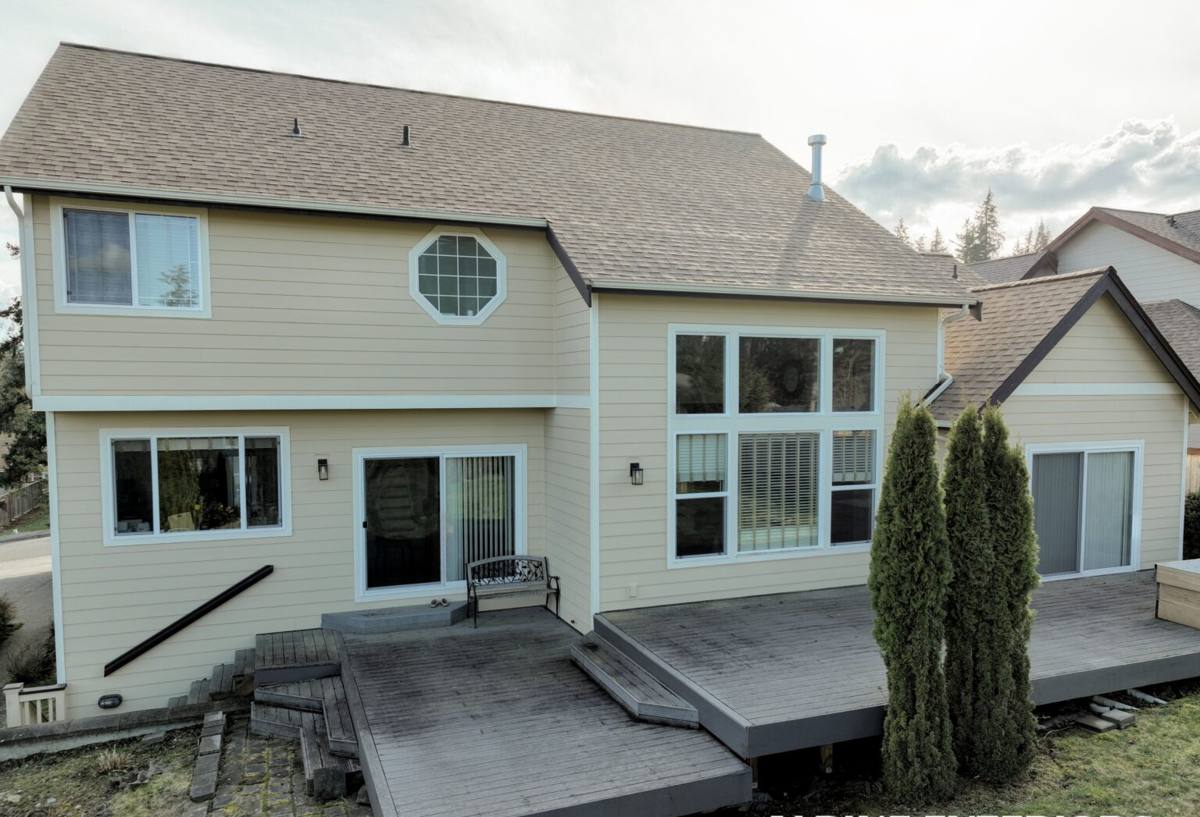
What Salt Air and Coastal Moisture Actually Do to a Window
Frames and Hardware
Airborne salt is mildly corrosive, and it settles on everything outdoors, including window frames and the metal hardware inside them — hinges, locks, balance mechanisms, and screws. Aluminum-clad and steel components are the most exposed to this over time; even coated hardware can start to pit or bind up faster near the water than it would ten miles inland. Wood frames without a durable, well-maintained finish take on moisture at a similar rate, which is what starts rot at the sill and lower corners.
Seals and Glazing
The insulated glass unit (the sealed pane assembly) in a modern window depends on an intact edge seal to keep argon gas in and moisture out. Constant humidity and repeated wet-dry cycling stress that seal. Once it fails, you'll usually see fogging or a cloudy haze between the panes — that's a sign the seal is gone, not something that can be cleaned out, and it means the glass unit (or the whole window) needs replacing.
Wood Trim and Sills
Driving rain that hits a wall at an angle finds its way into any gap in the flashing or caulking around a window opening, and wood sills and trim are usually the first thing to show it — soft spots, dark staining, or paint that keeps bubbling and peeling no matter how often it's redone. Moss and algae holding moisture against the lower sash and sill only make this worse.
Signs a Marietta Home Needs Window Replacement, Not Just Repair
Not every problem window needs full replacement. But in a coastal, high-moisture area, some symptoms are worth taking seriously before they spread into the wall framing around the window.
- Fogging or haze trapped between the panes of double-pane glass
- Soft, spongy, or visibly rotted wood at the sill, jambs, or lower corners
- Windows that are hard to open, close, or lock — often a sign the frame has shifted or swollen
- Persistent drafts or a cold wall around the window even with the sash fully closed
- Paint that blisters or peels repeatedly at the same window despite repainting
- Visible daylight or a whistling sound around the frame during windy, wet weather
- Condensation forming on the interior glass or sill on cold mornings
- Moss or dark streaking building up on the sill or exterior trim between cleanings
Any one of these can be a minor fix. Several together, especially on a wall that takes the brunt of the weather off the water, usually means the window and the opening around it need a proper look before more damage spreads into the framing.
What a Correct Window Replacement Job Actually Involves
Removal and an Honest Look at What's Underneath
Pulling the old window is where a lot of problems either get caught or get covered up. We check the framing, sill, and sheathing around the opening for rot or water damage before setting anything new. If the substrate underneath is compromised, installing a new window over it just buys a few years before the same problem resurfaces — so that gets addressed first, not skipped.
Flashing and Weatherproofing
This is the part that matters most for a house exposed to driving rain, and it's also the part that's invisible once the job is finished. Proper flashing — sill pan, side flashing, and head flashing integrated correctly with the house wrap — is what actually keeps wind-driven rain out of the wall cavity. A window can be a great product and still leak if the flashing detail around it is wrong. We install it in the sequence that sheds water down and out, not up into the wall.
Insulation and Air Sealing
The gap between a new window frame and the rough opening needs to be sealed and insulated correctly — not overpacked with rigid foam that can bow the frame, and not left with gaps that let air and moisture track in behind the trim. Done right, this is a big part of what makes a replacement actually feel warmer and quieter, not just look newer.
Finish Work
Interior and exterior trim, caulking, and paint or finish get completed to match the house, with attention to sealing the exterior trim joints that will be exposed to the weather going forward.
Choosing Window Materials for a Coastal Whatcom County Home
There isn't one "best" window material for every house — it depends on exposure, budget, and how much upkeep you want to take on. Here's how the common options generally hold up in a salt-air, high-rain environment like Marietta's.
| Frame Material | Coastal Durability | Maintenance | Typical Trade-offs |
|---|---|---|---|
| Vinyl | Very good — won't corrode or rot | Low; occasional cleaning | Limited color/finish options; can't be repainted |
| Fiberglass | Excellent — dimensionally stable, resists moisture | Low | Higher upfront cost than vinyl |
| Wood (unclad) | Weakest without diligent upkeep near salt air | High; refinishing needed regularly | Classic look, but rot risk if maintenance lapses |
| Wood, aluminum- or fiberglass-clad | Good on the exterior face if cladding and flashing are done right | Moderate | Interior wood warmth with better exterior protection |
| Aluminum | Fair — can pit or corrode faster in salt air unless well-coated | Low to moderate | Thin sightlines, but more thermally conductive |
For homes taking direct exposure off the bay, we generally steer clients toward vinyl or fiberglass frames for the durability-to-maintenance ratio, or a well-detailed clad-wood window if the look matters more and the owner is comfortable with some upkeep. This is a professional recommendation based on how these materials perform in this specific climate — not a claim that any one product is defective, just an honest read on maintenance burden and moisture behavior over time.
Full-Frame Replacement vs. Insert Replacement
There are two basic approaches to swapping out a window, and which one fits depends on the condition of the existing frame.
| Approach | What It Involves | Best For |
|---|---|---|
| Insert (pocket) replacement | New window fits inside the existing, sound frame | Frames still solid and square, faster turnaround |
| Full-frame replacement | Old frame removed entirely down to the rough opening | Rot, water damage, or a frame that's shifted out of square |
Insert replacement is quicker and less disruptive, but it only makes sense when the existing frame is genuinely sound — otherwise you're sealing a problem inside the wall rather than fixing it. Given how often we find sill or framing damage on older coastal-facing windows in this area, we don't recommend an insert install until we've actually confirmed the frame underneath is good.
Our Window Replacement Process
- On-site walkthrough of each window being replaced, checking framing, sills, and current air/water sealing
- Written scope and estimate covering material choice, approach (insert vs. full-frame), and a clear price
- Scheduling that accounts for weather — we avoid opening up walls during an active storm system
- Careful removal with an inspection of the opening before anything new goes in
- Repair of any rot or damaged framing found, documented and discussed with you before proceeding
- Installation with proper flashing sequencing, insulation, and air sealing
- Interior and exterior trim and finish work
- Final walkthrough and operation check on every window installed
Why a Crew That Already Works in Marietta Matters
Window replacement done by someone unfamiliar with this specific stretch of coastline often looks fine going in and then leaks or fails early, because the flashing and material choices that work in a drier, more sheltered part of the state aren't always enough here. A crew that regularly works Marietta and the surrounding Fairhaven-area neighborhoods has already seen how driving rain off the bay finds its way into a wall opening, which sills tend to rot first, and which hardware holds up against salt air and which doesn't.
That local pattern recognition shows up in small decisions during the job — how the flashing gets lapped, whether a sill needs extra attention before the new window goes in, what caulking and finish will actually hold up through a wet Whatcom County winter. It's the difference between a window that's installed correctly on paper and one that's installed correctly for this specific climate.
What Affects the Cost of Window Replacement in Marietta
Every project is priced after we've actually looked at the windows and openings involved, since the condition of the existing frame matters as much as the window itself. In general, the main cost factors are:
| Factor | Why It Affects Price |
|---|---|
| Insert vs. full-frame replacement | Full-frame involves more labor and materials |
| Frame material | Vinyl, fiberglass, and clad-wood windows sit at different price points |
| Rot or damage found during removal | Repairing framing or sheathing adds material and labor |
| Window size and type | Larger units, bay windows, and custom shapes cost more than standard single or double-hung sizes |
| Glass package | Double- vs. triple-pane, and coatings for sun or noise, change the per-unit cost |
| Number of windows and access | Whole-house projects and difficult access (second story, tight lots) affect scheduling and price |
As a broad range, homeowners in this area typically see per-window installed pricing run from the low hundreds into the low thousands of dollars depending on these factors — but the only way to get a number you can actually plan around is a written quote after we've seen the windows in person.
Get a Free, No-Pressure Estimate
If your Marietta home has windows showing fog between the panes, soft sills, stubborn drafts, or paint that won't stop peeling, it's worth having them looked at before the damage spreads further into the wall. We'll walk the property, give you a straight assessment of what's actually going on, and put together a written estimate with no pressure to commit on the spot. Use the form below to request your free estimate.