 Fairhaven Siding
 Storm Damage Roof Repair for Happy Valley Homes
Happy Valley sits close enough to Bellingham Bay that its roofs deal with a combination most inland neighborhoods never see: salt-laden air off the water, wind-driven rain that comes in sideways during winter storms, and a moss season that runs longer than almost anywhere else in Washington. None of that is dramatic on its own. Together, over years, it wears down fasteners, flashing, and shingle mat faster than the manufacturer's warranty assumes. When a storm finally does damage, it's usually finishing off something that was already weakened.
This page covers what storm damage roof repair actually looks like for a Happy Valley home — what to check for, what a correct repair involves, and how our process works when you call us after a windstorm or a heavy rain event leaves you with a leak, missing shingles, or damaged flashing.
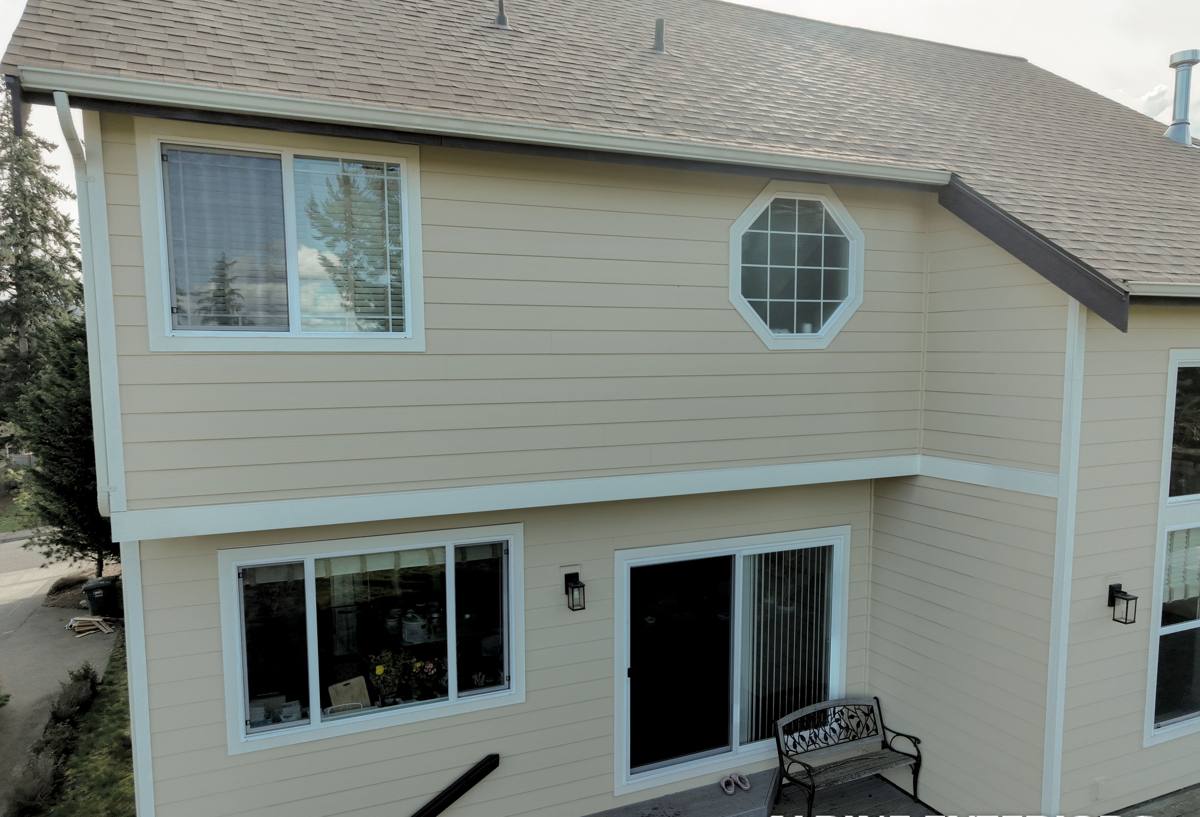
Why Happy Valley Roofs Take a Different Kind of Beating
Salt Air
Proximity to the water means airborne salt settles on roofing metal — flashing, vent caps, gutter hardware, exposed fasteners — and accelerates corrosion. A fastener that would last 25 years inland can start showing rust streaks in half that time this close to the bay. Corroded fasteners back out slightly, and that's often the first crack in a roof's defenses before a storm ever hits.
Driving Rain
Whatcom County storms don't just drop rain straight down — wind off the Salish Sea pushes it sideways and up under laps, flashing edges, and shingle tabs that would stay dry in a calm rain. This is why a roof can look fine from the ground after a windstorm and still be leaking at a valley, a chimney, or a vent boot that took wind-driven water at an angle it was never sealed for.
A Long Moss Season
Mild, wet winters and shaded lots with mature conifers give moss a long runway here — often eight or nine months of active growth. Moss holds moisture against the shingle surface, lifts tabs as it grows under the edges, and adds weight that stresses fasteners and decking over time. A moss-covered roof going into a windstorm is more vulnerable than a clean one, because the moss has already been prying at the shingle edges the wind now catches.
What Storm Damage Actually Looks Like After a Bad Night
After a windstorm or heavy rain event, the damage isn't always obvious from the driveway. What we typically find on a post-storm inspection includes:
- Shingles lifted, cracked, or torn off at ridges and edges where wind pressure is highest
- Flashing pulled loose or bent around chimneys, skylights, and roof-to-wall transitions
- Vent boots and pipe collars with cracked seals from wind flex or age
- Gutters pulled away from fascia or clogged with debris, causing water to back up under the drip edge
- Granule loss in a concentrated area, which weakens the shingle's water resistance even if it isn't torn
- Soft or discolored decking under an area that's been leaking slowly for longer than the storm alone would explain
That last point matters. A lot of what looks like "storm damage" is really storm damage exposing a weak spot — often a moss-compromised shingle or a corroded fastener — that had been building toward failure for a while. A repair that only addresses the visible tear without checking what let it happen isn't a complete repair.
What a Correct Repair Involves
Storm damage repair done right is not just patching the hole. A proper job covers:
- Temporary protection first. If there's an active leak or exposed decking, that gets tarped or covered the same visit to stop water intrusion — that comes before any planning conversation.
- Full-slope inspection, not just the damaged spot. Wind damage rarely stays confined to one shingle. We check the whole slope facing the storm's direction, plus valleys, flashing, and penetrations.
- Deck assessment. If water got under the shingles for any length of time, the decking underneath needs to be checked for soft spots before new material goes down over it.
- Matching materials correctly. Patching with a mismatched shingle color or profile is a cosmetic problem now and a resale problem later. We match existing material when it's still available, or set expectations honestly when it isn't.
- Flashing and fastener corrosion check. Given the salt air here, any exposed metal near the repair area gets a look — replacing a shingle next to corroding flashing just means a second repair call in a year or two.
- Ventilation check. Storm repairs are a good moment to confirm attic ventilation is still working, since trapped moisture accelerates the same mold and rot issues moss growth causes.
Repair vs. Replace: How We Help You Decide
Not every storm-damaged roof needs full replacement, and not every roof is worth patching indefinitely. The honest answer depends on a few factors we walk through with you directly.
| Factor | Leans Toward Repair | Leans Toward Replacement |
|---|---|---|
| Roof age | Under 10–12 years | Nearing or past expected lifespan |
| Damage extent | Localized to one slope or area | Spread across multiple slopes |
| Decking condition | Solid, no soft spots found | Soft, delaminated, or rotted in multiple spots |
| Moss/algae history | Minimal, well-maintained | Heavy, long-term moss buildup underneath shingles |
| Material availability | Matching shingles still made | Discontinued color or profile |
| Prior repairs | First storm-related issue | Repeated patches in the same areas |
We'll give you our honest read on which side of that table your roof falls on. If a repair genuinely solves the problem, that's what we'll recommend — a roof doesn't need to be replaced just because it took storm damage.
Our Process for Happy Valley Storm Calls
When you call us after a storm, here's what to expect:
- Fast response for active leaks. Active water intrusion gets prioritized and temporarily secured quickly, not scheduled a week out.
- On-roof inspection with photos. We document the damage clearly, both for your own records and for insurance if you're filing a claim.
- Straightforward written scope. You get a clear description of what's damaged, what needs to be done, and why — no vague line items.
- Insurance-friendly documentation. If you're working with your insurer, we provide the photos and scope details they typically ask for. We don't handle the claim for you, but we make sure the paperwork on our end supports your case.
- Repair and cleanup. Work is done with attention to matching your existing roof, and the site is cleaned of debris and old material before we leave.
Why It Matters to Hire a Crew That Already Works This Neighborhood
Happy Valley's mix of tree cover, proximity to the bay, and older housing stock means roofs here age differently than roofs a few miles inland. A crew that works this specific area regularly recognizes the difference between fresh storm damage and long-term moss or salt-air deterioration on sight, which means a more accurate scope and fewer surprises once work starts. It also means we're not learning the local wind exposure patterns or typical roofing ages for the first time on your job — we've already seen how storms tend to hit this part of Whatcom County.
There's a practical side too: after a widespread windstorm, response time matters. Crews that already know the neighborhood and its access points move faster than ones driving in blind from further out.
Signs You Should Have Your Roof Checked After a Storm
Even without an obvious leak, these are worth a call:
- Shingle pieces or granules in the gutters or on the ground after high wind
- A ceiling stain that appeared or grew after a storm
- Visible daylight or gaps around a chimney or vent from the attic
- Gutters or downspouts pulled loose or bent
- A slope that looks visibly patchy or uneven compared to the rest of the roof
- Any roof that already had heavy moss before the storm hit
If any of those sound familiar, it's worth having someone look before the next system moves through — Whatcom County rarely gives a long gap between storms in the fall and winter months.
Get an Honest Look at Your Roof
If a recent storm left you with damage — or you're just not sure whether what you're seeing is storm-related or the result of moss and salt air working on your roof over time — we're happy to take a look. The estimate is free, there's no pressure to book anything on the spot, and you'll get a straight answer about whether you're looking at a repair or something bigger. Fill out the form below to get started.