 Fairhaven Siding
 Building Decks for the Happy Valley Climate
Happy Valley homes sit close enough to Bellingham Bay to catch salt-laden air off the water, and close enough to the hills to get pounded by driving rain most months of the year. That combination is hard on decks. A deck built the way it might be built inland — standard fasteners, minimal airflow underneath, decking laid tight against the house — will show its age in Happy Valley within a few seasons. We've built and repaired decks in this neighborhood long enough to know which details matter here and which ones are just extra cost with no real payoff.
This page is about one thing: deck building, done right, for Happy Valley specifically. Not a general overview of decks everywhere — what this particular pocket of Whatcom County actually needs from a deck to hold up.
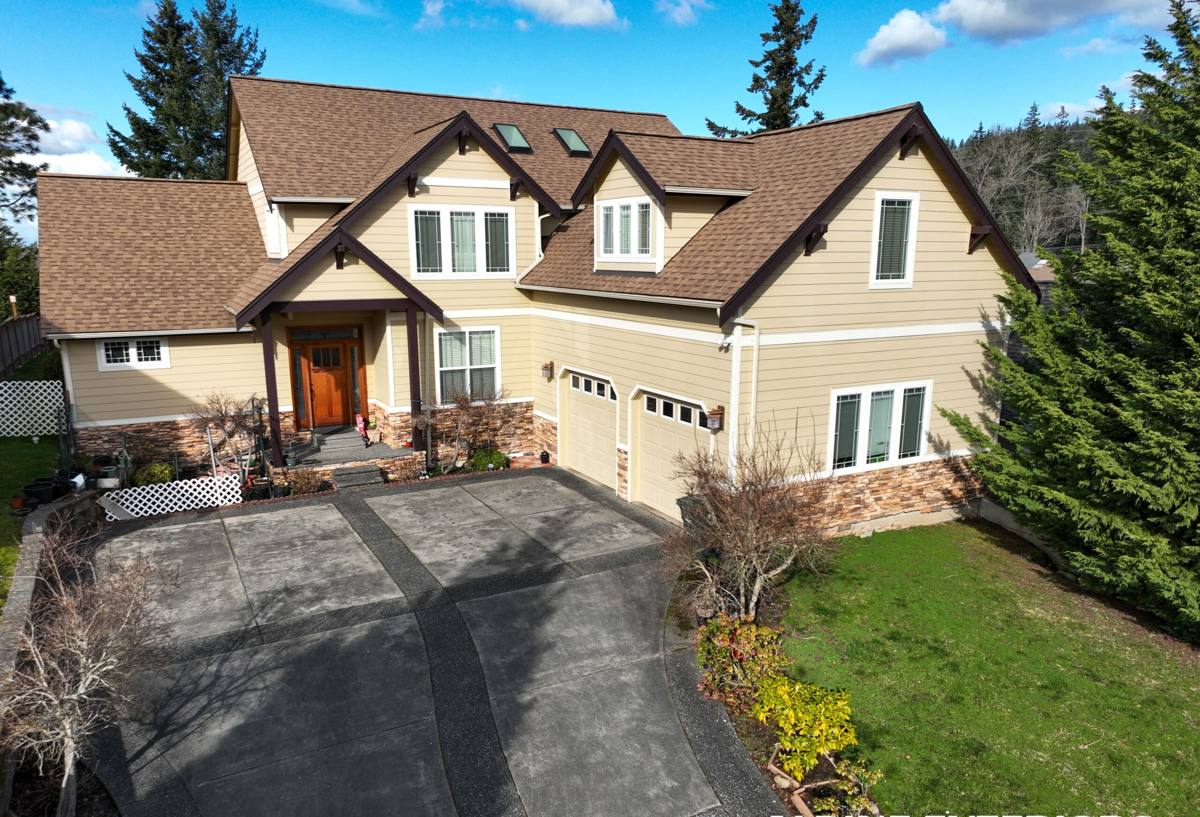
What Whatcom County Weather Does to a Deck
Three things drive almost every deck problem we see in this area, and they compound each other.
Salt Air and Metal Fatigue
Proximity to the water means airborne salt settles on everything outdoors, including your deck's hardware. Standard zinc-coated screws and joist hangers corrode faster here than they would twenty miles inland. Once a fastener starts rusting, it loses holding strength long before it looks obviously bad — which is exactly why we don't cut corners on fastener grade on coastal jobs.
Driving Rain, Not Just Rain
Fairhaven doesn't just get a lot of rain — a good share of it comes in sideways off storms moving through the Strait. That matters for a deck because wind-driven rain gets pushed into places vertical rain never reaches: under railings, behind ledger boards, into the end grain of boards that butt up against the house. Flashing and gaps that would be adequate somewhere calmer aren't always enough here.
A Long Moss Season
Between the moisture and the shade many Happy Valley lots get from mature trees, moss and algae have a long window to establish themselves — often nine or ten months of the year. Moss on a deck surface isn't just cosmetic. It holds moisture against the wood or composite surface, it's slippery when wet, and on wood decking it accelerates rot in exactly the spots where boards are already vulnerable.
What a Correctly Built Deck Actually Involves
A lot of what separates a deck that lasts fifteen-plus years from one that needs major repair in five happens below the surface, before a single visible board goes down.
Footings and Framing
Footings need to be sized and set to local frost depth and soil conditions, not guessed at. Many Happy Valley lots have some slope or fill soil, which changes how footings should be placed and how the frame is leveled. We check soil conditions on-site rather than assuming a standard footing spec will work everywhere on the property.
Ledger Board Flashing
The ledger board — where the deck attaches to the house — is the single most common source of hidden rot on any deck, and it's the point most affected by driving rain in this area. Proper flashing (metal flashing plus a self-adhering waterproof membrane behind it, installed in the correct order relative to the house's siding or house wrap) keeps water from working its way behind the ledger and into the rim joist. This is not a step to shortcut, and it's the one most often done wrong by crews unfamiliar with coastal detailing.
Joist Protection and Airflow
We wrap or tape the tops of joists to keep water from pooling in fastener holes and wicking into the wood. Just as important: the space under the deck needs enough airflow to dry out between storms. A deck built low to the ground with poor ventilation underneath is a moss and rot factory, regardless of what decking material sits on top.
Fasteners and Hardware
For coastal Whatcom County jobs, we use stainless steel or high-grade coated fasteners and hardware rated for corrosive exposure, not the minimum-code hardware that's fine sixty miles inland. It costs more up front. It's cheaper than replacing joist hangers in eight years.
Choosing a Decking Material for a Happy Valley Property
There's no single right answer here — it depends on your budget, how much upkeep you want to do, and how much shade and moisture your particular yard gets. Here's how the common options actually compare in this climate.
| Material | Moss/Moisture Behavior | Maintenance | Typical Lifespan Here |
|---|---|---|---|
| Pressure-treated wood | Absorbs moisture; needs good airflow and regular cleaning to resist moss | Annual cleaning, periodic staining/sealing | 10–15 years with upkeep |
| Cedar | Naturally rot-resistant but still needs airflow; can gray and hold moss if neglected | Regular cleaning, occasional sealing | 15–20 years with upkeep |
| Composite decking | Doesn't absorb water or rot, but surface can still grow algae/moss film in shaded spots | Periodic washing; no staining or sealing | 25+ years, manufacturer-dependent |
Composite generally holds up with the least effort in a wet, shaded climate like this one, which is why we recommend it for a lot of Happy Valley properties — especially decks under tree cover. That said, plenty of homeowners prefer the look and feel of real wood and are happy to keep up with cleaning and sealing on a schedule. We'll walk through the honest trade-offs for your specific lot rather than push one material as a default.
Site Conditions We Look For in Happy Valley
Every lot is different, but a few things come up often enough in this neighborhood that we check for them on every estimate:
- Tree cover and shade patterns — how much sun the deck area actually gets, since shade extends the moss season significantly
- Slope and drainage — where water naturally runs across the yard, and whether the deck's footprint will interrupt or redirect it
- Existing siding and house wrap condition — since the ledger board ties directly into it, we need to know what we're flashing against
- Prevailing wind and rain exposure — which side of the house takes the worst of driving storms, which affects railing and fastener choices
- Height above grade — decks more than a modest height off the ground trigger guardrail requirements and different footing engineering
- Access for equipment — narrow side yards or steep approaches common on hillside lots can affect how materials get to the build site
Permits and Code in Fairhaven and Whatcom County
Most new decks and many deck replacements require a permit, and requirements can hinge on details like deck height, distance from the house, and proximity to property lines. Guardrail height, baluster spacing, and stair rise-and-run are all governed by code, not preference — and inspectors here know what to look for. We handle the permit process as part of the job, including making sure footing depth and attachment details will pass inspection the first time. A deck built without a required permit can turn into a real problem later, whether that's at resale or if something needs repair down the line.
How We Build a Deck: Our Process
- On-site visit and assessment — we look at your yard's slope, sun exposure, drainage, and how the deck will tie into the house, and talk through what you actually want to use the space for.
- Design and material selection — we go over layout, size, railing style, and material options with honest pros and cons for your specific site, not a one-size answer.
- Permitting — we prepare and submit what's needed for your project and coordinate inspections.
- Site prep and footings — footings are dug and set to the depth and spacing the design calls for, adjusted for the actual soil we find.
- Framing and flashing — ledger attachment, flashing, and joist protection go in before anything else, since these are the parts you won't see again once decking is down.
- Decking, railing, and stairs — installed with corrosion-resistant fasteners and spacing that allows for drainage and airflow.
- Final walkthrough — we go over the finished deck with you, including basic care guidance for whatever material you chose.
Keeping Moss and Rot Off a New Deck
A well-built deck still needs some seasonal attention in this climate — the goal of good construction is to make that upkeep manageable, not eliminate it entirely. A simple maintenance rhythm goes a long way:
- Sweep leaves and debris off the surface regularly in fall, when they trap moisture against the boards
- Rinse or lightly scrub visible moss or algae before it has a chance to spread, rather than waiting for a deep clean once a year
- Keep gutters and downspouts near the deck clear so runoff isn't dumping extra water onto or under it
- Check railing posts and stair connections once a year for movement, which can signal a fastener starting to fail
- For wood decking, plan on cleaning and sealing on the schedule the material calls for — skipping a cycle in this climate shows up fast
Why Local Experience Matters for This Job
Deck building isn't exotic work, but building one that actually holds up on a shaded, sloped, salt-air-exposed Whatcom County lot takes judgment that comes from having done it here before — not just having built decks somewhere else. We know which fastener grade actually earns its cost on this coastline, how much airflow a low deck needs under Fairhaven's tree cover, and what the local permitting process expects. A crew that's worked Happy Valley before isn't guessing at any of that on your project.
If you're planning a new deck or need to replace one that's showing its age, we're happy to come take a look and give you a straightforward, no-pressure estimate — just fill out the form below.