 Fairhaven Siding
 Chuckanut's Climate Is Harder on Siding Than Most of Whatcom County
Homes tucked into the wooded slopes above Chuckanut Bay face a combination of stresses that most siding products were never designed to handle at once. There's the salt air rolling off the water, which accelerates corrosion on fasteners and trim and slowly breaks down paint films. There's the driving, wind-pushed rain that comes off Puget Sound and hits walls at an angle instead of falling straight down, forcing water up under laps and around trim if the assembly behind the siding isn't built to shed it. And there's the tree canopy — a lot of Chuckanut properties sit under a mix of conifers and broadleaf trees that keep whole wall sections shaded and damp for days after a storm passes.
Any one of those conditions is manageable. Together, they're why we see premature paint failure, swelling, and moss colonization on siding in this area faster than in drier, more open parts of Whatcom County. A siding choice and installation method that works fine on a sunny, open lot in another neighborhood can underperform on a shaded, bay-facing wall in Chuckanut within a handful of years.
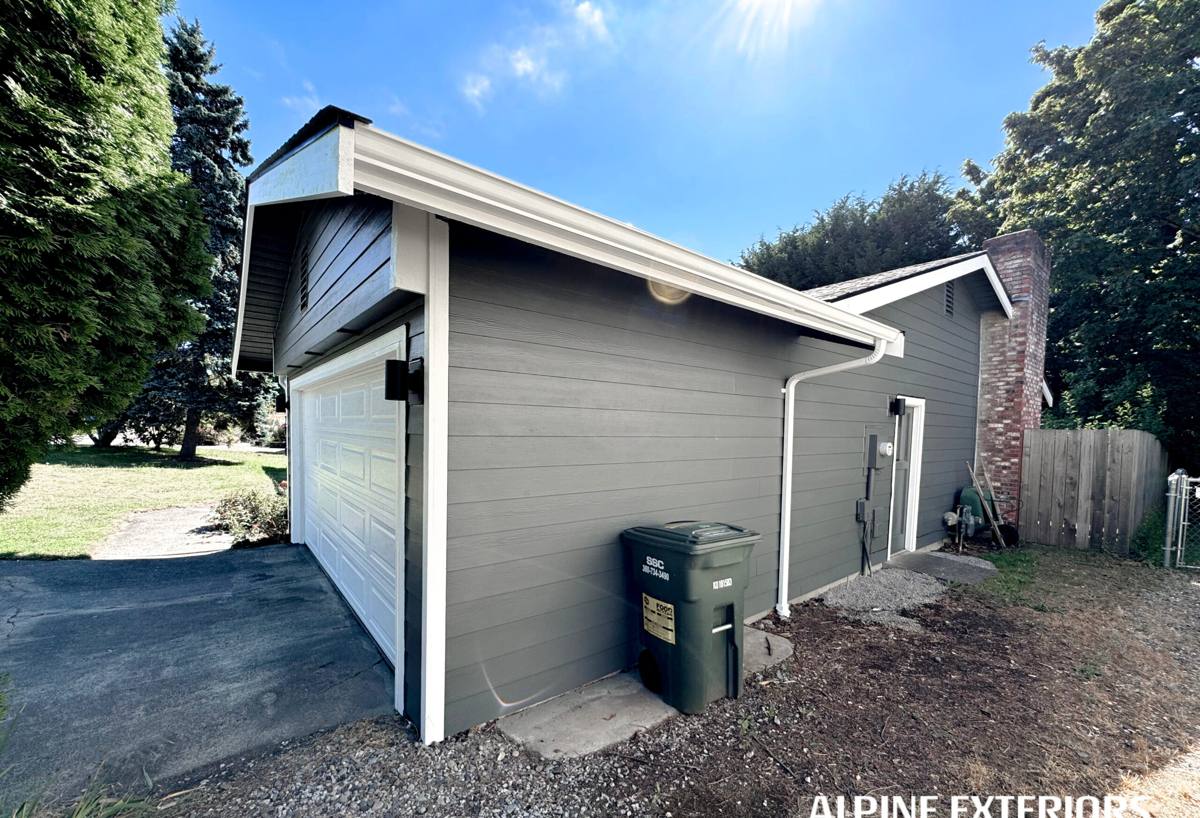
What Siding Actually Needs to Do Here
Before talking about products, it helps to be specific about what "good siding" means for this particular microclimate. It's not one property — it's several working together.
Shed wind-driven rain, not just vertical rain
Standard lap coverage assumes rain falls straight down. On exposed Chuckanut lots facing the water, rain regularly comes in sideways. That means lap overlaps, flashing details, and the drainage plane behind the siding all matter more here than they would on a sheltered inland lot.
Resist salt-driven corrosion and finish breakdown
Airborne salt accelerates rust on exposed fasteners and speeds up UV and moisture damage to paint. Materials and fastener choices that get away with less near Bellingham's inland neighborhoods don't always hold up as well closer to the bay.
Tolerate prolonged shade and moisture without feeding moss and algae
Under a full tree canopy, a wall can stay damp long after a storm has cleared elsewhere. Siding here needs a factory finish and surface texture that doesn't give moss and algae an easy foothold, plus a maintenance routine that keeps growth from taking hold in the first place.
Hold up structurally in a wet, wooded environment
Falling branches, ladder traffic for gutter and roof maintenance, and general wear are more common on tree-covered lots. The siding needs to resist dents and impact damage, not just moisture.
Why We Install Only James Hardie Fiber Cement
We standardized our whole company on James Hardie fiber cement siding, and we don't install vinyl, LP SmartSide, Cemplank, Allura, or bare cedar and primed spruce. That's not a marketing position — it's a decision we made after weighing how each of those products actually performs over time versus how much upkeep they demand from the homeowner.
Fiber cement is non-combustible, which matters given how much dry brush and timber surrounds homes in wooded areas near Fairhaven. It doesn't rot, delaminate, or feed insects the way wood-based products can. Hardie's ColorPlus factory finish is baked on under controlled conditions, which gives it better color retention and adhesion than field-applied paint — a real advantage against UV exposure and salt air. And Hardie engineers regional product lines (their HZ5 formulation, for example) specifically for climates with heavy moisture exposure, which is exactly what a bay-facing, tree-shaded Chuckanut wall deals with.
We're not going to tell you vinyl or engineered wood siding are bad products across the board — they have their place. But for this specific climate, and for the standard we want to stand behind on every job, fiber cement done right is the product we trust.
How Siding Materials Compare for This Climate
| Factor | Vinyl | Cedar / Primed Wood | LP SmartSide | James Hardie Fiber Cement |
|---|---|---|---|---|
| Moisture resistance | Doesn't absorb water, but can warp/buckle and gaps let water behind it | Absorbs moisture; prone to rot without diligent upkeep | Engineered wood core is moisture-resistant but still wood-based | Doesn't rot, swell, or absorb water into its core |
| Salt air / coastal exposure | Can become brittle and discolored over time | Finish breaks down faster; more frequent refinishing needed | Reasonable, but edges are vulnerable if damaged | Formulated for coastal/marine exposure in Hardie's HZ5 line |
| Moss / algae resistance | Can trap moisture behind panels in shaded areas | Readily hosts moss and mildew if kept damp | Moderate; factory finish helps but is not immune | Factory-cured finish resists staining and growth better |
| Fire resistance | Melts/deforms in heat, can contribute fuel | Combustible | Combustible (engineered wood) | Non-combustible |
| Typical maintenance | Low, but repairs are visually obvious (color-matching) | High — regular painting/sealing | Moderate — edge sealing and caulking upkeep | Low — periodic wash and caulk checks |
This table reflects general product characteristics, not a claim that any one product is unsafe or defective — it's simply why our crews standardized on one system rather than installing several.
What a Correct Fiber Cement Installation Actually Involves
Fiber cement siding's reputation is only as good as the installation behind it. Most of the failures we get called out to inspect trace back to shortcuts taken during install, not the material itself.
A real drainage plane, not just house wrap
Given how much wind-driven rain this area sees, we install a rainscreen or drainage gap behind the siding wherever the wall assembly allows it, so any moisture that does get past the cladding has somewhere to go instead of sitting against the sheathing.
Fasteners and clearances to spec
Hardie's installation instructions specify fastener type, spacing, and penetration depth, plus minimum clearances from grade, roof lines, and decks. Skipping these is the single most common cause of early moisture problems we see on fiber cement jobs done by crews unfamiliar with the product.
Flashing at every horizontal transition
Window heads, deck ledgers, roof-to-wall intersections — every horizontal break in the wall plane needs proper flashing integrated with the water-resistive barrier, not just caulk. Caulk is a backup, not a primary defense.
Factory-cut edges sealed, field cuts primed
Factory edges come pre-sealed, but any field cuts need to be primed and sealed per manufacturer instructions before installation, especially on a job where the wall will spend a lot of time damp under tree cover.
Our Process for a Chuckanut Job
Every fiber cement job we run in this area starts with an assessment of the specific wall exposures — which sides face the water and take direct wind-driven rain, which sides sit under heavy shade and stay damp longest, and where the existing wall assembly needs repair before new siding goes on. From there:
- Tear-off and inspection of the sheathing and framing for any existing moisture damage, which is common on older homes in wooded, marine-exposed settings
- Repair of any compromised sheathing or framing before anything new goes up — covering a problem is worse than finding it
- Installation of a water-resistive barrier and drainage plane sized to the wall's actual exposure
- Flashing integration at every window, door, and horizontal trim transition
- Fiber cement installation to Hardie's fastening and clearance specifications
- Final caulking, trim, and a walkthrough covering care specific to the home's shade and wind exposure
Living With Fiber Cement Under Heavy Tree Cover
Correctly installed Hardie siding is genuinely low-maintenance, but "low" isn't "none" — especially on a shaded, moss-prone lot. A simple seasonal routine keeps it looking right and prevents small issues from becoming expensive ones.
- Rinse siding annually (more often on heavily shaded walls) to remove pollen, moss spores, and grime before they take hold
- Keep gutters clear so overflow doesn't run down the siding face and feed algae growth
- Trim back branches and foliage that keep any wall section in constant shade or drip water directly onto siding
- Inspect and refresh caulking at trim and penetrations every few years, since caulk ages faster than the siding itself
- Check fastener heads and touch up any exposed metal promptly, given how quickly salt air can start corrosion once a finish is breached
- Walk the exterior after major windstorms to catch any impact damage from falling branches early
Why Local Experience in Chuckanut Matters
A siding crew that mostly works drier, more open neighborhoods can miss things that matter here — under-sizing the drainage plane for wind-driven rain, skipping extra flashing attention on shaded walls, or not accounting for how much longer a wall stays wet after a storm under tree cover. Crews who've worked repeatedly in Fairhaven and the Chuckanut area know which wall orientations need extra attention before they ever open a set of plans, because they've already seen how homes here age under these specific conditions.
If you're planning a siding project on a Chuckanut home, we're happy to walk the property, look at how your specific lot is exposed to wind, rain, and shade, and talk through what a correctly installed James Hardie system would look like for your home. The estimate is free, there's no pressure, and you'll get a straight answer about what your walls actually need.