 Fairhaven Siding
 Roof Repair Built for Ferndale's Coastal Weather
Ferndale sits close enough to Bellingham Bay and the Strait of Georgia that homes here take on a different kind of weathering than roofs even twenty miles inland. Salt-laden air corrodes exposed metal faster, driving rain off the water finds every gap in flashing and underlayment, and the long, wet Whatcom County shoulder seasons keep roofs damp for weeks at a stretch. That combination is why a roof repair here needs to be diagnosed and fixed differently than a repair in a drier climate — patch the visible symptom without addressing what's underneath, and the same leak or the same moss colony will be back within a year or two.
We've spent years repairing roofs on homes throughout Ferndale and the surrounding Fairhaven area, and the patterns repeat: fasteners corroding faster than the shingles around them, moss lifting shingle edges on north-facing slopes, and valleys and penetrations that were flashed correctly once but have since been compromised by years of freeze-thaw cycling and wind-driven rain. Good repair work here starts with understanding those patterns, not just patching what's visible from the ground.
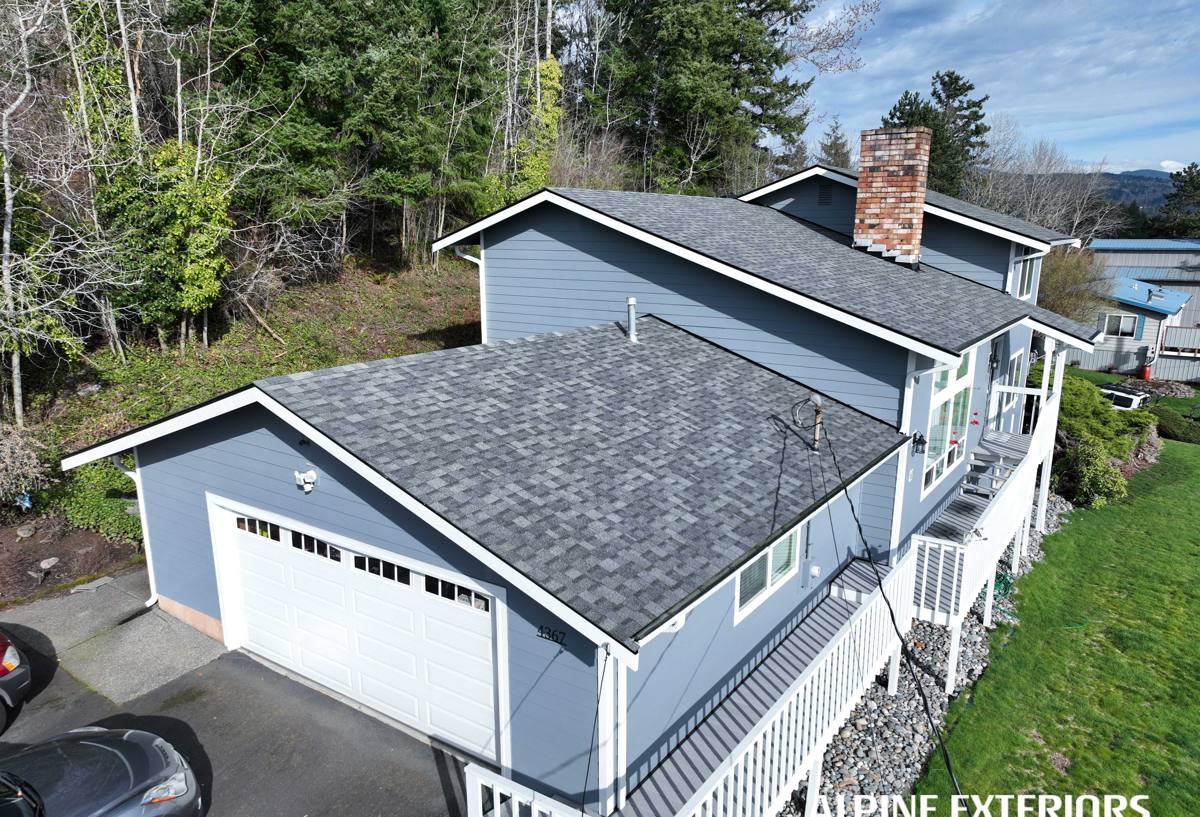
What Ferndale's Climate Actually Does to a Roof
Salt Air and Metal Fatigue
Homes closer to the water deal with airborne salt that accelerates corrosion on exposed metal — nail heads, flashing edges, gutter fasteners, and any exposed roofing hardware. Corroded fasteners lose their grip and their seal at the same time, which is exactly how small leaks start at seams and penetrations. On older roofs, we routinely find fastener corrosion well before the shingles themselves are due for replacement.
Driving Rain and Wind Exposure
Storms moving in off the water tend to push rain sideways rather than straight down, which puts unusual pressure on flashing around chimneys, skylights, and roof-to-wall transitions. A flashing detail that would hold up fine in a calmer climate can fail here simply because the rain is hitting it from an angle it wasn't sealed for.
Moss Season
Whatcom County's mild, wet stretch from fall through spring gives moss and algae months to establish themselves, especially on shaded, north-facing roof planes and anywhere debris collects. Moss doesn't just look bad — it holds moisture against the roofing material, lifts shingle tabs as it grows, and works its way under the shingle edge over time. Left alone, a moss mat can shorten the useful life of an otherwise sound roof by years.
Signs a Ferndale Roof Needs Repair, Not Just a Wash
- Granule buildup in gutters or at downspout outlets, a sign asphalt shingles are wearing thin
- Moss growth thick enough to see a raised edge or "cushion" at the shingle line
- Staining on interior ceilings or attic sheathing, especially after a stretch of driving rain
- Rusty streaking below flashing, vents, or exposed fasteners
- Curling, cracked, or missing shingles, particularly on the roof's windward side
- Soft spots or sagging when walked (a sign of underlying deck damage — don't wait on this one)
- Daylight visible through the roof deck from inside the attic
Any one of these can be a minor fix caught early or a bigger repair if it's been developing for a while. The honest answer only comes from getting eyes on it.
What a Correct Repair Actually Involves
A roof repair that's done right isn't just replacing what's visibly damaged — it's tracing the problem back to its cause. Water rarely leaks in exactly where it shows up on your ceiling; it can travel along rafters or sheathing before finding its way inside. That means a proper repair starts with removing the surrounding roofing material to inspect the deck and underlayment, not just laying a patch over the top.
Our General Process
- Inspection. We assess the whole roof, not just the reported problem area — a leak near a chimney is often a symptom of flashing failure, not shingle failure, and moss in one area usually means conditions are right for it elsewhere too.
- Diagnosis. We identify the actual point of water entry, which may be a few feet from where the damage shows up inside.
- Deck check. We open up the area to check the roof deck for soft spots, rot, or delamination before anything gets covered back up.
- Repair. We replace damaged shingles, underlayment, and flashing as needed, matching materials so the repair blends in and performs the same as the surrounding roof.
- Moss and debris treatment. Where moss is a factor, we remove it properly (not just scrape it, which can damage granules) and discuss options to slow regrowth.
- Final check. We verify the fix by inspecting flashing seals, fastener seating, and drainage before we consider the job finished.
Common Repair Types We Handle in Ferndale
| Repair Type | Typical Cause Locally | What's Involved |
|---|---|---|
| Flashing repair/replacement | Wind-driven rain, corrosion, age | Remove and re-flash chimneys, skylights, valleys, or wall transitions |
| Shingle replacement | Wind lift, moss lifting, granule loss | Match existing shingle profile and color as closely as possible |
| Moss and debris removal | Long wet season, shaded roof planes | Careful removal plus gutter and valley clearing |
| Deck repair | Long-term undetected leaks | Cut out and replace damaged sheathing before re-roofing the area |
| Fastener/hardware repair | Salt-air corrosion | Replace corroded nails and hardware with corrosion-resistant fasteners |
| Gutter and drainage fixes | Overflow backing water under the roof edge | Repair or reposition gutters so water sheds away from the fascia |
What Roof Repairs Typically Cost
Costs vary a lot depending on the extent of damage, roof pitch, material match, and whether the deck itself needs repair — anyone who quotes a firm number sight unseen is guessing. As a general guide:
- Minor repairs (a few shingles, a small flashing fix) tend to be the least expensive and quickest to complete
- Moderate repairs (larger flashing sections, moss removal plus shingle replacement) cost more due to labor and material scope
- Major repairs involving deck replacement or widespread shingle damage cost the most, since they involve tearing off and rebuilding sections of the roof structure
We give a firm, written estimate after an in-person inspection — not a phone-quote guess — so you know exactly what you're paying for and why.
Why It Matters That a Crew Already Works Ferndale
Roofing crews who work regularly in Fairhaven and Ferndale know which roof orientations collect moss fastest, how far inland salt-air corrosion tends to reach, and which flashing details actually hold up against wind-driven rain off the water — because we see the results year after year. That local pattern recognition shortens the diagnostic process and means fewer surprises once a repair is underway. A crew unfamiliar with this specific coastal Whatcom County environment may treat a repair like it's a generic inland job, which is how the same leak ends up getting "fixed" more than once.
We also know the practical side of working here: permitting expectations, typical roof ages in different parts of the area, and how the wet season affects scheduling — repairs are often best tackled in a dry window rather than mid-storm, and a crew that knows the local weather patterns can plan around that instead of getting caught by it.
When to Repair vs. When to Consider Replacement
Not every roof problem calls for a full replacement, and we won't push you toward one if a repair will genuinely hold up. Generally, repair makes sense when damage is localized, the roof is still within a reasonable portion of its expected lifespan, and the deck underneath is sound. Replacement becomes the more honest recommendation when damage is widespread, the roofing material is past its expected service life, or repeated repairs are treating symptoms of a roof that's simply worn out. We'll give you a straight answer either way, including the reasoning behind it, so the decision is yours to make with real information.
Maintenance That Extends a Ferndale Roof's Life
- Clear gutters and valleys of debris at least twice a year, more often under overhanging trees
- Have moss addressed before it establishes a thick mat, not after
- Trim back branches that shade roof sections and keep them damp longer than necessary
- Schedule an inspection after any major windstorm, even if nothing looks obviously wrong
- Address small leaks immediately — deck damage grows quietly and gets more expensive the longer it's ignored
If you're dealing with a leak, visible moss, or just want an honest read on your roof's condition, we're happy to take a look. Request a free, no-pressure estimate using the form below and we'll walk the roof, explain what we find, and give you a straight recommendation.