 Fairhaven Siding
 Why Ferndale Roofs Wear Out Faster Than the Warranty Sticker Suggests
Ferndale sits close enough to the water that homes here deal with a steady mix of salt-laden air, wind-driven rain, and long stretches of gray, damp weather that never quite dries a roof out between storms. Add in Whatcom County's extended moss season — often eight or nine months of the year when conditions favor growth — and you get roofs that age faster than the manufacturer's brochure assumes. A shingle rated for 25-30 years in a dry inland climate often needs replacing well before that mark here, especially if the original installation cut corners on ventilation or underlayment.
None of this means Ferndale is a bad place to own a roof. It means the roof has to be built for the actual conditions, not the generic ones. That starts with understanding what's actually failing on an older roof, and what a correct replacement needs to address that a quick reroof over old materials won't.
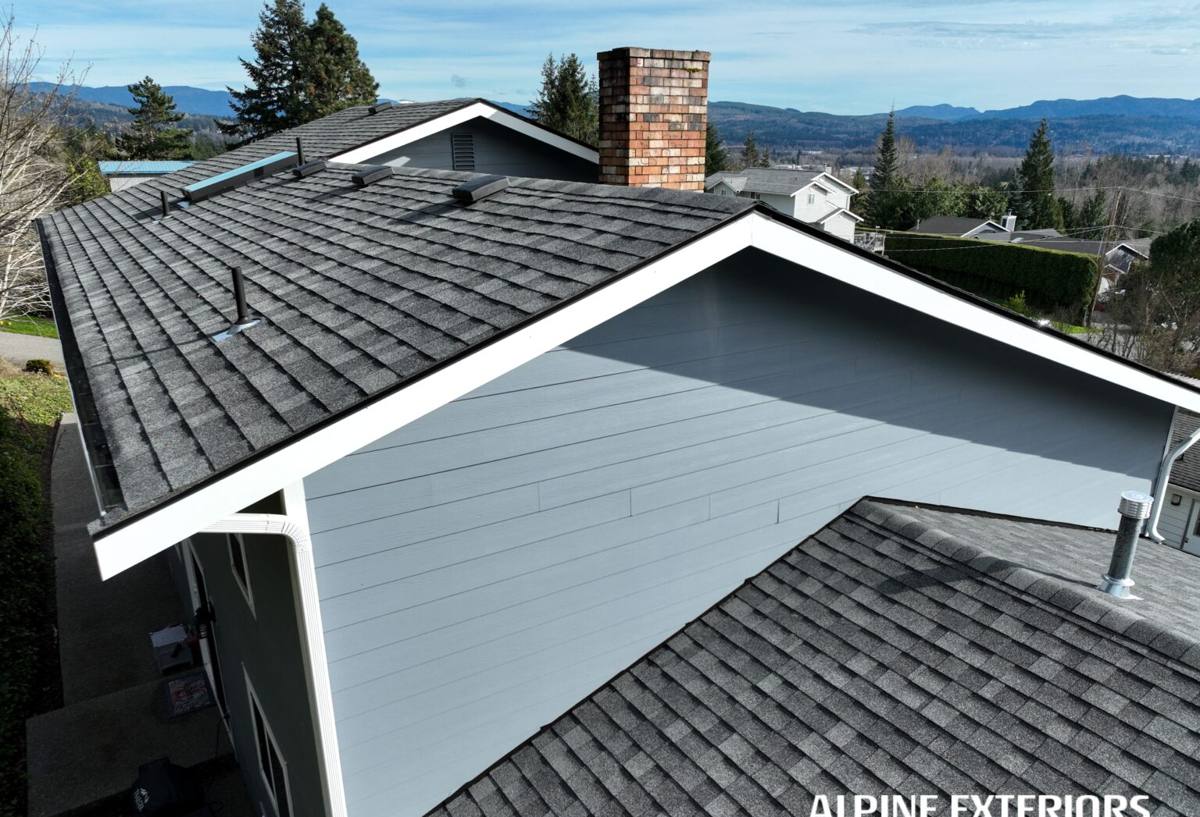
Signs Your Ferndale Home Needs a New Roof, Not Another Patch
Homeowners often call us after a leak, but by the time water is visibly coming through a ceiling, the underlying deck has usually been wet for a while. Catching the warning signs earlier saves money and avoids interior damage.
- Granule loss showing up in gutters or at downspouts, leaving shingles looking bald or blotchy
- Moss or dark algae streaking that keeps returning within a season or two of cleaning
- Shingles that are cupping, curling at the edges, or cracking when you look closely
- Soft spots or slight sagging along the roof plane, especially near valleys or the eaves
- Daylight visible through the attic decking, or insulation that's damp or matted
- Flashing around chimneys, skylights, or vent pipes that's rusted, lifted, or gapped
- Multiple past repairs in the same area that keep coming back
Any one of these on its own might be a repair. Several together, or a roof that's already past 20 years old, usually means full replacement is the more honest recommendation — patching a roof that's structurally at the end of its life just delays the same conversation while risking interior damage in the meantime.
What a Correct New Roof Installation Actually Involves
Full Tear-Off, Not a Layer Over
Washington building code and honest trade practice both point the same direction: a full tear-off to the deck is the right way to install a new roof, especially in a climate like this one. Roofing over old shingles traps moisture, hides deck damage, and voids most manufacturer warranties outright. It also means we never actually see the condition of the wood underneath — and in a place with this much annual rainfall, that's exactly where problems hide.
Deck Inspection and Repair
Once the old roofing is off, we inspect every section of the decking for soft spots, delamination, or rot — common wherever a roof has had a slow leak for months or years without anyone noticing from inside. Any compromised sheathing gets replaced before anything new goes down. Skipping this step is one of the most common shortcuts in the industry, and it's the one that causes the most expensive callbacks.
Underlayment Built for Wet Weather
Given how much of the year Ferndale spends under low pressure systems off the Salish Sea, we don't treat underlayment as an afterthought. A synthetic underlayment with proper ice-and-water shield at eaves, valleys, and around penetrations gives the roof a real second line of defense if wind-driven rain ever gets under the primary roofing material.
Flashing and Penetrations
Chimneys, skylights, vent stacks, and roof-to-wall transitions are where the overwhelming majority of roof leaks actually start — not in the open field of shingles. New step flashing, counter-flashing, and properly sealed penetrations matter more here than in drier climates, because there are simply more wet days for a marginal detail to fail on.
Choosing a Roofing Material for Local Conditions
There's no single "best" roofing material — the right choice depends on the home, the budget, and how much moss and moisture resistance matters to the owner. Here's how the common options stack up for a coastal Whatcom County property.
| Material | Moss/Moisture Behavior | Wind & Salt Air Durability | Typical Lifespan Here |
|---|---|---|---|
| Standard asphalt composition shingle | Prone to moss and algae without added protection; needs periodic cleaning | Good with proper nailing and sealed edges | 18-25 years |
| Algae-resistant (copper-granule) shingle | Noticeably better moss/algae resistance | Good with proper nailing and sealed edges | 20-28 years |
| Standing seam metal | Sheds moss and moisture very well; little for growth to grip | Excellent in wind and coastal exposure with correct fastening | 40-50+ years |
| Synthetic composite (shake/slate profile) | Resists moisture absorption well; low maintenance | Very good, engineered for wind uplift ratings | 30-50 years |
For most Ferndale homes we still install algae-resistant asphalt shingles, since they balance upfront cost with real moss resistance. Metal and synthetic options cost more up front but ask for far less maintenance over the life of the roof, which matters on properties where moss and moisture are a constant, low-grade battle rather than an occasional nuisance.
Ventilation: The Detail That Determines How Long the Roof Actually Lasts
A roof can be installed with premium materials and still fail early if the attic underneath can't breathe properly. Trapped heat and moisture in an under-ventilated attic condense on the underside of the decking, which rots wood from the inside and accelerates shingle aging from below — a problem that shows up faster in a humid coastal climate than almost anywhere else in the state.
Correct ventilation balances intake (usually at the soffits) with exhaust (ridge vents or equivalent), sized to the attic's actual square footage. We check and correct this on every new roof installation, not just when a homeowner specifically asks — it's one of the least visible parts of the job and one of the most consequential.
Our Installation Process, Start to Finish
- On-site inspection and estimate — we look at the existing roof, attic ventilation, and any problem areas before quoting anything.
- Material selection — we walk through the honest trade-offs between shingle, metal, and composite options for the specific home.
- Scheduling around the weather — we plan installation windows realistically, since a dry multi-day stretch matters more here than in drier regions.
- Full tear-off and deck inspection — old roofing removed, decking checked and repaired as needed.
- Underlayment, flashing, and ventilation correction — the parts that determine how the roof performs in year 10, not just year one.
- New roofing installation — installed to manufacturer specification so warranties stay intact.
- Cleanup and final walk-through — site cleared, and we go over the finished roof and any documentation together.
Why It Matters That We Already Work in Ferndale
A crew that regularly works Whatcom County knows what a Ferndale roof is actually up against — the wind exposure on more open, rural lots, the salt content in the air coming off the water, and how long moss-friendly conditions really last here compared to inland areas. That familiarity shows up in small decisions: how fasteners are spec'd for wind exposure, which underlayment detail gets extra attention at valleys, and knowing not to schedule a tear-off the day before a system rolls in off the coast.
It also means we're not guessing at permitting or code requirements specific to the area — we handle that as a normal part of the job, not an extra step the homeowner has to manage.
After Installation: Keeping a New Roof Performing Like One
A well-installed roof still benefits from basic upkeep in this climate. A short annual checklist keeps small issues from becoming expensive ones:
- Clear gutters and downspouts each fall before the wet season peaks
- Keep overhanging branches trimmed back to reduce shade and debris buildup, both of which feed moss
- Have moss growth treated early rather than left to spread — light growth is a quick fix, established growth is not
- Do a visual check after any major windstorm for lifted shingles or displaced flashing
- Schedule a professional inspection every few years, even with no visible problems
If you're weighing whether it's time for a new roof or want a straight answer on what your current one still has left in it, we're happy to take a look. We offer free, no-pressure estimates for Ferndale homeowners — just fill out the form below and we'll set up a time to come out.