 Fairhaven Siding
 Ferndale's Climate Puts Real Demands on Exterior Siding
Ferndale sits close enough to the water that salt-laden air is a daily fact of life for anything mounted on the outside of a house, and it sits far enough north that the rainy season isn't really a season here — it's most of the year. Add in the shade from mature trees on many lots and the long stretches of overcast, damp weather that Whatcom County is known for, and you get a climate that is genuinely hard on siding. Moss and algae get a running start every fall and don't let go until late spring. Wind-driven rain finds any gap in flashing or caulking within a few winters. And salt air accelerates corrosion on fasteners and hardware that isn't rated for it.
None of this is unique to Ferndale, but it's more pronounced here than in drier inland parts of the state. Siding that performs fine in Spokane or even in parts of Seattle can fall apart faster in a Ferndale yard that catches wind off the water and sits under fir trees half the day. That's the starting point for every decision we make about material, installation detail, and maintenance schedule on a Ferndale project.
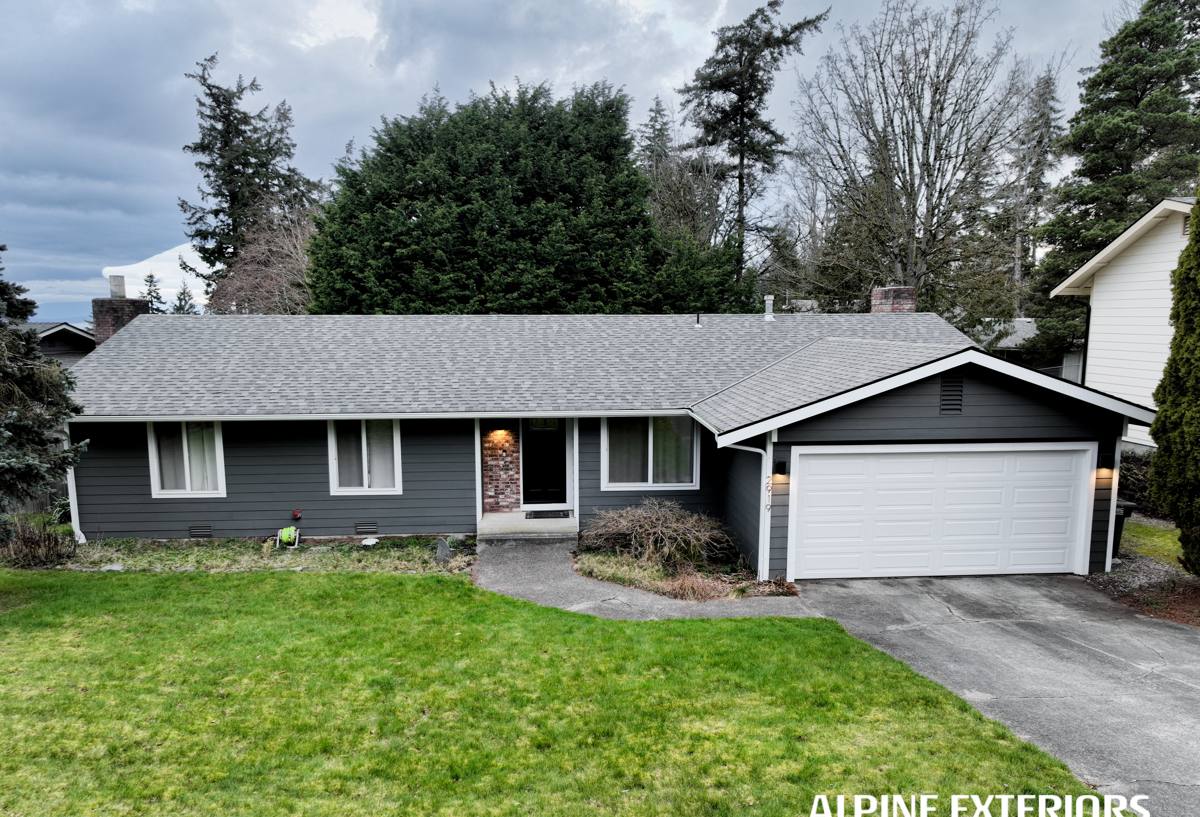
Why We Install Only James Hardie Fiber Cement Here
We don't install LP SmartSide, vinyl, Cemplank, Allura, primed spruce, or cedar. That's not a marketing position — it's a standard we set after weighing how each of those products actually holds up in this specific climate over the long run.
Vinyl and Engineered Wood Have Real Limits Here
Vinyl siding doesn't rot, but it does expand and contract more than fiber cement in our temperature swings, and its seams and J-channels give moss and mildew plenty of places to take hold. Engineered wood products like LP SmartSide perform well in many climates, but they rely on an intact factory coating and careful field-sealing of every cut edge to keep moisture out of the wood strand core — miss one cut edge in a wet Ferndale winter and you've created a slow-motion problem that's hard to see from the ground. Primed spruce and untreated cedar are wood, plain and simple, and wood in a climate with this much sustained moisture needs more repainting, caulking, and vigilance than most homeowners want to sign up for.
What James Hardie Gets Right
James Hardie fiber cement is non-combustible, dimensionally stable, and doesn't support the kind of moisture intrusion that causes wood or wood-composite products to swell and fail. It's also engineered specifically for climate zones — the HZ5 formulation is built for colder, wetter regions like ours, which matters more in Ferndale than it would somewhere dry. The ColorPlus factory-applied finish is baked on under controlled conditions, which gives it better fade and moisture resistance than field-applied paint, and it comes with a genuinely strong, transferable warranty when the installation is done to Hardie's specifications. That last part — "installed to spec" — is doing a lot of work in that sentence, and it's the reason installation quality matters as much as the product choice.
What a Correct Installation Actually Involves
Fiber cement siding is only as good as the flashing, fastening, and clearances behind it. A rushed or under-detailed install can undercut even the best product on the market, and in a climate that pushes this much water at a house, the margin for error is smaller than it looks.
- Weather-resistive barrier installed and lapped correctly before a single piece of siding goes up
- Flashing at every window, door, and horizontal trim transition — not just caulk covering a gap
- Correct starter strip at the base of the wall so the first course sits at the right angle and drains properly
- Fasteners driven to Hardie's specified depth and spacing, not overdriven or underdriven
- Proper clearance from grade, roof lines, decks, and patios so siding isn't sitting in standing water or snow load
- Corrosion-resistant fasteners and hardware appropriate for a salt-air environment
- Caulking only where Hardie's install guide calls for it — over-caulking traps moisture instead of shedding it
Every one of these steps is inspectable, and every one of them is easy to skip if a crew is moving fast to get to the next job. We build our schedule around doing these steps right the first time, because redoing trim and flashing after siding is up costs everyone more than doing it correctly during the original install.
How Siding Materials Actually Compare in a Ferndale Climate
| Material | Moss/Algae Resistance | Salt Air Behavior | Long-Term Maintenance |
|---|---|---|---|
| James Hardie Fiber Cement | Strong — dense, non-porous surface resists growth | Stable; use corrosion-resistant fasteners | Occasional wash; factory finish holds color |
| Vinyl | Moderate — seams and channels trap debris | Can become brittle faster near salt air over time | Low, but repainting isn't an option if faded |
| Engineered Wood (LP SmartSide) | Moderate if sealed correctly; risk at cut edges | Fasteners and edge seals need regular checking | Field-applied coatings need monitoring |
| Cedar / Primed Spruce | Weak without frequent treatment | Wood absorbs moisture faster near salt air | Repainting/staining and moisture checks needed regularly |
This table reflects general material behavior, not a claim that every alternative product fails on every house — plenty of vinyl and wood siding jobs last for years with good maintenance. It's simply why, weighing everything together for this specific climate, fiber cement is what we're willing to put our name behind.
Our Process, Start to Finish
1. Walkthrough and Assessment
We look at your current siding, trim, flashing, and any problem areas — especially north-facing walls and spots shaded by trees, which tend to hold moisture and moss longest in Ferndale.
2. Written Estimate
You get a clear scope of work: product line, color, trim details, and what the tear-off and disposal plan looks like, so there are no surprises once work starts.
3. Prep and Weather Barrier
Old siding comes off, sheathing is checked for hidden damage, and a new weather-resistive barrier goes on before anything else.
4. Installation
Siding, trim, and flashing go up following Hardie's fastening and clearance specifications, with attention to every penetration and transition point.
5. Final Walkthrough
We go around the house with you before we call it done, so you can see the work and ask questions while the crew is still on site.
Signs Your Ferndale Home May Need New Siding Soon
- Green or black staining that returns quickly after cleaning
- Soft spots, bubbling, or visible warping on wood or wood-composite siding
- Paint that's peeling or chalking faster than it used to
- Gaps opening up at seams, corners, or around trim
- Rusty streaks running down from fasteners or hardware
- Rooms near exterior walls that feel damp or drafty in winter
Any one of these on its own might just need a repair. Several at once, especially on the shaded or windward side of the house, usually means the siding system itself is losing the fight against the climate.
Cost Factors for a Ferndale James Hardie Project
| Factor | Why It Matters |
|---|---|
| House size and wall complexity | More corners, gables, and dormers mean more cutting, flashing, and labor |
| Product line and profile | Lap siding, shingle-style panels, and board-and-batten carry different material and install costs |
| Tear-off scope | Removing and disposing of existing siding down to sheathing adds time versus a simpler re-side |
| Underlying repairs | Rotted sheathing or trim found during tear-off needs to be addressed before new siding goes on |
| Trim and color selections | Custom trim details and premium ColorPlus color options affect material pricing |
We give real numbers during the estimate rather than a broad range up front, because the honest answer depends on what we find once the old siding comes off.
Why a Crew That Already Works in Ferndale Matters
A contractor who works Whatcom County regularly already knows what this climate does to a house over ten or twenty years, not just what a product spec sheet says on paper. That means knowing where moss tends to build up fastest, which wall orientations catch the worst of the driving rain, and how much clearance really matters near grade when the ground stays saturated for months at a time. It also means being available if a warranty question or a maintenance question comes up down the road — not a one-time crew that finished the job and moved on to another region.
Keeping Your Siding Looking Right After Installation
James Hardie siding with a ColorPlus finish needs far less upkeep than wood or repainted alternatives, but "low maintenance" doesn't mean "no maintenance." A periodic gentle wash removes the moss spores and organic buildup before they get a foothold, and an annual walk-around to check caulking at trim joints and penetrations catches small issues before they become water intrusion problems. Keeping gutters clear and trimming back vegetation that shades and dampens a wall also goes a long way in this climate specifically.
If you're weighing new siding for a Ferndale home, we're glad to walk the property with you, point out what we see, and put together a straightforward estimate — no pressure, no obligation. Use the form below to get started.