 Fairhaven Siding
 Windows Built for Life on Lummi Island
Lummi Island sits out in the Salish Sea, reached by ferry from the Whatcom County mainland, and that setting shapes everything about how a window performs there. Homes on the island take a steady diet of salt-laden air, wind-driven rain off the water, and a long gray moss season that keeps siding, trim, and window frames damp for months at a time. A window that's rated fine on paper can still fail early here if it wasn't chosen and installed with that exposure in mind. This page covers what actually matters for energy-efficient window replacement on Lummi Island, and how our Fairhaven-based crew approaches the job.
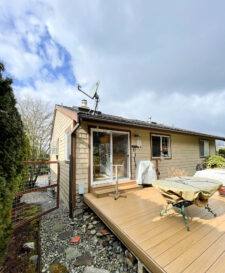
What the Local Climate Actually Does to Windows
Whatcom County's marine climate is mild compared to inland Washington, but "mild" doesn't mean easy on building materials. Three things stand out for Lummi Island specifically:
Salt Air
Being surrounded by saltwater, the island sees more airborne salt than mainland Fairhaven or Bellingham. Salt accelerates corrosion on hardware — hinges, locks, balance systems, and screws — and it can degrade certain metal cladding and finishes faster than the manufacturer's standard warranty testing assumes. Window hardware and cladding choices matter more here than in a typical inland install.
Driving Rain
Storms coming off open water don't just fall straight down — wind pushes rain sideways into wall assemblies and window openings. That means flashing detail, sill pan design, and sealant work carry more weight on Lummi Island than they would on a sheltered lot. A window can be well-built and still leak if the opening around it wasn't flashed to shed water outward and downward, not just caulked and hoped for.
Moss Season
Extended damp, shaded conditions during fall through spring keep moisture sitting against exterior surfaces longer. Wood trim and sills that don't drain and dry properly stay wet for extended stretches, which is exactly the condition that breeds rot and encourages moss and mildew growth around window perimeters.
What "Energy-Efficient" Should Mean for This Location
Energy efficiency on Lummi Island isn't just about a U-factor number on a label — it's about the whole assembly holding up to moisture and salt while it does its job of keeping heat in and drafts out. A few specifics we weigh for island homes:
- Low-E glass coatings tuned for our cloudy, mild climate rather than a hot, sunny one — the goal is retaining heat in winter without overdoing solar control you don't need most of the year
- Insulated (usually argon-filled) dual or triple-pane glazing to cut heat loss through the glass itself
- Warm-edge spacer systems, which resist condensation better at the glass edge than older metal spacers — condensation control matters more in a consistently damp environment
- Frame materials and finishes that tolerate salt exposure without pitting, chalking, or corroding hardware early
- Weatherstripping and lock hardware rated to keep sealing properly after repeated damp/dry and salt-air cycling
Frame Material Trade-Offs for Salt Air and Rain Exposure
There's no single "correct" frame material for every home — it depends on the house's style, budget, and how exposed the specific elevation is to weather. Here's how the common options stack up for island conditions specifically:
| Frame Material | Salt Air Behavior | Moisture/Rot Risk | Maintenance |
|---|---|---|---|
| Vinyl | Does not corrode; UV-stable finishes hold up well | Low — won't rot, but seams and welds need quality fabrication | Low — occasional cleaning |
| Fiberglass | Very stable, minimal reaction to salt exposure | Low — dimensionally stable in wet/dry cycling | Low |
| Aluminum | Can pit or corrode over time without marine-grade coatings | Low rot risk, but thermal performance needs a thermal break | Moderate — coatings need monitoring |
| Wood (clad or unclad) | Unclad wood is more vulnerable; needs consistent finish maintenance | Higher — exposed wood in constant damp conditions is the most rot-prone option | Highest — refinishing on a schedule |
| Wood-clad (vinyl or aluminum exterior) | Exterior cladding protects the wood from direct salt/rain exposure | Moderate — depends on cladding seams and flashing quality | Moderate |
For most Lummi Island homes, we steer clients toward vinyl or fiberglass on directly exposed elevations, and reserve unclad wood for sheltered spots — like a covered porch — where a homeowner specifically wants that look and is willing to keep up a finish schedule.
What a Correct Installation Involves Here
The window unit itself is only part of the job. On an island property exposed to driving rain, the installation detailing is what determines whether that window stays dry for the next 20 years or starts leaking in year three.
Our Process
- Assessment: We look at the existing opening, sill condition, and any signs of past water intrusion or wood damage before quoting anything.
- Removal and inspection: Old windows come out carefully so we can check the rough opening, sheathing, and framing underneath for rot or moisture damage that needs addressing before a new window goes in.
- Sill pan and flashing: We install a sloped sill pan and integrate flashing with the home's water-resistive barrier so any water that gets past the window sheds outward, not into the wall cavity.
- Setting and sealing: The window is set level and plumb, shimmed correctly so it doesn't bind or sag, and sealed with sealants suited to marine, damp-climate conditions — not just whatever caulk is on the truck.
- Insulation and air-sealing: Gaps around the frame are insulated and air-sealed properly, which affects both energy performance and long-term moisture control inside the wall.
- Trim and finish: Interior and exterior trim is reinstalled or replaced, with attention to keeping exterior wood trim protected and properly primed or capped against the damp season ahead.
Why a Fairhaven Crew That Already Works Lummi Island Matters
Lummi Island is only reachable by ferry, which changes how a project needs to be planned. A contractor who hasn't worked the island before will underestimate scheduling around ferry departures, material staging, and the extra coordination it takes to get a crew, tools, and windows on and off the island efficiently. That translates into wasted time and, often, a rushed installation at the end of the day to catch a ferry — exactly the kind of shortcut that leads to bad flashing work.
Working out of Fairhaven, we're close enough to the terminal to plan trips efficiently, and because we've done work on the island before, we know to batch tasks, bring the materials and tools we'll need in one trip, and build the schedule around the ferry rather than fighting it. That planning matters as much to the quality of your window install as the product you choose.
Cost Factors Specific to This Job
Every project is different, so we don't quote pricing sight unseen, but a few things specifically affect cost for Lummi Island window jobs beyond the base price of the windows themselves:
| Factor | Why It Affects Cost |
|---|---|
| Ferry logistics | Trips and material transport need to be planned efficiently into the schedule |
| Existing wood/rot condition | Damp-season exposure means some openings need sill or framing repair before a new window goes in |
| Frame material choice | Fiberglass and higher-grade vinyl cost more upfront but reduce long-term maintenance in salt air |
| Flashing and sill pan detailing | Proper flashing integration takes more time than a quick caulk-and-set job, but it's what prevents leaks |
| Number and size of openings | Larger or custom-sized windows and multi-window projects affect both material and labor cost |
Signs Your Current Windows Are Losing the Fight
If you're weighing whether replacement makes sense now, a few signs specific to this climate are worth checking for:
- Persistent condensation between panes (a sign the seal has failed and insulating gas has escaped)
- Soft, discolored, or spongy wood at the sill or trim — early rot from sustained dampness
- Visible corrosion or stiff, hard-to-operate hardware on aluminum or older metal components
- Moss or dark staining building up on the sill or lower frame that keeps coming back
- Noticeable drafts or a cold feeling near the window even when it's fully closed
- Difficulty opening, closing, or locking — frames that have swollen or warped from moisture cycling
Any one of these on its own might just need a repair. Several together, especially on a home's more weather-exposed side, usually means it's time to talk about replacement before the surrounding framing gets drawn into the problem.
Getting an Honest Read on Your Windows
We'd rather tell you that three of your windows need replacing and the rest are fine than sell you a whole-house job you don't need. If you're on Lummi Island and dealing with drafts, fogged glass, sticking sashes, or trim that's starting to show its age, we're happy to come take a look and give you a straightforward assessment — no pressure, no inflated scope. Reach out for a free estimate using the form below, and we'll work with you on timing that makes sense around the ferry schedule.