 Fairhaven Siding
 Decking on the Edgemoor Bluff Is a Different Job Than Decking Inland
Edgemoor sits up on the bluff above Bellingham Bay, and that view comes with exposure. Homes here catch salt-laden air off the water, take driving rain straight off Puget Sound weather systems, and sit under tree cover that keeps everything damp long after a storm passes. A deck built the same way you'd build one twenty miles inland in Whatcom County simply won't hold up the same way out here. We've worked on enough decks in this neighborhood to know which details matter and which corners get cut on jobs that don't last.
This page is about composite decking specifically — not siding, not railing systems in isolation, but the deck surface and structure underneath it, built for what Edgemoor's climate actually does to a deck year over year.
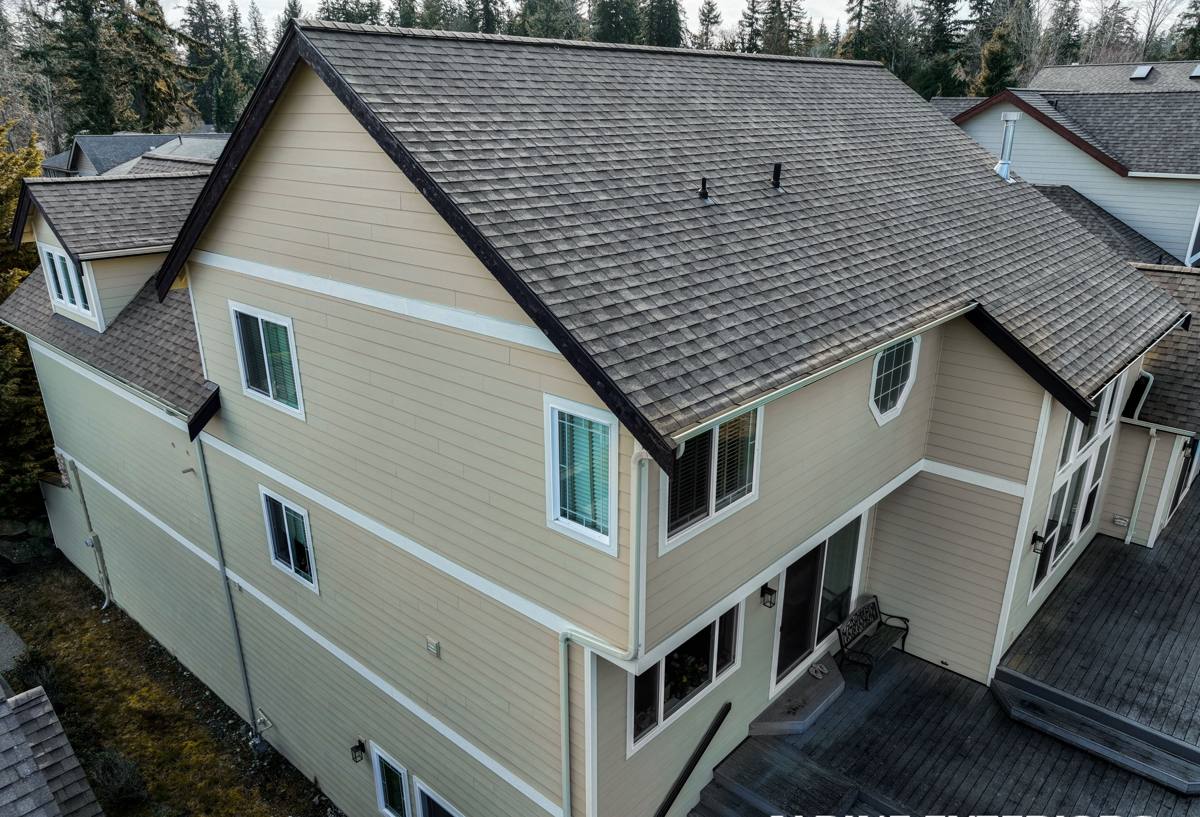
What Salt Air and Driving Rain Actually Do to a Deck
Salt air doesn't just sit on the surface — it works into every metal fastener, every joist hanger, every screw head on a deck. Left unaddressed, ordinary fasteners corrode faster near the water than they would a few miles inland, and a corroding fastener under a composite board you can't easily inspect is exactly the kind of problem that shows up as a soft spot or a squeak two or three years down the road, long after the crew that installed it is gone.
Driving rain is the other half of the equation. Rain that comes in sideways off the bay gets up under railings, into ledger connections, and along the边 edges of boards where water doesn't drain the way it does on a flat, sheltered lot. Composite decking itself doesn't rot the way wood does, but the framing underneath it — the joists, the ledger board, the posts — is still wood or wood-based product in almost every case, and that's where moisture damage actually happens if the build doesn't manage water correctly.
The Moss Factor
Whatcom County's long wet season means moss and algae get a real head start on any horizontal surface that doesn't dry out quickly, and shaded decks under mature trees are the worst of it. Composite boards resist rot, but the ones with a poor cap or a heavily embossed wood-grain texture can still hold moisture in the grain pattern long enough for moss and mildew to take hold on the surface. This is a product-selection issue as much as an installation issue, and it's one of the first things we talk through with Edgemoor homeowners.
Composite Decking Options: What Actually Holds Up Here
"Composite decking" isn't one product — it's a category, and the tiers differ a lot in how they handle a wet, shaded, salt-air environment. We steer most Edgemoor jobs toward fully capped boards rather than uncapped or partially capped composite, for reasons that come down to moisture behavior more than looks.
| Decking Type | Moisture/Salt Air Behavior | Maintenance | Typical Cost Tier |
|---|---|---|---|
| Uncapped composite | Absorbs moisture at cut edges and surface; more prone to mold/algae in shaded, wet spots | Periodic cleaning, edge sealing recommended | Lowest |
| Fully capped composite | Polymer shell resists moisture absorption and salt exposure well; edges need proper capping at cuts | Occasional wash-down | Mid |
| Mineral-based composite (PVC/polymer blend) | Best moisture and UV stability near water; holds color and resists surface mold longest | Low — wash-down only | Higher |
| Pressure-treated wood (for comparison) | Rots and checks faster in this climate; needs annual sealing/staining to keep up | High — annual maintenance | Lowest upfront, highest lifetime |
We don't push homeowners toward the most expensive tier by default — a fully capped, mid-tier composite is the right call for plenty of Edgemoor lots, especially ones with more sun exposure and less direct wind-driven rain. Where we do recommend stepping up is on shaded, north-facing, or heavily wind-exposed decks, where the cheaper uncapped products tend to disappoint homeowners within a few seasons.
What a Correct Installation Actually Involves
Substructure and Ledger
The framing underneath the decking is where a deck's real lifespan gets decided, regardless of what board you put on top. That means proper ledger flashing where the deck ties into the house — a detail that's easy to under-build and very expensive to fix once siding and decking are both in place — plus joist spacing and blocking that's actually sized for the composite product's span rating, not just whatever spacing worked for wood in the past.
Fasteners and Hardware
Given the salt air exposure on the bluff, we spec stainless steel or heavily coated, corrosion-rated fasteners and structural hardware rather than standard galvanized options, particularly on any deck with a clear line to the water. It costs more upfront and it's invisible once the deck is built, but it's the difference between hardware that's still sound in fifteen years and hardware that's the reason for a rebuild in eight.
Ventilation and Drainage
Composite boards need airflow underneath them to shed the moisture that inevitably gets past the surface — through gaps, around posts, at the perimeter. Low-clearance decks, or decks built tight against grade, trap moisture against the joists no matter how good the board on top is. Where clearance is tight, we look at options like joist tape, under-deck drainage systems, or grading adjustments rather than just bolting a nice deck surface onto a substructure that can't breathe.
Board Spacing and Fastening
Composite boards expand and contract with temperature more than most homeowners expect, and gapping that's too tight causes buckling, while gapping that's too loose lets debris and moisture collect. Manufacturer-specified gapping and hidden fastener systems, installed to the actual spec for the specific product, are non-negotiable on our jobs — not an area to eyeball.
Permits and Waterfront/Bluff Considerations
Decks on elevated, view-lot properties in Edgemoor often involve more than a straightforward permit — guardrail height and spacing requirements matter more on an elevated deck than a ground-level patio, and depending on the specific lot, there can be additional considerations tied to slope, setbacks, or bluff proximity that a standard inland deck project wouldn't run into. We pull the required permits through the appropriate local building department and handle inspections as part of the job, rather than leaving that step to the homeowner.
Long-Term Maintenance in This Climate
Even the best composite decking benefits from a periodic wash-down in a climate with this much moss and algae pressure — it's a fraction of the maintenance wood decking needs, but it's not zero-maintenance no matter what the marketing says. We tell every Edgemoor customer the same thing: plan on an annual cleaning, keep gutters and nearby drainage clear so water isn't sheeting onto the deck from the roof above, and address any standing moss promptly rather than letting it establish. A deck built with proper airflow underneath makes this maintenance far easier and less frequent than one that was built tight to the ground.
Our Process, Start to Finish
- On-site assessment — we look at sun exposure, wind exposure, existing structure (if replacing a deck), and drainage before recommending a product tier.
- Product and layout selection — we walk through board options with actual samples, not just a catalog page, and talk through the cost-versus-longevity tradeoffs for your specific spot on the bluff.
- Permitting — we handle the paperwork and inspections required for the scope of work.
- Demo and structural work — old decking and, where needed, old framing comes out; ledger, posts, and joists get built or reinforced to current span and flashing standards.
- Decking installation — boards go down to manufacturer spec on gapping, fastening, and edge treatment.
- Final walkthrough — we go over care and cleaning specific to the product installed before we consider the job done.
Checklist: What to Ask Before You Sign a Decking Contract
- Is the decking product fully capped, and does the quote specify the exact brand and line — not just "composite"?
- What fastener and hardware grade is specified, and is it rated for coastal/salt-air exposure?
- Does the quote include ledger flashing and joist work, or just the visible decking surface?
- Is there a plan for under-deck ventilation or drainage, especially on a low-clearance or shaded deck?
- Will the contractor pull the permit and handle inspections, or is that left to you?
- What does the manufacturer's warranty actually cover — materials only, or installation too?
Why a Crew That Already Works Edgemoor Matters
A lot of decking problems on the bluff don't show up in year one — they show up in year four or five, after enough wet seasons and salt air exposure have found every shortcut in the original build. A crew that's already worked on decks in this specific part of Whatcom County has seen which details actually matter here versus what's fine on a sheltered, inland lot. That's not a marketing point — it's the difference between a deck that gets re-flashed and reinforced correctly the first time and one that needs a partial rebuild before it's paid for itself.
If you're planning a new deck or replacing one that's showing its age, we're happy to come take a look and give you an honest read on what your specific lot needs — no pressure, no upsell, just a straightforward estimate based on what we actually see when we're standing on your property. Fill out the form below and we'll get in touch.