 Fairhaven Siding
 Deck Replacement for Sehome Homes
A deck in the Sehome area doesn't fail the way a deck fails in a dry climate. Out here, the problem usually isn't one big storm — it's years of quiet, steady moisture exposure that finally catches up with the structure underneath. Salt-tinged air off the water, driving rain that comes in sideways more often than straight down, and a moss season that can stretch from October well into spring all work on wood, fasteners, and footings at the same time. By the time a deck looks bad on the surface, the framing underneath has usually been dealing with that punishment for a while already.
We replace decks in this part of Whatcom County regularly enough to know what tends to go wrong first, and where. This page is about what a correct deck replacement actually involves here — not a generic list of decking products, but the specific decisions that matter for a deck that has to survive our climate for the next 20-plus years.
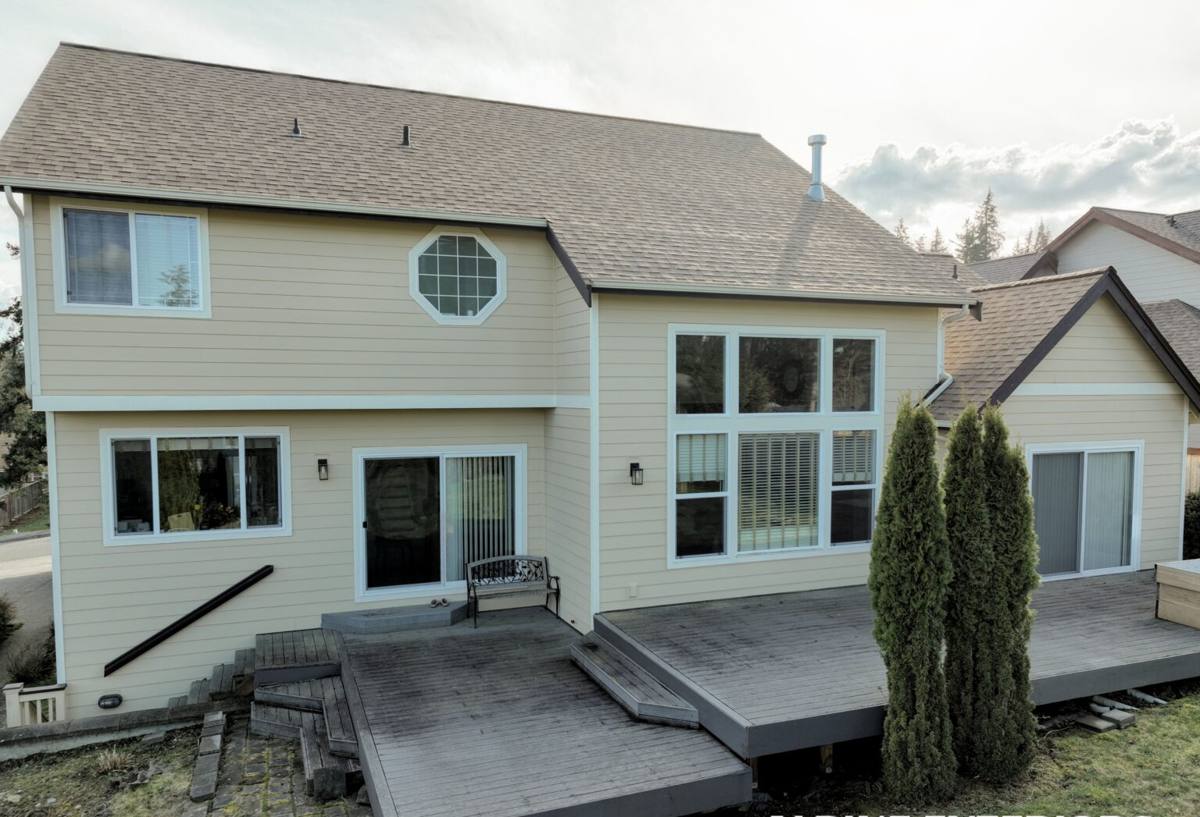
Why Local Weather Wears Decks Out Faster Than People Expect
Three things stack on top of each other in this region, and each one shortens the life of a deck on its own.
Salt Air
Proximity to Puget Sound means airborne salt is a constant, low-level presence. It accelerates corrosion on fasteners, joist hangers, and any exposed metal hardware. A galvanized nail that would last decades inland can start showing rust streaks in half that time here, and once a fastener corrodes, the wood around it starts to fail too.
Driving Rain
Wind-driven rain doesn't just fall on a deck's surface — it gets pushed into gaps, ledger connections, and the end grain of boards where water has the most time to sit and soak in. Flat, calm rain is relatively easy for a deck to shed. Rain that's being pushed sideways finds every weak point in the flashing and fastening.
Moss Season
A long, damp, shaded season means moss and algae get a real foothold on horizontal wood surfaces, especially decks that sit under trees or against the north side of a house. Moss holds moisture directly against the board surface for months at a time, which is a slower but just as damaging process as standing water — it keeps the wood wet long after the rain itself has stopped.
None of these three things alone would necessarily ruin a deck quickly. Together, over years, they're why decks in this area often need full replacement sooner than an owner expects, even when the surface boards still look presentable.
Signs a Sehome-Area Deck Needs Replacing, Not Just Repair
Not every tired-looking deck needs to come out entirely. But there's a point where patching individual boards stops being a real fix and starts being a way to delay an inevitable full rebuild. Here's how we tell the difference on a site visit.
- Soft or spongy spots in the decking that give underfoot, especially near the house or at board ends
- Visible rot, dark staining, or crumbling wood at the ledger board where the deck attaches to the house
- Rust streaking or corrosion visible around joist hangers, post bases, or structural fasteners
- Persistent moss or algae growth that comes back within weeks of cleaning
- Railings or stair stringers that feel loose or flex under normal use
- Posts that show rot or insect damage at the point where they meet the ground or a footing
- A deck more than 20-25 years old built to an older structural standard, even if it looks fine on top
If it's just the surface boards showing wear but the framing underneath is sound, a resurfacing or partial repair can make sense. Once the framing, ledger, or footings are compromised, replacement is the honest recommendation — repairing around rotten structure just moves the failure point somewhere else.
What a Correct Deck Replacement Actually Involves
A deck replacement done right isn't just pulling old boards and screwing down new ones. The parts that matter most for long-term durability in this climate are the parts nobody sees once the project is finished.
The Ledger Connection
Where the deck attaches to the house is the single most important structural and moisture detail on the entire project. It needs proper flashing that directs water away from the house framing, not just caulk covering a gap. This is also the spot most prone to hidden rot on older decks, because water that gets behind the ledger has nowhere to go and no way to dry out.
Footings and Posts
Footings need to sit below frost depth and bear on solid, undisturbed soil — not just be poured wherever a post happened to land originally. Post bases should hold the post above the concrete rather than embedding wood directly in it, since wood-to-concrete contact is one of the fastest ways to start rot at ground level.
Framing and Hardware
Joists, beams, and hangers all need to be rated for the actual load and span involved, and every piece of structural hardware should be corrosion-resistant hardware appropriate for coastal exposure — not just whatever standard-grade fastener happens to be on the shelf. This is where salt air does the most long-term damage if the wrong hardware goes in.
Drainage and Airflow
Water needs a way to shed off the deck surface and out from underneath it. Decks built tight to the ground or against solid skirting with no ventilation tend to trap moisture underneath, which is exactly the kind of slow, hidden dampness that causes structural rot years down the line.
Choosing Decking Material for This Climate
There's no single right answer for every homeowner — budget, maintenance tolerance, and how the deck gets used all factor in. What matters is going in with realistic expectations about how each material behaves once it's exposed to years of local moisture.
| Material | Upfront Cost | Maintenance | How It Handles This Climate |
|---|---|---|---|
| Pressure-treated wood | Lowest | Regular cleaning, periodic staining/sealing | Performs well if maintained; neglect leads to moss buildup and faster surface wear |
| Cedar | Moderate | Occasional cleaning and sealing to preserve color | Naturally moisture-resistant, ages to a gray patina if left unsealed, still needs footing/hardware care |
| Capped composite | Higher | Occasional washing, no staining or sealing | Resists moisture absorption well; still needs periodic cleaning to prevent moss taking hold on the surface |
| PVC decking | Highest | Minimal — washing only | Fully moisture-resistant board itself, though framing underneath still needs the same care regardless of decking material chosen |
One thing worth being direct about: no decking material solves a bad substructure. We've seen composite and PVC boards installed over ledger connections and framing that were never properly flashed or fastened — the boards look fine for a while, but the structure underneath is still failing on the same timeline it would with any material. The board choice affects surface maintenance and appearance; it doesn't replace doing the structural work correctly.
How Our Process Works
We keep the process straightforward, because a deck replacement shouldn't feel like a mystery to the homeowner paying for it.
- On-site assessment. We look at the existing deck's framing, ledger, footings, and posts — not just the surface boards — to determine what's actually driving the need for replacement.
- Honest scope and estimate. We tell you what needs to happen structurally, walk through material options with real trade-offs, and give a clear estimate before any work starts.
- Permitting. We handle the permit process where required, so the work is documented and inspected rather than done off the books.
- Demolition and structural rebuild. Old decking, framing, and any compromised posts or footings come out first. New footings, framing, and ledger flashing go in to current standards.
- Decking installation. Boards, railings, and stairs go in per the material manufacturer's specifications, since improper fastening or spacing is a common cause of early composite and PVC failures.
- Final walkthrough. We go over the finished deck with you, including what maintenance it will and won't need going forward.
Permits in Whatcom County
Deck replacements involving structural changes, new footings, or decks above a certain height typically require a permit locally. Skipping this step might save a little time upfront, but it creates real problems later — unpermitted structural work can complicate a home sale, an insurance claim, or a future remodel. We build the permit timeline into the project schedule from the start rather than treating it as an afterthought.
Ongoing Deck Maintenance in This Climate
Even a well-built deck needs some seasonal attention here, particularly around moss season. A short annual routine keeps a new deck performing the way it's designed to.
- Clear leaves and debris from between boards before fall rains set in, so moisture doesn't get trapped
- Wash the deck surface once or twice a year to remove early moss and algae growth before it establishes
- Check railings and stair connections annually for looseness
- Inspect the ledger flashing area for staining or gaps, since this is the first place hidden moisture problems tend to show
- Keep gutters and downspouts near the deck clear, since overflow directed onto or under a deck accelerates wear
- Re-seal or re-stain wood decking on the schedule appropriate to the product used — don't wait until it's visibly gray and dry
Why Hiring a Crew That Already Works in Sehome Matters
A deck replacement designed for a dry inland climate isn't the same project as one designed for Whatcom County's combination of salt air, driving rain, and a long moss season. A crew that works in this area regularly knows which hardware actually holds up to coastal exposure, how ledger flashing needs to be detailed for sideways rain, and where moss tends to establish itself on a finished deck so drainage and airflow get planned for accordingly from the start. That local pattern recognition is the difference between a deck that needs real attention again in eight or ten years and one that's still solid decades out.
Fairhaven Siding Company works throughout this area, and we bring that same local knowledge to every deck replacement — not a one-size-fits-all approach borrowed from a different climate.
If you're weighing repair versus replacement, or just want an honest look at what your deck's framing and footings are actually dealing with, we're happy to come take a look. Fill out the form below for a free, no-pressure estimate.