 Fairhaven Siding
 Why Bellingham Decks Wear Out Faster Than the Manuals Say
Most decking products are rated and warrantied based on a generic climate that doesn't exist in Whatcom County. Bellingham sits close enough to the water that salt-laden air reaches yards well inland, and the region's long wet season keeps wood and fasteners damp for months at a stretch. Add a moss season that can run from fall through late spring on shaded or north-facing decks, and you have conditions that quietly work against a deck's structure long before the surface boards look bad.
We get called out to a lot of decks in the Bellingham area that look fine from a few feet away but have real problems underneath — soft framing, corroded hardware, or trapped moisture behind the boards. Deck repair here isn't just about swapping a few gray boards for new ones; it's about understanding what driving rain and salt air actually do to a structure over time and fixing that root cause.
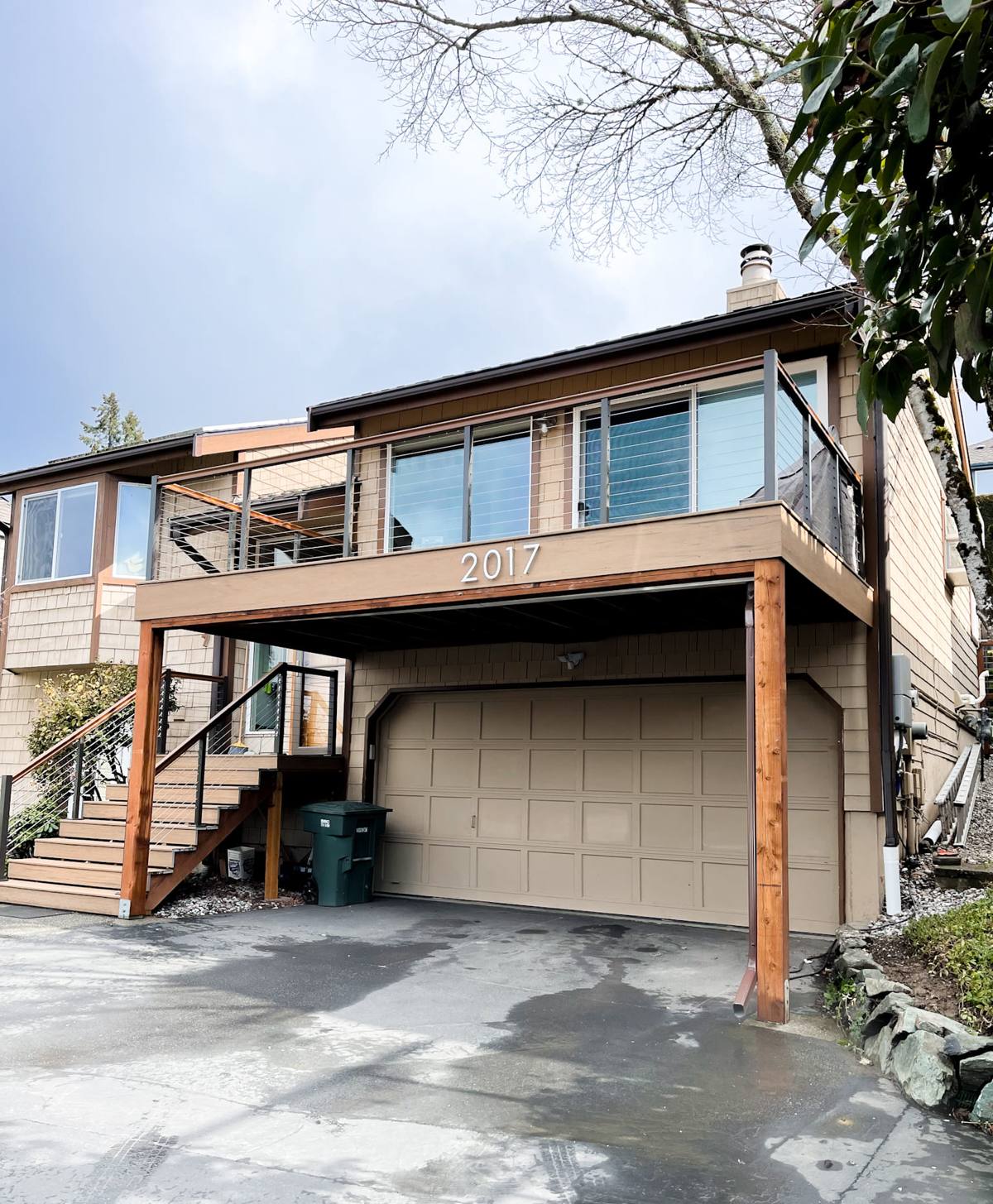
The Deck Problems We See Most Often in Bellingham
Ledger Board and Rim Joist Rot
The ledger board — where the deck attaches to the house — is the single most common failure point we find. Driving rain gets pushed sideways by wind off the bay and finds its way behind poorly flashed ledger boards. Once water gets trapped there, it has nowhere to dry out, and rot can spread through the ledger and rim joist for years before it shows on the surface.
Post Bases and Footings
Wood posts that sit in standing water or damp mulch, or that were never properly separated from concrete footings, rot from the bottom up. This is a structural safety issue, not a cosmetic one, and it's easy to miss on a quick visual inspection.
Moss, Algae, and Slick Surfaces
Shaded decks and north-facing decks in this part of Whatcom County can stay damp for most of the year, which is exactly what moss and algae need to take hold. Beyond looking bad, a mossy deck surface holds moisture against the wood and becomes genuinely slippery — a real fall hazard on stairs and ramps.
Fastener Corrosion
Standard screws and nails that would hold up fine in a drier inland climate corrode faster here because of the salt content in the air. Corroded fasteners lose their grip strength gradually, which can leave boards feeling "loose" long before anyone notices a fastener has failed.
What a Correct Deck Repair Actually Involves
A repair that only replaces the boards you can see is a cosmetic fix, not a real repair, if the framing underneath is compromised. Our process always starts by separating what's failing from what's just weathered:
- Probing framing members with an awl or moisture meter at the ledger, joists, beams, and post bases — not just a visual check
- Checking the ledger flashing and house-to-deck connection, since this is where hidden water damage most often starts
- Inspecting joist hangers and structural fasteners for rust, cracking, or under-driven nails
- Confirming guardrails, stair stringers, and post connections meet current structural expectations, not just how they looked when built
Only after we know what's actually happening underneath do we scope the repair — because a deck with sound framing might need a partial board replacement and a re-seal, while one with a compromised ledger needs framing work before anything else matters.
Repair or Replace? What Actually Drives That Decision
Homeowners often ask us to just "quote a repair," but the honest answer depends on a handful of factors we walk through on-site. Here's how we generally think about it:
| Factor | Leans Toward Repair | Leans Toward Replacement |
|---|---|---|
| Framing condition | Solid, dry, structurally sound | Rot at ledger, joists, or posts |
| Deck age | Under 15 years, good original build | Original construction predates current flashing/guardrail practices |
| Extent of damage | Isolated boards or one section | Widespread moss staining, soft spots across the deck |
| Fastener condition | Localized corrosion | Fasteners failing throughout |
| Budget goal | Extend usable life a few years | Long-term, lower-maintenance solution |
In a lot of cases the honest recommendation is a hybrid: replace the structural elements that are compromised (ledger, a section of framing, post bases) and keep decking that's still sound, rather than tearing out everything.
Our Deck Repair Process, Start to Finish
1. On-Site Inspection
We walk the whole deck, not just the area you flagged, since problems in this climate rarely stay isolated. We check framing, flashing, fasteners, and drainage together.
2. Isolate the Real Problem
We identify exactly which components are structural failures versus surface wear, and explain the difference in plain terms before any work starts.
3. Framing and Structural Repairs
Any compromised ledger, joist, beam, or post gets repaired or replaced first. This is the part of the job that doesn't show but matters most for safety and long-term durability.
4. Drainage and Flashing Corrections
Where water intrusion caused the original damage, we correct the flashing or drainage path so the same failure doesn't happen again in a year or two.
5. Decking, Fasteners, and Finish
Boards are replaced or repaired with materials and fasteners suited to a coastal, high-moisture climate, and finished or sealed as appropriate for the material.
6. Final Walkthrough
We go over what was found, what was fixed, and what to watch going forward — including anything that's still sound now but worth budgeting for later.
Decking Materials and Fasteners We Use in This Climate
Material choice for a repair depends on what's already there and what the homeowner wants going forward, but a few standards guide our recommendations in Bellingham specifically:
- Fasteners: we favor stainless steel or coated fasteners rated for coastal exposure over standard galvanized hardware, since salt air accelerates corrosion on lower-grade coatings
- Wood decking: cedar and treated lumber both have a place, but either needs consistent sealing on this coast — we're upfront that wood decking here is a maintenance commitment, not a one-time purchase
- Composite decking: a strong option for homeowners who want to reduce the sealing and staining cycle, though it still needs proper ventilation underneath to avoid trapping moisture against framing
- Flashing materials: we use flashing designed to shed water away from the ledger connection rather than relying on caulk alone, which fails faster in constant damp conditions
We'll walk through the honest trade-offs of each option for your specific deck rather than pushing one product — what matters most is that whatever you choose gets installed correctly for how wet this region stays for much of the year.
A Maintenance Checklist for Bellingham Deck Owners
Between repairs, a few habits go a long way toward slowing down the moss, moisture, and corrosion cycle that's common in this climate:
- Sweep debris and fallen leaves off the deck regularly, especially under trees where moisture collects
- Check for moss or algae buildup each fall and treat it before it spreads across the whole surface
- Inspect the ledger board area at the house connection once a year for staining or soft wood
- Look for loose or rust-stained fasteners, particularly on stair treads and railings
- Keep gutters and downspouts near the deck clear so runoff isn't draining directly onto it
- Reseal wood decking on the schedule recommended for the product, not just when it looks dry
- Confirm nothing is blocking airflow underneath the deck, since trapped moisture below is as damaging as rain from above
Why Hiring a Crew That Already Works Bellingham Matters
Deck repair advice that works in a dry inland climate can be the wrong advice here. A crew that regularly works Bellingham and the surrounding Whatcom County area already knows which failure patterns show up on which types of decks — a shaded deck a block off the water behaves differently than one out in the open, and the repair approach should reflect that.
We're based out of Fairhaven, and Bellingham is core territory for us, not a stretch job we take occasionally. That means we're familiar with the permitting expectations that apply to structural deck work in the City of Bellingham and Whatcom County, and we're not guessing at how a given deck will hold up through another wet season — we've already seen how similar decks in the area have fared over time.
Get an Honest Look at Your Deck
If your deck has soft spots, visible staining near the house, persistent moss, or just feels less solid than it used to, it's worth having someone look at the framing before deciding between a patch job and a full rebuild. We offer free, no-pressure estimates for deck repair work in Bellingham and the surrounding area — fill out the form below and we'll take a look and give you a straight answer about what your deck actually needs.