 Fairhaven Siding
 Building a Deck That Can Actually Handle York's Climate
York is a quiet, tree-lined pocket close to Fairhaven, and homes here get a specific mix of weather that most deck-building advice online doesn't account for: salt-laden air drifting up from the water, long stretches of driving rain off and on for months at a time, and shaded, moisture-holding conditions that keep moss and algae going nearly year-round. A deck built with generic, one-size-fits-all methods will show it within a couple of seasons — soft spots at the ledger, green film on the boards by January, corroding fasteners you can't even see until they've already let go. A deck built for this specific stretch of Whatcom County holds up because every material and connection was chosen with that climate in mind from the start.
This page is about one job, done right, in one place: deck building for York homes. Not a generic overview of decks everywhere — the actual decisions that matter when you're building outdoor living space fifteen minutes from Bellingham Bay.
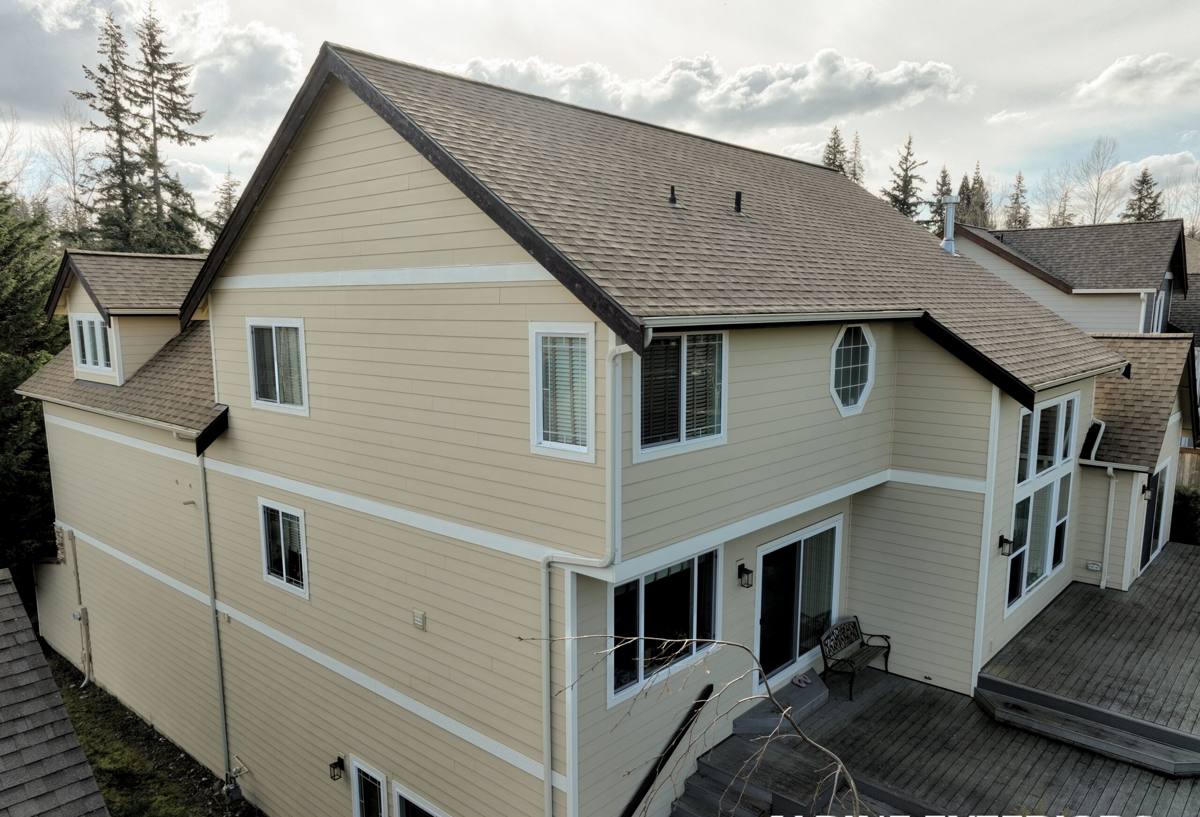
What Makes a York Deck Different From an Inland Build
A deck in a dry, inland climate mostly has to deal with sun and occasional rain. A York deck has to deal with near-constant moisture exposure, airborne salt, and — depending on the lot — a tree canopy that keeps large sections of the deck shaded and damp for most of the day. None of that is a reason to avoid building a deck here. It just means the build has to account for it.
Salt Air and Metal Fatigue
Even a few miles from open water, salt-laden air carries inland on wind and settles on any exposed metal. Standard zinc-coated fasteners and connectors that would last decades in a dry inland town can start pitting and staining within a few years out here. It doesn't usually fail catastrophically overnight — it corrodes slowly, quietly, in places you can't see until a board comes loose or a rail feels wobbly.
Shade, Moss, and Slip Risk
Many York lots carry mature tree cover, which is one of the neighborhood's genuine draws — but shade plus regular rain is exactly the recipe moss needs. On a deck, moss isn't just an appearance issue. It holds moisture against the wood surface and creates a slip hazard on stairs and walking surfaces, especially through the darker, wetter months.
Decking Material Options for This Climate
There's no single "best" decking material for every homeowner — it depends on budget, how much upkeep you want to take on, and how the deck will be used. Here's how the common options actually perform in a marine, shade-prone environment like York's, based on what we see in the field, not manufacturer marketing.
| Material | Moisture / Salt Resistance | Moss & Mildew Resistance | Maintenance | Relative Cost |
|---|---|---|---|---|
| Pressure-treated lumber | Good, if properly sealed and detailed | Moderate — needs regular cleaning | Annual cleaning, re-sealing every 2-3 years | Lowest |
| Western red cedar | Naturally decay-resistant, moderate salt tolerance | Moderate — moss still grows on shaded cedar | Regular cleaning, periodic oil or stain | Mid |
| Capped composite decking | Very good — doesn't absorb moisture like wood | Good — smoother, harder surface resists moss buildup better | Occasional washing, no sealing or staining | Higher upfront |
| Uncapped/low-end composite | Fair — some older formulations absorb moisture at the core | Poor to moderate — can still stain and green in shade | Regular washing, can't be resurfaced | Mid |
Our honest take: for a shaded York lot within a few miles of the water, capped composite is usually the lowest-maintenance long-term choice, but a well-detailed cedar or pressure-treated deck built with proper drainage and airflow underneath will also hold up for decades. The material matters less than the details underneath it — which is where most decks actually fail.
What's Underneath Matters More Than What's On Top
Homeowners naturally focus on the decking boards because that's what they see and walk on. But the framing, fasteners, and footings are what determine whether the deck is still solid in fifteen years — and they're exactly what generic, rushed builds skip past.
Framing and Ledger Protection
The ledger board — where the deck attaches to the house — is the single most common failure point on any deck, and it's the connection most exposed to bulk water running off a roof or siding. It needs proper flashing that directs water away from the house framing, not just caulk, which dries out and cracks long before the deck's lifespan is up. Joists benefit from a protective tape or membrane over the top edge so standing water doesn't sit directly on cut lumber.
Fasteners and Hardware
Given the salt exposure discussed above, we use stainless steel or high-grade coated fasteners and structural connectors rather than standard zinc hardware, particularly at the ledger, post bases, and any hardware that's difficult to inspect or replace later. It costs more up front. It's also the difference between hardware that's still sound in year twenty and hardware that's rusted through in year eight.
Footings in Wet Ground
Whatcom County soil holds water, and a lot of it stays saturated for months of the year. Footings need to be sized and set below frost depth and on stable, well-draining bearing soil — not just poured to the minimum and hoped for. A deck that shifts or heaves because a footing was undersized is a structural problem, not a cosmetic one.
Drainage, Slope, and Keeping Moss From Taking Over
Most of the moss and mildew problems we get called out for aren't a materials issue — they're a design issue. Standing water and dead air are what let moss establish itself. A deck that's built to shed water and breathe underneath will stay noticeably cleaner with far less scrubbing.
- Decking installed with a slight slope away from the house so water doesn't pool against the siding
- Consistent gapping between boards so water drains through instead of sitting on the surface
- Adequate clearance and airflow beneath the deck so the underside can actually dry out between storms
- Gutters or drip paths directed away from the deck surface where roof runoff would otherwise concentrate
- Any built-in planters or landscaping kept from trapping soil moisture directly against structural framing
- Debris — needles, leaves, seed pods — cleared from between boards regularly, especially under tree cover
Railings, Stairs, and Getting the Code Right
Washington follows the International Residential Code for deck construction, and Whatcom County enforces it through the standard permitting process — a permit is required for most new decks, particularly anything attached to the house or elevated above grade. The main points that actually get inspected:
- Guardrails required on any walking surface more than 30 inches above grade, built to a minimum 36-inch height
- Baluster spacing that won't allow a 4-inch sphere to pass through, for child safety
- Stair rise and run within code tolerances, with handrails required on stairs with multiple risers
- Proper attachment or independent footing if the deck can't be safely ledger-attached to the house structure
Skipping the permit might save a little time upfront, but it can become a real problem at resale — an unpermitted deck can hold up a home sale or require retroactive inspection and correction. We pull the proper permits as part of the job so you're not the one dealing with that later.
How We Build a Deck in York, Start to Finish
Site Visit and Design
We walk the actual site — the slope, the tree cover, how close it sits to the water, and how the sun and shade move across the yard through the day. That's what drives the material recommendation and the framing plan, not a standard template.
Permitting
We handle the Whatcom County permit submission and inspections that go with it, so the deck is built to code and documented correctly from day one.
Construction
Footings, framing, flashing, and fastener choices are all handled with this specific climate in mind — not generic practices pulled from a drier region. We work around the region's rain patterns rather than rushing a pour or a framing step in weather that compromises it.
Final Walkthrough
Before we call it done, we walk the deck with you — checking rail stability, stair feel, drainage, and finish — and go over the maintenance schedule so you know what to expect in year one versus year ten.
Why Hire a Crew That Already Works in York
A contractor who mostly works inland, or outside Whatcom County, doesn't have the day-to-day feel for how fast moss establishes on a shaded York lot, how the local soil drains, or which fastener grade actually holds up this close to the water. That knowledge comes from doing the work here repeatedly, not from a spec sheet. It also means we already know the county's permitting process and inspection expectations, so there are no surprises mid-project.
Keeping Your New Deck Looking Good Through the Wet Season
A well-built deck still needs some seasonal attention — the goal is to make that upkeep minimal, not eliminate it entirely. A simple annual rhythm works well here: clear debris and check drainage paths in fall before the heavy rains set in, do a light wash-down in late winter or early spring to knock back any moss before it spreads, and inspect railings and stair connections once a year for any movement. Composite decking mostly needs washing; wood decking needs that plus periodic sealing or staining on the schedule appropriate to the species.
If you're weighing a new deck for a York property, or replacing one that's showing its age, we're happy to take a look and give you a straight, no-pressure estimate — just fill out the form below.