 Fairhaven Siding
 Building a Deck That Holds Up in Edgemoor's Marine Climate
Edgemoor sits close enough to the water that its homes deal with a version of Pacific Northwest weather that's a notch harder on outdoor structures than most inland Whatcom County neighborhoods. Salt-laden air off the bay, driving rain that comes in sideways during fall and winter storms, and a long stretch of the year when shaded, damp surfaces grow moss faster than they dry out — all of it works against a deck that wasn't built with those specific conditions in mind. A deck that would be fine in a drier climate can start showing fastener corrosion, soft framing, or slick, moss-covered boards within a few seasons out here if it was built to a generic standard instead of a local one.
This page covers what we actually pay attention to when we build or rebuild a deck in Edgemoor: material choices, hardware, drainage, and the parts of the job that are easy to skip if a crew doesn't do this kind of work regularly in this kind of climate.
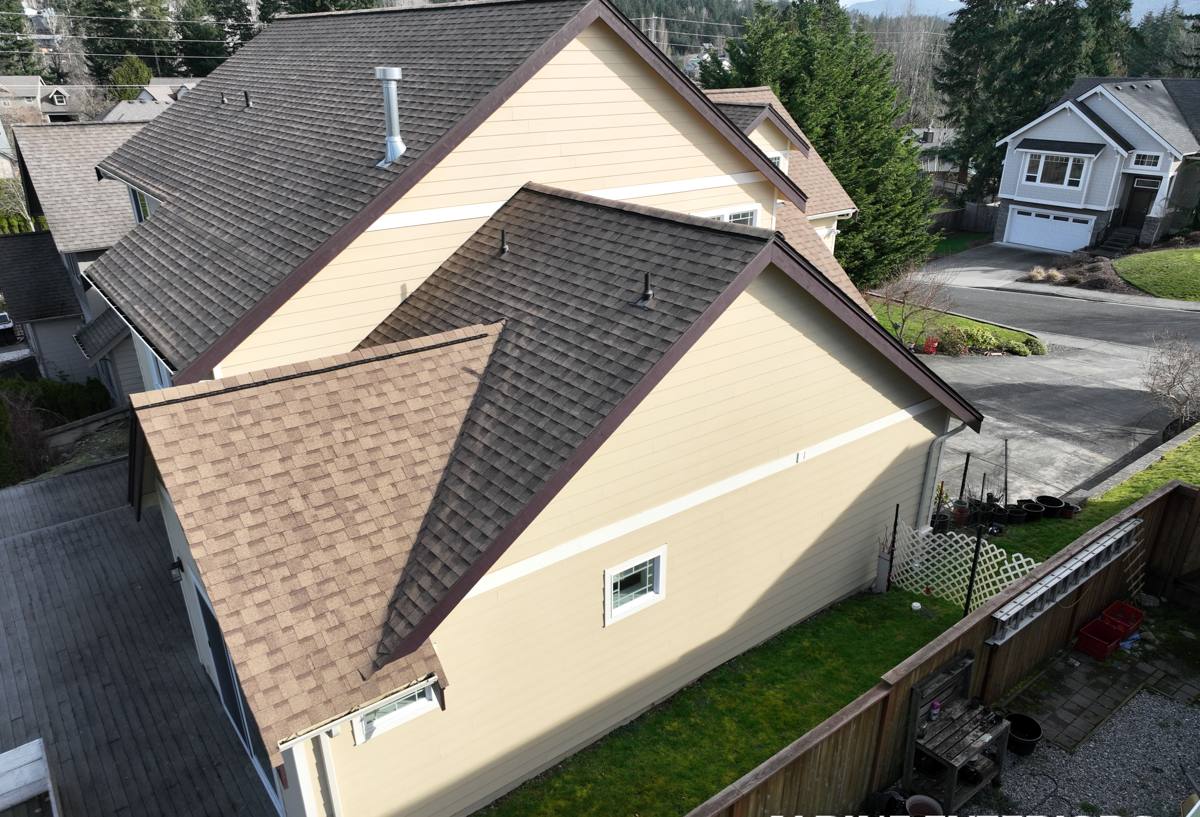
What Edgemoor's Location Demands From a Deck
Salt Air and Metal Fasteners
Proximity to salt water accelerates corrosion on anything metal — nails, screws, joist hangers, bolts, and railing hardware. Standard electro-galvanized fasteners that might last for years in a drier, inland setting can start rusting and staining the wood around them much sooner near the water. Once a fastener starts to corrode, it loses holding strength gradually and invisibly, which is a bad combination for something holding structural framing together.
Driving Rain and Ledger Board Attachment
The ledger board — where the deck attaches to the house — is the single most common failure point on decks in wet climates, and Fairhaven's rain patterns make it worse. Wind-driven rain gets pushed up and under trim and siding at the ledger connection if it isn't flashed correctly, and that moisture has nowhere to go. It sits against the rim joist and the ledger, and over years that leads to rot in framing you can't see from the outside until it's a real problem.
Moss, Shade, and Surface Drainage
A lot of Edgemoor lots have mature trees and northern or shaded exposures, which means decks here spend more of the year damp than a deck out in open sun would. Moss and algae need moisture and shade to establish, and once they get a foothold on decking boards or stair treads, they hold even more moisture against the wood and create a genuine slip hazard. Board spacing, air flow underneath the deck, and how quickly the surface can shed water all matter more here than they would on a dry, sun-exposed lot.
Choosing the Right Decking Material for This Climate
There's no single "best" decking material for every home — it depends on budget, how much upkeep an owner wants to do, and how exposed the site is to shade, salt air, and rain. Here's how the common options actually perform in Edgemoor's conditions:
| Material | Moisture Behavior | Maintenance | Typical Lifespan Here | Notes |
|---|---|---|---|---|
| Pressure-treated wood | Absorbs and releases moisture readily; prone to cupping/checking if not sealed | Needs cleaning and sealing every 1-2 years in this climate | 15-20 years with upkeep | Lowest upfront cost; upkeep is non-negotiable near salt air |
| Cedar | Naturally rot- and insect-resistant, but still needs sealing to fight moss/graying | Similar sealing schedule to treated wood | 15-25 years with upkeep | Better natural moisture resistance; higher material cost |
| Composite decking | Doesn't absorb water into the board itself; surface can still grow moss/algae if shaded and damp | Periodic washing; no sealing or staining | 25-30+ years | Higher upfront cost, much less hands-on upkeep over time |
| PVC/capped composite | Fully moisture-resistant surface; best resistance to moss staining and rot | Lowest — occasional washing | 25-30+ years | Highest material cost; best fit for heavily shaded, damp lots |
For a shaded, moisture-heavy Edgemoor lot, we'll usually walk an owner through whether the lower upfront cost of wood is worth the ongoing sealing schedule, or whether a composite or capped product pencils out better over the life of the deck given how much moss and algae pressure the site actually has. We frame this as a trade-off, not a sales pitch — both approaches work when built correctly.
Structural Details That Matter More Here Than Elsewhere
The visible decking is only part of the job. The structure underneath is what determines whether the deck is still solid and safe in ten or twenty years, and it's where climate-specific details matter most:
- Ledger flashing: Proper metal flashing and a water-resistant barrier behind the ledger board, installed so water sheds outward and down rather than tracking back toward the house framing.
- Joist tape: Self-adhering flashing tape over the tops of joists and beams, so fasteners driving through decking don't create an open path for water into the wood grain.
- Corrosion-resistant hardware: Stainless steel or hot-dip galvanized fasteners and structural connectors, sized for salt-air exposure rather than the cheaper coated hardware that's fine inland.
- Footings set below frost depth and on solid bearing: Especially relevant on sloped or wooded Edgemoor lots where soil conditions vary from what's a few feet away.
- Board spacing for drainage: Gaps sized to let water pass through quickly rather than pool, which also helps boards dry out between rain events instead of staying damp long enough for moss to take hold.
- Ventilation underneath: Enough clearance and airflow below the deck framing so the underside can dry out, rather than staying in a permanently damp microclimate.
Our Deck Building Process
Every deck we build or rebuild goes through the same basic sequence, adjusted for the specific site:
- Site assessment: We look at sun/shade exposure, drainage patterns, existing structure (for rebuilds), and how close the site is to salt air exposure to inform material and hardware choices.
- Design and material selection: We talk through decking material, railing style, and layout with the homeowner, including the honest cost and maintenance trade-offs above.
- Permitting: We handle the permit process for the scope of work that requires it.
- Framing: Footings, posts, beams, and joists built to span and load requirements, with ledger flashing and joist tape installed before decking goes down.
- Decking installation: Boards installed with correct spacing and fastening for the chosen material.
- Railing and stairs: Built to code for height and baluster spacing, with the same corrosion-resistant hardware standard used throughout.
- Final walkthrough: We go over the finished deck with the homeowner, including what maintenance (if any) the chosen material needs going forward.
What a Correctly Built Deck Includes
- Ledger properly flashed and sealed against the house
- Joist tops protected with joist tape before decking is fastened down
- Stainless or hot-dip galvanized fasteners and connectors throughout
- Footings sized and set to local frost and bearing requirements
- Board spacing that allows real drainage, not just a hairline gap
- Adequate under-deck ventilation and clearance from grade
- Railings and stairs built to current code height and spacing
Permits and Local Considerations
Deck projects in and around Fairhaven typically require a permit once the deck exceeds a certain height or size, and there are setback rules tied to property lines that can affect layout, particularly on the smaller or more irregularly shaped lots common in older Edgemoor neighborhoods. Exact requirements depend on the specific property, so we don't guess — we confirm what applies to a given lot before finalizing a design, and we handle the paperwork so the homeowner isn't stuck navigating it alone.
Maintenance in a Moss-Prone, Salt-Air Environment
Whatever material a deck is built from, a few habits go a long way in this climate:
- Sweep debris (leaves, needles) off the deck regularly, especially in fall — trapped organic matter holds moisture and feeds moss growth.
- Wash the surface at least once a year to remove early moss and algae growth before it gets established and stains the surface.
- For wood decks, plan on resealing or staining on a 1-2 year cycle depending on sun exposure — shaded areas will need it more often than sun-exposed sections of the same deck.
- Check railing and stair hardware periodically for early rust staining, which is the first visible sign of fastener corrosion in salt-air settings.
- Keep gutters and downspouts near the deck clear so roof runoff isn't dumping extra water onto or near the structure.
Why Hiring a Crew That Already Works Edgemoor Matters
A deck built to a generic, one-size-fits-all standard can look fine on day one and still be the wrong deck for this location. The difference shows up years later — in fastener corrosion a general contractor from outside the area might not think to spec against, in moss buildup on boards that weren't spaced or oriented with drainage in mind, or in soft framing at a ledger that wasn't flashed for wind-driven rain. Working regularly in Fairhaven and Whatcom County means we're not guessing at what this climate does to a deck over time — we've seen it, and we build against it from the start rather than fixing it later.
If you're planning a new deck or need to replace one that's showing its age, we're happy to take a look and talk through what makes sense for your specific property. Reach out for a free, no-pressure estimate using the form below.