 Fairhaven Siding
 Windows in Sunnyland Face a Different Set of Problems
Sunnyland sits close enough to the water that homes here take on a steady diet of salt-laden air, wind-driven rain, and long stretches of damp, low-sun weather that keeps moss and mildew active for much of the year. Whatcom County's marine climate is mild compared to a lot of the country, but "mild" doesn't mean gentle on building materials. It means near-constant moisture exposure, which is a much harder test for a window system than the occasional hard freeze or heat wave other regions deal with.
Windows are one of the first things to show that stress. Salt air accelerates corrosion on hardware and fasteners. Driving rain finds any gap in flashing or sealant and pushes water sideways and upward, not just down. And moss season — which around here can stretch from fall through spring — keeps wood trim, sills, and cladding damp for weeks at a time, which is exactly the environment rot and mildew need to take hold. A window that was installed correctly for a drier inland climate can still fail early in Sunnyland if it wasn't built and sealed with this specific exposure in mind.
What "Custom" Actually Means for a Window Job Here
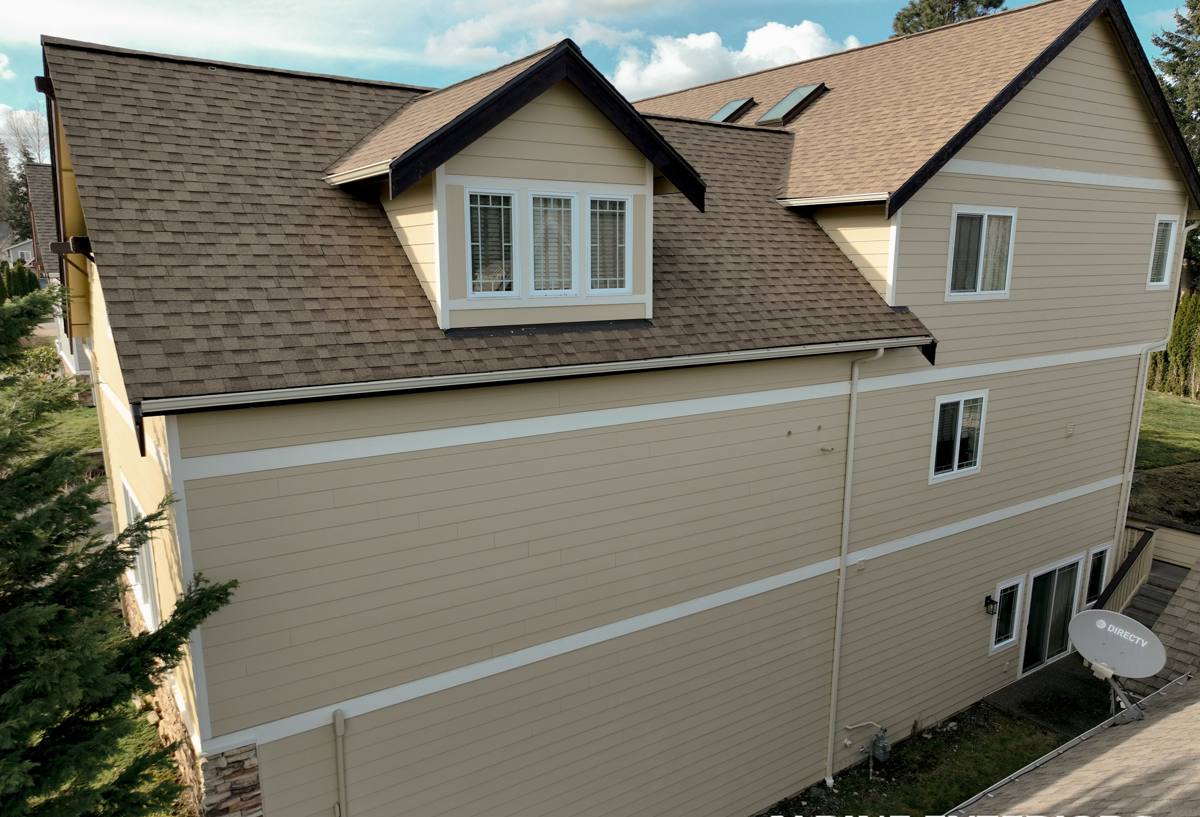
"Custom windows" doesn't just mean an odd-sized opening or a decorative shape, though we do plenty of that. In a neighborhood like Sunnyland, custom also means matching the window package — frame material, glass, hardware, and flashing detail — to how that specific wall of the house takes weather. A window on the side of a house that catches prevailing wind and rain needs a different sealant strategy and sometimes a different frame material than a sheltered window on the lee side of the same home.
It also means working with what's actually there. Sunnyland has a mix of older homes with original wood-frame windows, mid-century houses with early aluminum units, and newer construction with vinyl or fiberglass. Each of those starting points changes the approach — the rough opening condition, the existing flashing (or lack of it), and what's hiding behind the trim once it comes off.
Full-Frame Replacement vs. Insert Replacement
There are two basic ways to replace a window, and the right choice depends on the condition of what's already in the wall:
- Insert (pocket) replacement — the new window is fitted inside the existing frame. Faster and less invasive, but it only works if the existing frame is still sound, square, and free of rot or water damage.
- Full-frame replacement — the old window and its frame come out down to the rough opening, exposing the sheathing and framing so we can inspect and fix what's underneath. This is the right call any time there's evidence of past leaks, soft wood, or a home old enough that the original flashing was never installed to modern standards.
In a damp coastal neighborhood, we lean toward full-frame more often than a contractor working inland might, simply because hidden water damage behind old trim is common enough that it's worth checking rather than assuming.
Where Coastal Window Installations Actually Fail
Almost every early window failure we get called out to look at traces back to one of a small handful of causes — not the window unit itself, but how it was integrated into the wall.
Flashing and Water Management
A window opening needs to shed water the way shingles do: each layer overlapping the one below it, so water is always directed outward and down, never trapped behind the siding. Wind-driven rain off the water can push moisture uphill and sideways, so sill pans, head flashing, and proper integration with the weather-resistive barrier matter more here than in a drier climate where gravity alone does most of the work.
Sealant Choice and Placement
Not every caulk or sealant is rated for constant UV and moisture cycling. We've opened up window trim where the sealant looked fine on the surface but had already failed behind the trim, letting water track down into the wall cavity for months before anyone noticed a soft spot.
Hardware and Fastener Corrosion
Salt air is hard on unprotected metal. Standard fasteners and hinge hardware can start corroding years earlier near the water than they would a few miles inland. Using stainless or coated fasteners rated for coastal exposure costs a little more up front and avoids replacing corroded hardware — or worse, water finding its way in through a rusted-through fastener hole — a few years down the road.
Choosing a Frame Material for This Climate
There's no single "best" window material — each one is a different set of trade-offs, and the right pick depends on the home, the budget, and how exposed that particular wall is.
| Frame Material | How It Handles Salt Air & Rain | Maintenance | Typical Fit |
|---|---|---|---|
| Vinyl | Won't corrode or rot; performs well in coastal humidity | Low — occasional cleaning | Most homes, best value |
| Fiberglass | Excellent dimensional stability, resists moisture and salt exposure | Low | High-exposure walls, long-term durability priority |
| Wood (unclad) | Beautiful but vulnerable to rot if finish isn't maintained in a wet climate | High — regular refinishing | Historic character homes where owner accepts upkeep |
| Wood-clad (wood interior, metal or vinyl exterior) | Good — exterior shell protects wood from weather | Moderate | Homes wanting a wood interior look with less exterior maintenance |
| Aluminum (older stock) | Prone to corrosion and thermal transfer near salt air; largely superseded by modern materials | Moderate to high | Mostly seen in older replacements needing upgrade |
For most Sunnyland homes, we steer clients toward vinyl or fiberglass for the bulk of the house, and reserve unclad wood for situations where matching a historic look is the priority and the owner understands the upkeep involved. That's a maintenance-and-longevity recommendation based on how these materials behave in constant moisture, not a knock on wood windows generally — they've been used successfully in this region for a century, they just ask more of the owner.
Glass and Weatherproofing Details Worth Getting Right
The glass package matters almost as much as the frame in a climate that's overcast and damp more often than not. A double-pane, Low-E insulated glass unit is standard for this region — it cuts heat loss during the cold, wet months and reduces condensation on the interior pane, which is a common complaint in older single-pane or poorly sealed windows once the weather turns damp.
Argon or krypton gas fill between the panes adds a modest insulation boost. Warm-edge spacers (instead of older metal spacers) reduce the cold spot at the glass edge, which is where condensation and even mold tend to start on interior sills during our wetter months. None of this is exotic — it's standard on quality windows today — but it's worth confirming rather than assuming, especially on lower-cost window lines.
Our Installation Process
- On-site assessment. We look at each window opening individually — exposure direction, existing flashing condition, and any sign of past water intrusion — rather than quoting the whole house as identical openings.
- Removal and inspection. Old units come out carefully so we can check the sheathing, framing, and existing flashing underneath before anything new goes in.
- Repair as needed. Any soft wood, missing flashing, or gaps in the weather-resistive barrier get addressed before the new window goes in — installing a good window over a bad opening just hides the problem temporarily.
- Flashing and sealing. Sill pan, jamb, and head flashing installed in proper shingle-lap order, with sealant rated for coastal UV and moisture exposure.
- Setting and securing the window. Shimmed level, plumb, and square, fastened with corrosion-resistant hardware appropriate for the exposure.
- Insulation and interior/exterior finish. Gaps insulated (not overpacked, which can bow the frame), then trim and caulking finished to match the home.
- Final check. Operation, seal, and drainage confirmed before we call the job done.
Signs Your Sunnyland Home's Windows Need Attention
- Fogging or condensation between the panes (a sign the seal has failed)
- Soft or discolored trim around the window frame
- Drafts or a noticeable temperature difference near the window even when closed
- Windows that are hard to open, close, or lock — often a sign the frame has shifted or swollen
- Visible moss, mildew, or dark staining on sills and exterior trim
- Paint or finish that's peeling faster on window trim than on the surrounding siding
- Any musty smell near a window, which can mean moisture is already inside the wall cavity
Cost Factors for Custom Window Projects
Every project is different, but the biggest cost drivers on a custom window job in Sunnyland tend to be the same handful of things:
| Factor | Why It Moves the Price |
|---|---|
| Full-frame vs. insert replacement | Full-frame involves more labor and often uncovers repairs; insert is faster when the existing frame is sound |
| Frame material | Vinyl is typically the most budget-friendly; fiberglass and wood-clad cost more up front |
| Number and size of openings | Larger or non-standard shapes require custom fabrication rather than stock sizing |
| Hidden repair needs | Rot or water damage found behind old trim adds material and labor before the new window can go in |
| Glass package | Upgraded Low-E coatings, gas fill, or impact-rated glass add cost but improve performance |
| Trim and finish work | Matching existing interior/exterior trim details, especially on older homes, adds labor |
We give honest, itemized estimates rather than a single lump number, so you can see where the cost is actually going and make decisions about where to spend and where to save.
Why Local Experience in Sunnyland Matters
A crew that regularly works Fairhaven and the surrounding Bellingham neighborhoods has already seen how homes in this exact microclimate age. We know what a window opening on an exposed, water-facing wall tends to look like after twenty or thirty years of driving rain and moss season, versus one that's more sheltered. That familiarity means fewer surprises once we open up a wall, a more accurate estimate from the start, and flashing and sealing decisions based on how this specific area actually behaves — not a generic national installation standard that assumes a drier climate.
It also means we're accountable locally. If a question comes up after the install, we're not a crew that drove in from out of the area for one job and moved on.
Maintenance That Actually Matters Here
Even a well-installed custom window benefits from a little seasonal attention in a climate like this:
- Clear debris and moss from sills and tracks before wet season sets in, so water has somewhere to drain instead of sitting
- Check exterior caulking annually for cracking or separation, especially on sun-and-rain-exposed walls
- Keep gutters and downspouts clear so roof runoff isn't dumping extra water directly onto window heads
- Operate each window a few times a season, even ones you rarely open, so hardware doesn't seize
- Watch for early signs of trouble — fogging glass, soft trim, sticking sashes — and address them before they become bigger repairs
None of this replaces a good installation, but it extends the life of one considerably in a neighborhood that gets this much sustained moisture exposure.
If you're weighing a window project in Sunnyland — whether it's a couple of problem windows or a full-home replacement — we're happy to take a look and give you a straightforward, no-pressure estimate. Use the form below to get started.