 Fairhaven Siding
 Windows Built for the Puget Neighborhood, Not a Generic Coastal Spec
Puget sits close enough to the water that its homes take a different kind of beating than houses even a mile or two inland. Salt-laden air moves through on the wind, driving rain comes in sideways off the Sound for weeks at a stretch, and the moss season here runs longer than most of Washington. Windows that were fine when a house was built decades ago are often the first thing to show their age — fogged glass, swollen sashes, drafts you can feel with a hand held near the frame. Replacing them correctly in this specific setting means paying attention to details that a one-size-fits-all install skips.
We're a Fairhaven-based crew, and Puget is part of our regular territory. That matters more than it sounds like it should, because window performance in a marine climate is decided less by the product on the shelf and more by how it's flashed, sealed, and set into the wall.
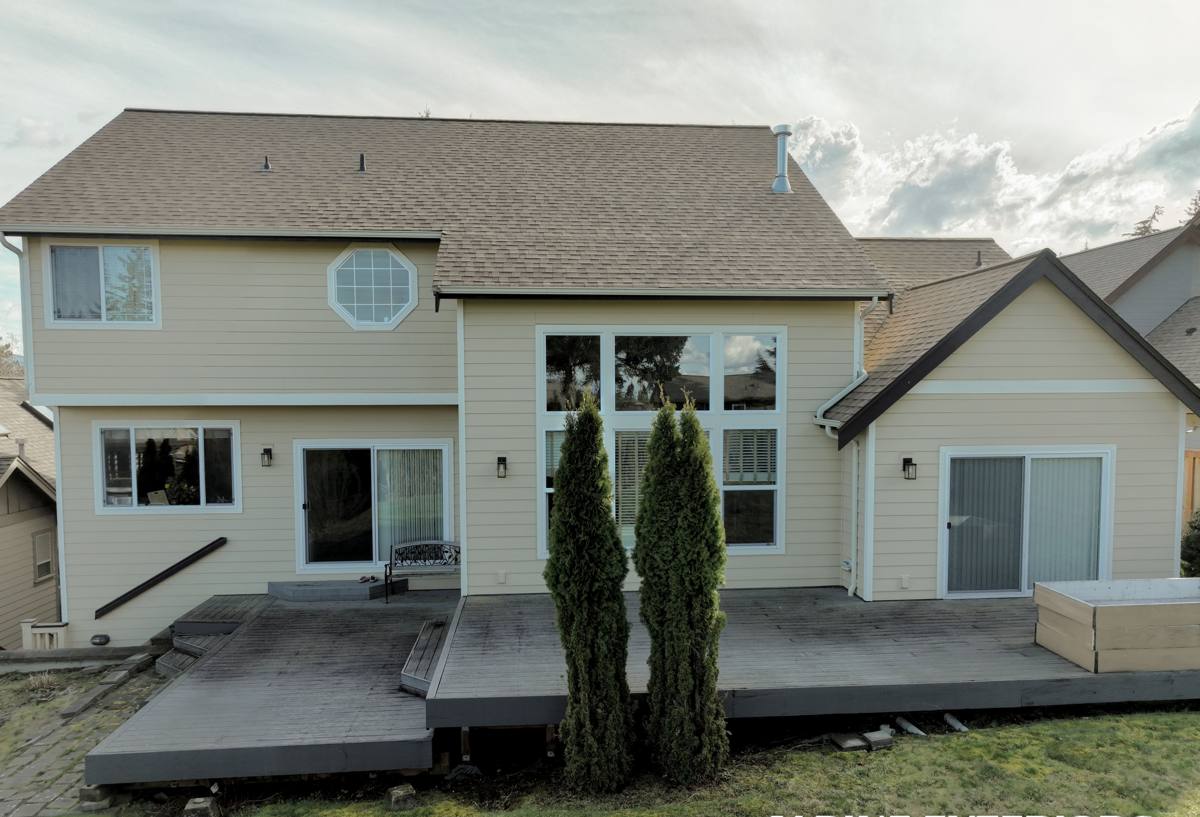
What This Climate Actually Does to Windows
Salt Air and Metal Fatigue
Airborne salt accelerates corrosion on anything metal — hinges, cranks, balance systems, and especially older aluminum frames. It also degrades some sealants faster than the manufacturer's stated lifespan assumes, since most warranty testing isn't done with a marine air profile in mind. We factor that in when we talk through hardware and finish options with Puget homeowners.
Driving Rain and Wind-Driven Moisture
Whatcom County storms don't just drop rain straight down — wind pushes it sideways into wall assemblies, and a window opening is the weakest point in that assembly by design. Water doesn't need a big gap to get in; it needs a path, and horizontal-driving rain will find one that a calmer climate's flashing detail would never expose.
Moss, Mildew, and a Long Wet Season
Moss doesn't just grow on roofs. It takes hold in shaded window sills, in wood cladding around older frames, and in any spot where water sits instead of draining. A long wet season means more months where moisture-related problems compound before a dry stretch ever gives materials a chance to fully dry out.
Signs Your Current Windows Are Already Losing the Fight
- Fogging or a visible haze between panes — the seal on the insulated glass unit has failed
- Soft or spongy wood at the sill or lower corners of the frame
- Visible moss or dark staining on the exterior trim around the window
- Drafts you can feel on a windy day even with the window latched
- Sashes that stick, won't stay up, or have become hard to operate
- Paint that's cracking or peeling specifically around the window perimeter, not the whole wall
Any one of these on its own might just mean a repair. Two or three together usually means the window and its surrounding flashing are both due for replacement, not patching.
What a Correct Installation Involves Here
A window replacement is really two jobs: removing the old unit without damaging the opening, and building a new water-management system around whatever new window goes in. In a driving-rain climate, the second job matters as much as the first.
Inspecting the Opening
Before anything new goes in, we check the rough opening for rot, soft framing, or old flashing that's already failed. Installing a great window into a compromised opening just hides the problem behind new trim — it doesn't fix it.
Flashing and Water Management
This is the step that separates a durable install from one that fails in five years. Proper flashing directs any water that gets past the exterior cladding back out, rather than letting it collect at the sill. That includes sill pans, correctly lapped house wrap or building paper, and flashing tape sequenced so every layer sheds water to the one below it — never the reverse.
Setting the Window Level, Plumb, and Square
A window that's slightly out of square will bind, won't seal evenly, and puts uneven stress on the frame that shows up as premature wear. We shim and set every unit so it operates the way it's supposed to for the long haul, not just on installation day.
Sealing and Insulating the Gap
The gap between the window frame and the rough opening needs the right combination of backer rod, low-expansion foam, and exterior sealant — too much rigid foam can actually bow a frame out of square, which is a common mistake on rushed jobs.
Exterior Trim and Final Weatherproofing
The last exterior layer — trim, caulking, and paint or stain — is what stands between the assembly and the next storm. We match this to the home's existing trim details where possible so the new windows look original to the house, not bolted on.
Choosing the Right Frame Material for Puget Conditions
There's no single "best" window material — the right choice depends on how much upkeep a homeowner wants to take on and how the window is oriented relative to weather exposure.
| Frame Material | Salt Air / Moisture Behavior | Maintenance | Typical Fit |
|---|---|---|---|
| Vinyl | Won't corrode or rot; performs consistently in marine air | Low — occasional cleaning | Most budget-conscious replacements |
| Fiberglass | Very stable, resists expansion/contraction from wet-dry cycles | Low | Larger openings, higher wind exposure |
| Wood, factory-clad exterior | Clad exterior handles rain well; needs correct detailing at joints | Moderate — interior wood still needs occasional attention | Homes prioritizing a traditional interior look |
| Bare wood | Requires diligent upkeep in this climate; we discuss trade-offs honestly before recommending it | High | Historic-accuracy projects where the homeowner accepts the maintenance |
| Aluminum | Prone to corrosion and condensation in salt air over time | Moderate to high | Rarely our first recommendation for this specific setting |
We're upfront when a material isn't a great match for a given exposure — for instance, a west-facing wall that takes the brunt of storm winds is a tougher spot for bare wood than a sheltered, covered entry. That's a maintenance and moisture-behavior conversation, not a knock on any manufacturer.
Glass and Hardware Choices That Matter Locally
Insulated Glass Units
Double-pane, argon-filled units are standard for a reason — they cut down on condensation on the interior glass, which is a common complaint in homes near the water where indoor humidity and cool glass surfaces don't get along.
Hardware and Corrosion Resistance
Cranks, locks, and balance hardware see more wear in salt air. We favor hardware finishes and materials with better corrosion resistance for homes in this area, since replacing a failed lock mechanism is a far smaller job than replacing a failed frame — but it's still an avoidable headache with the right upfront choice.
Screens and Weatherstripping
Weatherstripping wears faster in a climate with this much seasonal moisture cycling. We check and, where needed, replace this on both new installs and existing windows we're servicing, since a worn strip undoes a lot of the benefit of an otherwise good window.
Our Process for Puget Projects
- On-site assessment of existing windows, openings, and any visible moisture or rot damage
- Honest recommendation on materials and glass options based on that specific home's exposure
- Written estimate with no pressure to decide on the spot
- Removal of old units with care taken to protect siding and interior trim
- Opening inspection and repair of any rot or damaged framing found underneath
- Flashing and sill pan installation sequenced for proper water shedding
- Setting, shimming, and sealing the new window
- Exterior trim, caulking, and final weatherproofing
- Walkthrough so you know how to operate and maintain the new windows
Cost Factors to Expect
Every project is different, but the same handful of factors drive most of the cost variation we see on Puget-area jobs.
| Factor | Why It Affects Cost |
|---|---|
| Number and size of openings | More or larger windows mean more material and labor |
| Condition of the existing opening | Rot or water damage found during removal adds repair work before the new window goes in |
| Frame material selected | Vinyl, fiberglass, and clad-wood carry different material costs |
| Glass package | Upgraded glass coatings or gas fills add cost but improve comfort and efficiency |
| Access and site conditions | Second-story or hard-to-reach windows take more time and setup |
| Trim and exterior finish work | Matching existing trim profiles or repainting adds labor |
Broadly, homeowners should expect a range rather than a flat number — we'll walk through where a given project falls on that range and why, once we've actually seen the openings in person.
Maintaining New Windows in a Wet Climate
- Clear moss and debris from sills and tracks a couple of times a year, especially after fall storms
- Check exterior caulking annually for cracking or gaps and touch up before the wet season sets in
- Keep gutters and downspouts clear so runoff isn't sheeting directly across upper windows
- Operate each window a few times through the year so hardware doesn't seize up from disuse
- Wipe down hardware periodically if you're right near the water, where salt residue builds up faster
Why a Crew That Already Works Puget Is Worth Choosing
Window installation looks similar on paper everywhere — remove old unit, flash, set new unit, seal. What actually determines whether it holds up is judgment calls made on site: how much flashing overlap a particular wall assembly needs, whether a sill has enough slope to shed water, how a specific trim profile ties into the existing siding. A crew that regularly works this neighborhood has already seen how local homes are built, what their common trouble spots are, and what actually holds up through a Whatcom County winter versus what just looks fine on install day. That's the difference between a window that performs for twenty-plus years and one that needs attention again in five.
If your Puget-area home has windows that are fogging, drafty, or showing wear around the frame, we're happy to take a look and give you a straightforward, no-pressure estimate — just fill out the form below.