 Fairhaven Siding
 Building Decks for Happy Valley's Climate, Not Against It
Happy Valley homes sit in one of the more demanding microclimates for outdoor structures in Whatcom County. The combination of salt-laden air off the bay, long stretches of driving rain, and a moss season that can run half the year puts real stress on a deck's framing, fasteners, and decking surface. A deck built with generic, one-size-fits-all methods will show its age fast here — soft spots in the boards, rust streaks around fastener heads, green film that never fully dries out. A deck built for this specific environment holds up the way it should.
This page covers what a custom deck built for Happy Valley actually needs: the right materials, the right substructure details, the right drainage plan, and the maintenance rhythm that keeps it looking good year after year.
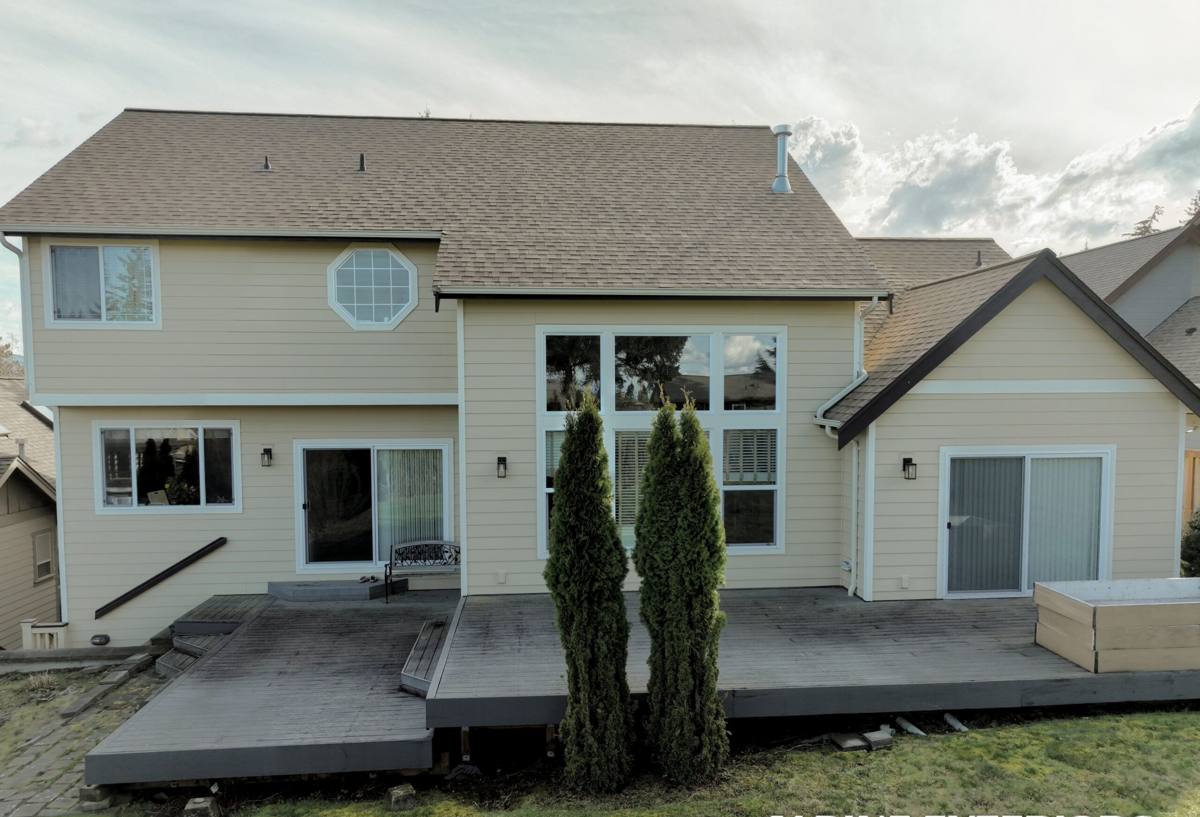
What Fairhaven's Climate Actually Does to a Deck
Moisture and Moss
Western Washington's wet season means a deck can stay damp for days at a stretch, especially in shaded or tree-covered yards common throughout Happy Valley. Moss and algae need exactly that kind of sustained moisture to establish, and once they take hold on wood decking they hold water against the surface, accelerate rot, and turn boards slick and dangerous underfoot. The boards that struggle most are the ones with tight grain patterns and minimal airflow beneath them — moisture gets trapped with nowhere to go.
Salt Air and Hardware
Fairhaven's proximity to Bellingham Bay means the air itself carries salt. Standard zinc-coated fasteners and hardware corrode faster in a marine air environment than they would twenty miles inland. Corroding fasteners aren't just a cosmetic problem — a joist hanger or ledger bolt that's lost structural integrity is a safety issue, and it's one of the most common reasons older decks in coastal neighborhoods fail inspection or need premature rebuilding.
UV, Rain Cycling, and Wood Movement
Even with our relatively mild summers, repeated wet-to-dry cycling causes wood to expand and contract. Over years, that movement works fasteners loose, opens gaps at butt joints, and can crack boards that weren't given room to move. A deck built without accounting for this cycle will need more frequent repair than one built with proper spacing and fastening from day one.
Choosing the Right Decking Material for Happy Valley
There's no single "best" decking material for every homeowner — budget, maintenance tolerance, and how the deck will be used all factor in. What matters is understanding the real trade-offs for our specific climate, not a national average climate.
| Material | Moisture & Moss Resistance | Maintenance | Typical Lifespan Here |
|---|---|---|---|
| Pressure-treated fir/hem-fir | Fair — needs sealing to perform well | Annual cleaning and re-sealing recommended | 10-15 years with upkeep |
| Western red cedar | Good natural rot resistance, moss still adheres to grain | Periodic cleaning, staining every 2-3 years | 15-20 years with upkeep |
| Composite decking | Very good — engineered to resist moisture absorption | Occasional washing, no sealing or staining | 25-30 years |
| PVC/capped polymer decking | Excellent — fully sealed surface sheds moisture and resists mold | Occasional washing only | 25-30+ years |
We install real wood decking when a homeowner wants that traditional look and understands the upkeep it requires. For most Happy Valley projects, though, we steer conversations toward composite or capped polymer decking, simply because the maintenance burden and moss vulnerability of wood is a harder sell once someone has lived through a few wet Northwest winters. That's a maintenance and moisture-behavior trade-off, not a knock on wood as a material — it's a matter of picking what fits how you actually want to spend your weekends.
Framing and Substructure: Where Decks Actually Fail
The decking surface is what you see, but the framing underneath is what determines whether a deck lasts fifteen years or thirty. Most deck failures we're called to repair or rebuild in this area start below the visible boards, not on top of them.
Ledger Attachment and Flashing
Where a deck attaches to the house is the single most important — and most commonly rushed — connection point. Proper flashing keeps water from wicking behind the siding and into the wall framing, which in a driving-rain climate is a slow, invisible way to cause serious structural damage. We flash every ledger connection to keep water moving away from the house, not into it.
Fasteners and Connectors
Given the salt air along this stretch of coastline, we use stainless steel or heavy-duty coated fasteners and structural connectors rated for corrosive environments, not standard-grade hardware. It costs more up front and it's the difference between hardware that's still sound in twenty years and hardware that's rusting through in eight.
Footings
Footing depth and sizing need to account for local soil conditions and frost depth requirements. Undersized or shallow footings are a common shortcut on lower-cost deck builds, and they show up later as a deck that feels bouncy or has started to settle unevenly.
Drainage and Airflow: The Details That Prevent Moss
Since moss and rot both need trapped moisture to take hold, the goal of a well-built deck is to give water nowhere to sit. That means:
- Proper board spacing to let water drain through rather than pool on the surface
- Adequate clearance and airflow beneath the deck so the underside can actually dry between rain events
- Grading beneath the deck that directs water away from the house foundation instead of toward it
- Joist tape or flashing on top of framing members to keep standing water off structural wood
- Keeping decking clear of tight-against-siding construction that traps humidity against the house
These are the kind of details that don't show up in a photo of a finished deck but make the real difference in how it performs through a Whatcom County winter.
Our Custom Deck Process
1. On-Site Design Consultation
We walk the property with you, talk through how you'll use the space, and look at site-specific factors — sun exposure, tree cover, slope, drainage patterns — that affect both design and material recommendations.
2. Material and Layout Planning
We go over decking, railing, and hardware options honestly, including the maintenance trade-offs of each, so you're choosing based on real information rather than a showroom sample.
3. Permitting
Most custom deck builds in Whatcom County require a building permit, particularly for decks attached to the house or elevated above a certain height. We handle the permit application and inspection scheduling as part of the build.
4. Framing and Structural Build
Footings, ledger flashing, joists, and structural hardware go in first, built to hold up under our wet season, not just pass a one-time inspection.
5. Decking, Railing, and Finish Work
Decking is installed with proper spacing and fastening for the material chosen, followed by railing, stairs, and any finish details like lighting or fascia.
6. Final Walkthrough
We walk the finished deck with you, cover basic care for the specific material installed, and make sure everything meets code and your expectations before we consider the job done.
Permits and Code Basics in Whatcom County
Deck permitting requirements depend on height, size, and whether the structure is attached to the house, but homeowners are often surprised how many "simple" deck projects still require a permit and inspection. Guardrails are typically required once a deck surface reaches a certain height above grade, and stair and railing dimensions follow specific code requirements for rise, run, and baluster spacing. Skipping permitting isn't a shortcut worth taking — it can complicate a home sale later and, more importantly, permits exist to catch structural issues like undersized footings or improper ledger attachment before they become safety problems.
Maintaining Your Deck Through Moss Season
Whatever material you choose, a little seasonal maintenance goes a long way in this climate. A basic annual routine:
- Clear leaves, needles, and debris from between boards before the wet season sets in — trapped organic matter is what moss feeds on
- Rinse or lightly scrub the surface a couple of times through fall and winter if the deck sits in shade
- Check railings and stair connections annually for movement or corrosion at hardware points
- For wood decking, re-seal or re-stain on the manufacturer's recommended schedule — don't wait until it looks dry and gray
- Keep gutters and downspouts near the deck clear so runoff isn't dumping extra water onto the structure
- Trim back overhanging branches where possible to improve sun exposure and airflow
Why a Crew That Already Works Happy Valley Matters
A deck built by a crew unfamiliar with this specific coastal, wet-winter environment often looks fine the day it's finished and starts showing problems within a few seasons — moss taking hold in spots that never dry out, hardware rusting faster than expected, a ledger connection that wasn't flashed for driving rain. We work in Fairhaven and the surrounding Whatcom County neighborhoods regularly, which means our material choices, fastening standards, and drainage details are already built around what actually holds up here, not around a generic national spec sheet. That local track record is also why we can give you a straight, realistic answer about what a given material or design choice will actually cost you in upkeep five and ten years down the road.
If you're considering a new deck or replacing one that hasn't held up to Happy Valley's weather, we're happy to come take a look and talk through honest options. Use the form below to request a free, no-pressure estimate.