 Fairhaven Siding
 Building Decks for the Chuckanut Landscape
The stretch of shoreline and forested hillside around Chuckanut, just south of Fairhaven, is one of the more demanding places in Whatcom County to build an outdoor structure. Homes here sit close to saltwater, often tucked under tall conifers, and frequently perched on sloped lots that drop toward Chuckanut Bay or Samish Bay. A deck built for this setting has to do more than look good in July. It has to survive a wet, shaded, salt-tinged climate for decades without rotting, rusting, or growing a carpet of moss by its second winter.
We build custom decks specifically for this area, and the decisions we make on materials, fasteners, drainage, and structure are shaped by what actually happens to wood and metal here — not by a generic spec sheet written for a drier climate.
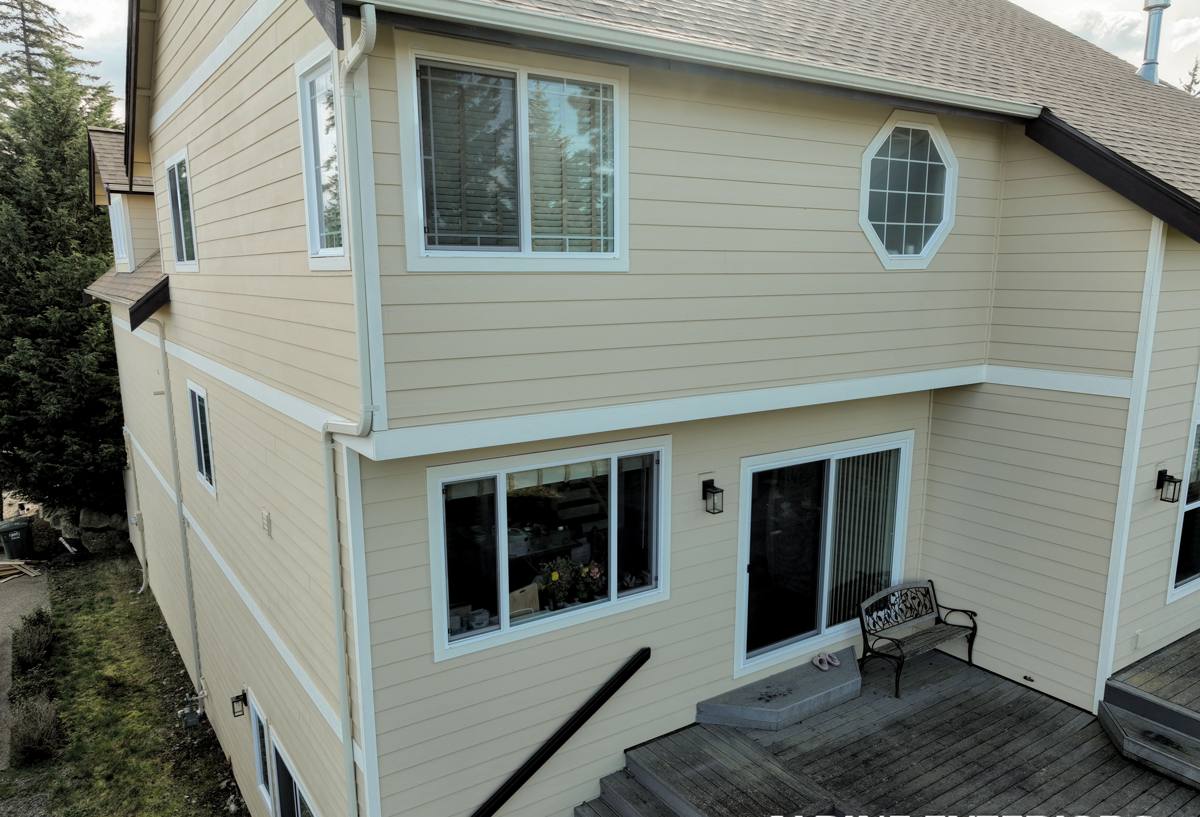
What the Local Climate Does to a Deck
Three factors define deck performance in Chuckanut, and they compound each other:
Salt Air
Proximity to saltwater accelerates corrosion on any exposed metal — nails, screws, joist hangers, post bases. Standard hot-dip galvanized hardware can start showing rust streaks within a few seasons this close to the shoreline. Fasteners rated for coastal or salt-treated lumber exposure aren't optional here; they're the difference between a deck that holds together at 15 years and one that needs structural repairs at 8.
Driving Rain
Whatcom County's rainfall isn't just frequent, it often arrives sideways off the water, driven by wind. That means end grain, ledger connections, and any horizontal surface take on more moisture than a rain gauge alone would suggest. Flashing details and drainage slope matter more here than in a sheltered inland yard.
Long Moss Season
Tree cover, shade, and near-constant dampness give moss and algae a long growing window — often nine or ten months of the year in the shadier lots around Chuckanut. Decking surfaces, especially wood and lower-grade composites, can go green and slick if they're not specified and maintained with that reality in mind.
Sloped Lots and Structural Planning
Much of the terrain between Fairhaven and Chuckanut isn't flat. Many lots step down toward the water, which means a deck often isn't a simple ground-level platform — it's a structure that has to handle elevation change, sometimes with multi-level framing, taller support posts, and footings set into a slope rather than level ground.
That changes the engineering, not just the labor. Taller posts need proper bracing against wind and lateral load. Footings on a grade need to be sized and placed so they don't shift as the slope drains or saturates during the wet months. And any deck more than a few feet off the ground typically needs guardrails engineered to code, not just bolted on as an afterthought.
We evaluate the slope, drainage path, and soil conditions on-site before we ever price a design, because a deck plan that works on a flat inland lot often needs real changes to hold up on a hillside near the bay.
Choosing the Right Decking Material for This Environment
There's no single "best" decking material — there's a best material for a given lot's sun exposure, shade, and how much upkeep the owner actually wants to do. Here's how the common options perform in a salt-air, high-moisture, moss-prone setting like Chuckanut:
| Material | Moisture & Salt Resistance | Moss/Algae Behavior | Maintenance |
|---|---|---|---|
| Pressure-treated pine | Good if sealed regularly; end cuts need re-treatment | Prone to green growth in shade without cleaning | Annual cleaning, re-sealing every 2-3 years |
| Cedar | Naturally rot-resistant, holds up well near salt air | Still needs cleaning in shaded, damp spots | Periodic cleaning and oil/stain every few years |
| Composite (capped) | Excellent — doesn't absorb moisture like wood | Can still get slick with algae film; needs occasional washing | Low — mostly just washing |
| Tropical hardwood (e.g., ipe) | Very good natural durability | Similar cleaning needs as cedar | Moderate — oiling to maintain color, though structurally low-maintenance |
For heavily shaded lots under mature trees, we often steer homeowners toward capped composite or cedar over uncapped, budget-grade boards — not because cheaper wood "fails," but because the maintenance burden of keeping a shaded, damp deck from going slick is higher with softer, uncapped materials.
Framing, Flashing, and Fasteners: Where Decks Actually Fail
Most deck problems we get called to fix in this area don't start with the decking boards — they start underneath, where nobody's looking.
- Ledger flashing: Where a deck attaches to the house is the single most common failure point in the Pacific Northwest. Proper flashing keeps driving rain from working its way behind the ledger board and into the house framing.
- Joist hanger corrosion: Coastal air corrodes standard hardware faster than inland installs. We use fasteners and connectors rated for the exposure level the site actually has.
- Post base drainage: Posts set directly on wet soil or in poorly drained footings rot from the bottom up. Post bases need to keep wood off standing water.
- Gap spacing: Boards installed too tight don't drain or dry between rains, which speeds up rot and moss growth alike.
None of this is visible once the deck is finished and stained. It's also exactly where a deck built by a crew unfamiliar with this climate tends to cut corners without realizing it — because the mistakes don't show up for a few winters.
Our Process for a Chuckanut Deck Build
- Site walk and slope assessment: We look at grade, drainage direction, sun/shade pattern, and proximity to the water before discussing design.
- Design and material selection: Based on the site conditions, we recommend decking, framing, and hardware suited to that specific lot — not a one-size-fits-all package.
- Permitting: Deck projects above certain heights or attached to the structure typically require a permit through the applicable jurisdiction. We handle that paperwork so the project is built to code from the start.
- Framing and flashing: This is where we spend extra time — ledger flashing, joist hangers, post bases, and footings all get built to handle sustained coastal moisture, not just pass a quick inspection.
- Decking installation: Boards are spaced and fastened for proper drainage and airflow underneath.
- Final walkthrough: We go over care and maintenance specific to the materials chosen, so the deck actually lasts as long as it's built to.
What Ongoing Maintenance Looks Like Here
A deck near Chuckanut needs a slightly different maintenance rhythm than one built further inland, mostly because of moss and salt exposure:
- Sweep or blow off debris regularly — wet leaves and needles trap moisture against the decking surface and feed moss growth.
- Wash the surface at least once or twice a year with a deck-safe cleaner to remove algae film before it gets slick.
- Check fastener heads and hardware periodically for early rust, especially on decks closest to the water.
- Reseal or re-oil wood decking on the schedule appropriate to that material — don't wait until it's visibly gray or checking.
- Keep gutters and downspouts near the deck clear so runoff isn't dumping extra water onto the structure.
Cost Factors to Expect
Every deck is priced around its own footprint, height, and material choice, but the factors that move the price most in this area are consistent:
| Factor | Why It Affects Cost |
|---|---|
| Slope and elevation | Taller posts, engineered footings, and guardrails add material and labor |
| Decking material | Composite and hardwood cost more upfront than treated lumber but reduce maintenance costs over time |
| Access to the site | Hillside lots with limited equipment access can add labor time |
| Permitting requirements | Height, attachment method, and jurisdiction affect what's required |
| Hardware upgrades | Coastal-rated fasteners and connectors cost more than standard hardware but last longer |
We give straightforward, itemized pricing before any work starts, so homeowners know exactly what they're paying for and why.
Why a Crew That Already Works Chuckanut Matters
A lot of deck problems in this specific stretch of Whatcom County trace back to a plan that would have worked fine somewhere drier or more sheltered. A crew that regularly builds in Chuckanut already knows which lots need extra footing depth, which yards hold moisture longest into summer, and which hardware upgrades are worth the added cost versus which are overkill for a given site's exposure. That local pattern recognition is hard to replace with a generic spec sheet, and it's usually the difference between a deck that needs attention in year six and one that's still solid at year twenty.
If you're considering a custom deck for a Chuckanut-area property near Fairhaven, we're happy to walk the site, talk through material and design options honestly, and put together a clear, no-pressure estimate using the form below.