 Fairhaven Siding
 Decking Built for Happy Valley's Weather, Not Just the Showroom Sample
Happy Valley sits inland from Fairhaven's waterfront blocks, but that doesn't spare it from what Whatcom County weather does to an outdoor deck. Salt-tinged air off Bellingham Bay still reaches homes throughout the area on southwest wind, driving rain soaks into anything with an open seam or a poorly flashed ledger board, and the tree cover that makes Happy Valley's lots so pleasant also means long stretches of shade where moss and moisture linger well after the rest of the yard has dried out. A deck built to a generic spec sheet can look fine in the showroom and still fail here in five years. One built for this specific combination of salt, rain, and shade holds up for decades.
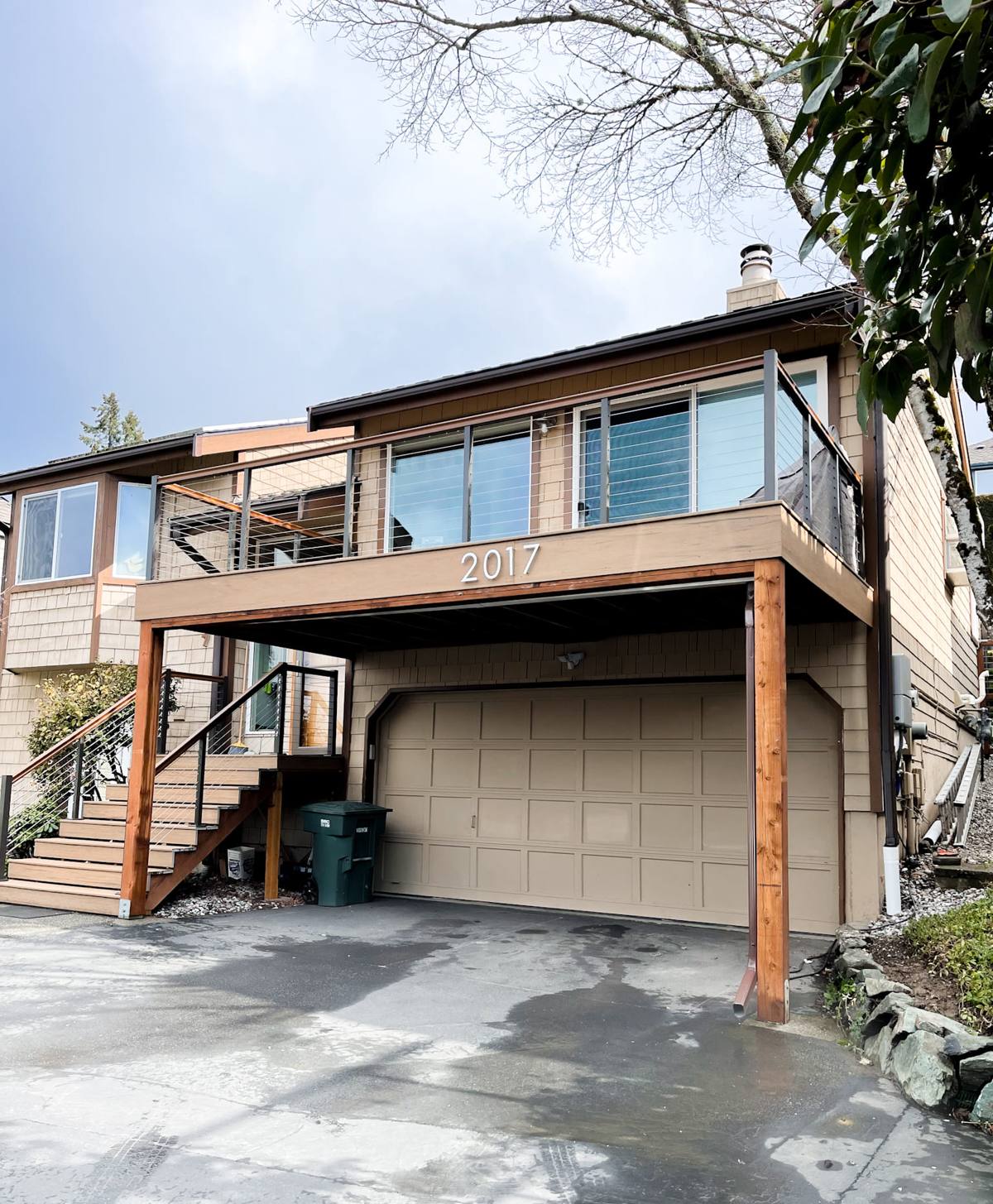
This page is about one job in one place: installing composite decking correctly for homes in Happy Valley. Not a general decking pitch, not a product brochure — what your deck actually needs to survive the conditions right outside your door, and what a properly built one looks like underneath the boards.
What Happy Valley's Climate Actually Does to a Deck
Moss Season Is Longer Than People Expect
Anyone who's scraped moss off a walkway in this part of Whatcom County knows it isn't a once-a-year chore. Shaded, moisture-retentive surfaces here can grow moss nearly year-round, and a deck is exactly that kind of surface — horizontal, often partially shaded by mature trees or the house itself, and slow to dry between rain events. Moss doesn't just look bad; it holds moisture against the board surface and turns a deck slick and genuinely dangerous underfoot.
Salt Air Doesn't Stay at the Waterfront
Salt-laden air travels a lot further inland than most homeowners assume, especially during storm systems that push moisture off Bellingham Bay across the whole area. For a wood deck, that means accelerated corrosion of any exposed fastener and faster breakdown of surface finishes. For composite decking, the material itself doesn't corrode, but the hardware, hidden fastener clips, and any metal flashing underneath absolutely can if the wrong grade is used.
Driving Rain Finds Every Gap
Rain here doesn't just fall — it drives sideways during a lot of the winter storm pattern, which means water gets pushed into joints, under ledger boards, and behind fascia in a way that gentle straight-down rain never would. Any deck detail that relies on gravity alone to shed water — instead of proper flashing and drainage planning — is a deck that's going to find trouble in Happy Valley within a few wet seasons.
What a Correct Composite Deck Installation Involves
Composite boards get most of the attention because they're what you see and touch, but the board is the last decision in the process, not the first. A correct installation starts underneath, with decisions that determine whether the deck sheds water properly for the next 25-plus years.
- Pressure-treated or engineered framing sized and spaced to the composite manufacturer's actual span tables, not generic wood-deck spacing
- Joist tape or another water-shedding barrier over every joist top, so fasteners seat into protected wood instead of bare, exposed lumber
- Proper ledger board flashing where the deck ties into the house, so water is directed away from the wall assembly instead of behind it
- Hidden fastener systems or approved face-screwing, matched to the specific board profile being installed
- Adequate ventilation and drainage slope beneath the deck so trapped moisture has somewhere to go
- Stainless steel or coated hardware rated for the moisture and salt exposure this area actually sees
Skip any one of these and the boards on top can be the best composite on the market and the deck will still develop soft framing, fastener corrosion, or standing water problems well before the material warranty runs out.
Choosing the Right Composite Board for This Climate
Not all composite decking is built the same way, and the differences matter more in a wet, shaded, salt-influenced environment than they do in a dry inland climate. The two biggest distinctions are whether the board is capped or uncapped, and how the board handles moisture at the core.
| Feature | Capped Composite | Uncapped Composite | PVC / Cellular |
|---|---|---|---|
| Moisture resistance | Strong — outer shell resists absorption | Weaker — core can absorb water at cut ends | Excellent — no wood fiber to absorb water |
| Moss and mildew resistance | Good | Fair — more prone to surface staining in shade | Very good |
| Maintenance in shaded, mossy areas | Periodic cleaning | More frequent cleaning needed | Low |
| Feel and weight underfoot | Solid, wood-like | Solid, wood-like | Lighter, more plastic feel |
| Typical upfront cost | Mid to upper range | Lower range | Upper range |
For most Happy Valley properties, a fully capped composite board strikes the right balance — the exposed shell resists the moisture and moss exposure this area sees, without the higher cost of a full PVC system. We'll walk you through actual board options and cut ends on site rather than push one line, but this is the framework we use to make that call.
Cut Ends and Fastener Points Need Sealing
Any time a composite board is cut or drilled on site — at a stair stringer, a picture-frame border, or a house wall — that cut exposes the core material. On an uncapped or partially capped board, that exposed edge is where moisture gets in first. Sealing or capping every field cut is a small step that a lot of quick installs skip, and it's one of the first things that shows up as failure in a wet climate like this one.
Our Process for a Happy Valley Decking Project
- On-site assessment. We look at sun exposure, tree cover, existing drainage, and how the deck ties into the house before recommending anything.
- Design and board selection. We talk through composite options, color and finish trade-offs for a shaded lot, and layout — including stairs, railing, and any picture-framing.
- Permitting. Deck work is frequently subject to local permitting depending on size, height, and attachment to the house; we handle that step rather than leaving it to you to sort out.
- Demo and framing. Old decking and, where needed, old framing comes out. New framing is set to proper spacing and protected with joist tape before anything else goes down.
- Flashing and drainage. Ledger flashing, fastener hardware grade, and slope are addressed before a single composite board is installed.
- Board installation. Composite decking goes down with the fastening system matched to that board profile, cut ends sealed, and layout checked as we go.
- Final walkthrough. We go over the finished deck with you, including what maintenance it actually needs and doesn't.
Maintenance a Happy Valley Composite Deck Actually Needs
Part of the appeal of composite decking is that it needs far less upkeep than wood — no annual staining or sealing. But "low maintenance" doesn't mean "no maintenance," especially under Happy Valley's tree cover.
- Sweep debris and fallen leaves off the deck regularly during fall and winter so they don't trap moisture against the board surface
- Rinse or lightly scrub shaded sections a couple times a year to keep moss and algae from taking hold
- Keep nearby vegetation trimmed back where practical to let more light and airflow reach shaded deck sections
- Check that under-deck drainage and ventilation gaps stay clear of leaf litter and debris
- Inspect visible fastener points and railing hardware periodically for any early corrosion
Permits and Practical Considerations
Deck projects in and around Fairhaven and Happy Valley typically fall under local building permit requirements once you're past a certain size, height off grade, or attachment to the structure of the house. Requirements can vary by lot and by scope, so this isn't something to guess at — we confirm what applies to your specific project and handle the paperwork as part of the job rather than handing it back to you.
Why Hire a Crew That Already Works This Neighborhood
A lot of what separates a deck that lasts in Happy Valley from one that doesn't isn't the brand name on the board — it's whether the crew installing it understands how water, shade, and salt air actually behave on this kind of lot. A contractor who mostly works drier, more exposed sites elsewhere in the region may not think twice about joist tape, fastener grade, or drainage slope, because their jobs don't punish those shortcuts the same way. A crew that regularly works Fairhaven and the surrounding Whatcom County neighborhoods has already seen what happens when those details get skipped, and builds accordingly the first time.
That local pattern recognition also shows up in smaller, practical ways: knowing which board colors hold up visually in heavy shade, which layouts drain well on a sloped or partially shaded lot, and where local permitting tends to slow a project down if it isn't handled early.
What to Ask Any Contractor Before You Hire Them
- Do you use joist tape or an equivalent moisture barrier over the framing?
- What fastener and hardware grade do you use, and is it rated for coastal or salt-influenced conditions?
- How is the ledger board flashed where the deck meets the house?
- Do you seal or cap field cuts made to the composite boards on site?
- Will you handle the permit process, or is that left to me?
- What does the manufacturer's warranty actually cover, and what voids it?
If you're weighing composite decking for a Happy Valley property, we're glad to walk the site with you, talk through honest options for your specific lot and sun exposure, and put together a free, no-pressure estimate — just fill out the form below.