 Fairhaven Siding
 Siding in Columbia Has One Job: Survive the Bay Air
Columbia sits close enough to the water that its homes take on a different kind of weather than siding in an inland Whatcom County neighborhood ever has to deal with. Salt-laden air off Bellingham Bay works on exposed fasteners and cheap trim year-round. Driving rain off the water finds every gap in a wall assembly that wasn't detailed correctly the first time. And the long, wet, low-sun stretch from October through April gives moss, algae, and mildew months to take hold on anything that stays damp. None of that is unique to one street or one block — it's the character of living this close to Fairhaven's shoreline, and it's exactly what a siding system installed here has to be built to handle.
A lot of siding failures we get called out to inspect in this part of Bellingham aren't failures of the product itself — they're failures of installation choices that ignored this climate. Trim that traps water instead of shedding it. House wrap that was never properly lapped. Caulk used as a substitute for real flashing. The siding material matters, but so does whether the person installing it understood what Columbia's weather does to a wall over twenty years, not just over the first two.
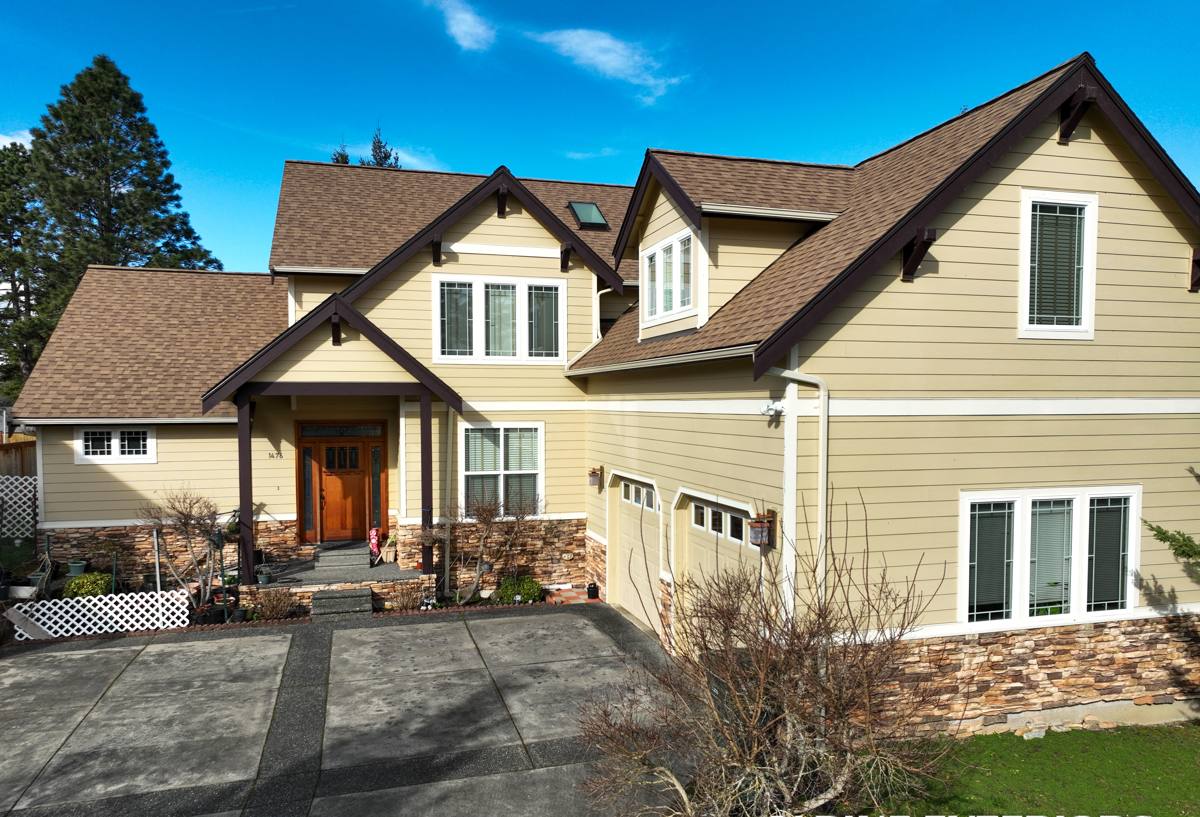
What Columbia Homes Actually Need From Their Siding
Most of the housing stock in this part of Fairhaven is older — craftsman bungalows, mid-century ranches, and a mix of remodeled and original-era homes, many with siding that's due for replacement simply from age and decades of coastal exposure. Whatever goes back up needs to do three things well:
- Shed water, not absorb it. Wood-based products swell and hold moisture; that moisture is what feeds rot and lets moss get a foothold.
- Resist salt-driven corrosion. Fasteners, trim, and flashing details all need to be rated for a coastal-adjacent environment, not just a general Pacific Northwest one.
- Hold a factory finish through freeze-thaw and UV cycles. Field-applied paint on wet climate siding tends to fail early here; a factory-cured finish holds up far longer.
Whatcom County's building code also assumes a wet climate — proper drainage planes and weather-resistive barriers aren't optional extras, they're the baseline for a code-compliant, durable install in this zip code.
Why We Only Install James Hardie in Columbia
We stopped installing vinyl, LP SmartSide, cedar, and other fiber cement brands years ago, and we don't make exceptions for jobs in Fairhaven just because a homeowner already has a product in mind. That's not a sales pitch — it's a standard we hold because we've seen what each of those alternatives does over time in exactly this kind of climate.
Vinyl is inexpensive and low-maintenance in a dry climate, but it becomes brittle in cold snaps, expands and contracts more than fiber cement, and its seams give moss and algae plenty of texture to grip in a shaded, damp yard. LP SmartSide is a wood-strand product — better than raw wood, but still an engineered wood product, which means any breach in its factory coating is an invitation for moisture to get into the substrate. Cedar and primed spruce look great on day one and require the most ongoing maintenance of anything on this list — refinishing, caulking, and vigilance against rot that most homeowners underestimate when they choose it.
James Hardie fiber cement is non-combustible, dimensionally stable in wet-dry cycles, and available in HZ5-engineered formulations built specifically for climates like ours. Its ColorPlus finish is baked on at the factory under conditions no field application can match, and it comes with a warranty structure that's meaningfully stronger than what you get with vinyl or wood-based alternatives. That combination — the moisture behavior, the finish durability, and the fire performance — is why it's the only product we put on a house.
What a Correct Installation Actually Involves
Moisture Management Comes First
Before a single piece of siding goes up, the wall needs a properly lapped weather-resistive barrier and correctly installed flashing at every window, door, and penetration. This layer is what actually keeps water out of the wall assembly — the siding itself is the second line of defense, not the first. Skipping or rushing this step is the single most common cause of hidden rot we find behind old siding in this area.
Fastening and Clearances
James Hardie specifies exact fastener types, spacing, and clearances from grade, roof lines, and decks — and those specs exist for a reason in a wet climate. Panels fastened too tight, boards installed without the required gap at trim, or the wrong fastener material all shorten the life of an otherwise excellent product. We install to Hardie's published specifications, not to whatever's fastest.
Trim, Caulking, and Flashing Details
Corner boards, window trim, and butt joints are where most siding failures start. Correct detailing sheds water away from seams instead of letting it pool or wick in. We treat every trim intersection as a place water will eventually try to get through, because in this climate, it will.
Finish and Touch-Up
ColorPlus finish arrives factory-cured, so field touch-up is limited to cut edges and small areas using Hardie's matched touch-up products — not a full repaint. Done correctly, the finish should perform for decades without the homeowner needing to repaint the whole house.
Our Process, Start to Finish
- On-site assessment. We look at your current siding, the wall assembly underneath where visible, drainage around the foundation, and any moisture damage before quoting anything.
- Product and color selection. We walk you through Hardie's plank, panel, and shingle profiles and ColorPlus palette options suited to your home's style.
- Tear-off and inspection. Removing the old siding lets us actually see the sheathing and framing underneath and catch problems before they're covered up again.
- Weather barrier and flashing installation. This is the step we don't rush, for the reasons above.
- Siding installation to manufacturer spec. Correct fastening, clearances, and trim detailing throughout.
- Final walkthrough. We go over the finished job with you before we consider it done.
Comparing Siding Options for a Columbia Home
| Factor | James Hardie Fiber Cement | Vinyl | LP SmartSide / Wood |
|---|---|---|---|
| Moisture resistance | Engineered for wet climates (HZ5) | Doesn't absorb, but seams trap moisture and debris | Vulnerable once coating is breached |
| Salt air / coastal exposure | Stable, corrosion-resistant fastening systems | Can become brittle over time | Coating wear accelerates near salt air |
| Moss and algae resistance | Smooth factory finish sheds growth better | Seams and texture collect growth | Wood grain texture holds moisture and growth |
| Fire performance | Non-combustible | Combustible | Combustible |
| Finish longevity | Factory-baked ColorPlus, decades-rated | Color can fade unevenly | Field-level coatings, shorter repaint cycle |
| Typical maintenance | Occasional wash, minimal upkeep | Low but seams need monitoring | Regular inspection and recoating required |
What Affects the Cost of a Columbia Siding Job
Every home is different, and we don't quote real numbers without seeing the house, but the main cost drivers on a Fairhaven-area siding installation are consistent:
| Factor | Why It Matters |
|---|---|
| Tear-off condition | Rotted sheathing or hidden moisture damage found during removal adds repair work before new siding can go up |
| Home size and wall complexity | More corners, gables, and trim details mean more labor and material |
| Siding profile chosen | Lap plank, panel, and shingle profiles carry different material and install costs |
| Trim and accessory scope | Full trim replacement alongside siding affects both cost and long-term water management |
| Access and site conditions | Sloped lots, tight setbacks, and landscaping near the home can affect labor time |
Why Hiring a Crew That Already Works Columbia Matters
A siding crew that mostly works dry, inland climates can install a technically fine product and still get the details wrong for a coastal-adjacent neighborhood like this one — because the failure points here aren't the same ones they're used to guarding against. Knowing how aggressively moss establishes itself in a shaded Fairhaven yard, how much wind-driven rain a west-facing wall takes off the bay, and how salt air treats unprotected metal changes real decisions on the job: fastener choice, flashing details, ventilation gaps behind the siding. A crew that's done this work up and down this part of Bellingham isn't guessing at those answers.
Signs Your Columbia Home's Siding Needs Attention
- Soft or spongy spots when you press on the siding, especially near the bottom courses
- Persistent moss or dark streaking that comes back within weeks of cleaning
- Visible gaps, warping, or separation at seams and trim joints
- Peeling or bubbling paint, particularly on wood or wood-composite siding
- Rising energy bills that suggest the wall assembly is no longer sealing properly
- Visible rust staining running from fasteners or trim
Any one of these on its own might not mean a full replacement is due, but a few of them together, especially on a home that's had the same siding for two or three decades, are worth a professional look before winter's rain arrives.
If your Columbia home's siding is showing its age or you're planning ahead for a replacement, we're happy to take a look and give you an honest, no-pressure assessment of what it actually needs. Use the form below to request a free estimate.