 Fairhaven Siding
 Fiber Cement Siding Built for Columbia's Climate
Columbia sits close enough to the water and to Fairhaven's tree cover that its homes take a different kind of beating than houses just a few miles inland. Salt-laden air moves through the neighborhood off Bellingham Bay, driving rain comes in sideways for months at a stretch, and the shaded, damp conditions that make this part of Whatcom County beautiful are the same conditions that grow moss on anything that holds moisture. Siding here isn't just a cosmetic choice. It's the first line of defense against a climate that never really dries out.
We work on homes throughout Columbia and the surrounding Fairhaven area, and the pattern is consistent: siding failures in this neighborhood almost never come from one dramatic event. They come from years of moisture creeping into seams, caulk joints, and end cuts that weren't sealed correctly the first time. The right material, installed the right way, is what keeps that slow failure from happening.
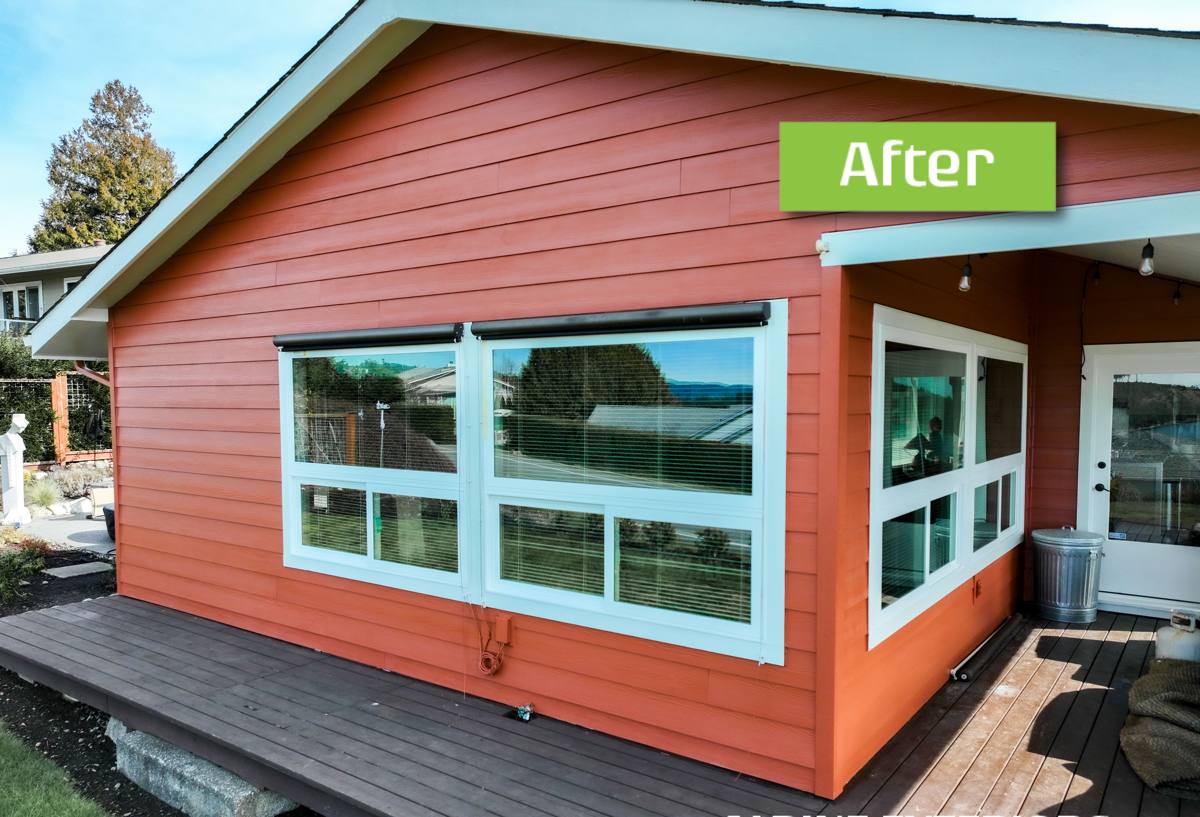
What Salt Air, Driving Rain, and Moss Season Do to a House
Each of these three factors stresses siding differently, and a good installation has to account for all three at once, not just one.
Salt Air
Airborne salt accelerates corrosion on fasteners, flashing, and any exposed metal trim. It also breaks down paint film faster than it would inland, which is why so many older homes near the water show chalking and fading years ahead of schedule. Materials and finishes that aren't rated for coastal exposure tend to show their age fastest here.
Driving Rain
Fairhaven's weather doesn't just rain straight down — wind-driven rain pushes water sideways into every gap, lap joint, and penetration in the siding. If flashing, house wrap, and caulking aren't done correctly behind the siding, water finds its way to the sheathing long before anyone notices a problem on the surface.
Moss Season
Shade, moisture, and mild temperatures make Whatcom County an ideal environment for moss and algae growth for a large part of the year. Moss holds water against a surface, and on materials that absorb moisture, that constant dampness is what leads to rot, delamination, or paint failure over time.
Why This Company Installs Only James Hardie Fiber Cement
We install James Hardie fiber cement siding exclusively. We don't install vinyl, LP SmartSide, Cemplank, Allura, primed spruce, or cedar. That's a deliberate standard, not a sales preference, and it's worth explaining honestly rather than just asserting it.
Vinyl is inexpensive and low-maintenance, but it's a plastic product that expands, contracts, and can warp or crack in temperature swings and impact events, and it doesn't hold paint if a homeowner ever wants to change color. Wood products like cedar and primed spruce look great new, but in a climate this wet they demand consistent refinishing and are genuinely vulnerable to moisture, rot, and moss staining if maintenance slips even one season. Engineered wood products like LP SmartSide use a wood-strand core that, while treated, is still an organic material at its core — edge sealing and caulking have to be perfect and stay perfect, because any breach lets moisture into a substrate that can swell. Other fiber cement brands compete on price but don't carry the same factory finish warranty or the regional engineering James Hardie builds into its product line.
James Hardie fiber cement is cement, sand, and cellulose fiber — it doesn't rot, it isn't a food source for moss or insects, and it's non-combustible. Hardie's ColorPlus factory finish is baked on under controlled conditions rather than field-applied, which gives it better adhesion and fade resistance than most job-site paint jobs. And Hardie engineers specific product lines for different climate zones, which matters directly for a neighborhood dealing with salt air and constant rain.
How Fiber Cement Compares for Whatcom County Homes
| Material | Moisture & Moss Resistance | Salt Air Durability | Maintenance Burden | Typical Lifespan |
|---|---|---|---|---|
| James Hardie Fiber Cement | Excellent — non-organic, won't rot | Strong; factory finish resists coastal fading | Low — periodic wash, no refinishing on schedule | Decades with proper install |
| Vinyl | Good, but traps moisture behind if installed loose | Fair — can fade and chalk faster near water | Low, but can't be repainted easily | Variable; prone to cracking/warping |
| Cedar / Primed Spruce | Poor without diligent upkeep | Moderate; salt accelerates finish breakdown | High — regular refinishing required | Shorter without consistent maintenance |
| Engineered Wood (LP SmartSide) | Fair — depends entirely on sealed edges | Moderate | Moderate — caulking and touch-ups matter | Depends on installation quality |
What a Correct Installation Involves in This Climate
Fiber cement siding performs the way it's supposed to only when it's installed to manufacturer spec — the material itself isn't what fails, poor installation is. In a climate like Columbia's, a few details matter more than usual:
- Correct HardieZone product selection for the Pacific Northwest — not every Hardie product line is engineered the same way for wet climates
- Proper weather-resistive barrier and flashing behind every seam, window, and penetration so wind-driven rain never reaches the sheathing
- Manufacturer-specified fastener spacing and clearance from the ground and hard surfaces, to keep moisture from wicking up from below
- Correctly sized gaps at butt joints and trim, caulked with a sealant rated for the movement and moisture this climate produces
- Field-cut edges sealed before installation, since an unsealed cut edge is the single most common entry point for moisture
- Adequate clearance and ventilation behind the siding so any incidental moisture can dry out instead of sitting against the wall assembly
Skipping any one of these doesn't cause a visible problem right away — that's what makes bad installations dangerous. The damage shows up years later, after moisture has already been working behind the siding through several wet seasons.
Our Process for Columbia Siding Projects
When we take on a fiber cement project in Columbia, the sequence is straightforward and doesn't skip steps to save time:
- On-site inspection of the existing siding, sheathing, and any trouble spots — especially areas that get direct wind-driven rain or shade-driven moss growth
- Confirming the right James Hardie product line and ColorPlus finish for the home's exposure and the homeowner's preference
- Removing old siding and checking the sheathing underneath for hidden moisture damage before anything new goes up
- Installing house wrap, flashing, and starter strips correctly before a single piece of siding is hung
- Hanging siding to spec with proper fastening, gapping, and sealed cut edges throughout
- Final walkthrough covering caulking, trim, and touch-up, with a straightforward explanation of any maintenance the homeowner should expect
What Affects Your Siding Cost
| Factor | Why It Matters |
|---|---|
| Condition of existing sheathing | Hidden rot or moisture damage found during tear-off adds repair work before new siding can go up |
| Home size and wall complexity | More corners, dormers, and trim details mean more cutting, flashing, and labor time |
| Product line and finish selection | Different HardieZone lines and ColorPlus finish options carry different material costs |
| Site access | Tight lots, slopes, or landscaping near the house can affect staging and labor time |
| Trim and detail work | Window, door, and corner trim replacement adds scope beyond the field siding itself |
We'll walk through these factors specific to your home during an estimate rather than quoting a number sight unseen — every Columbia property has its own combination of exposure, access, and existing condition.
Why Hiring a Crew That Already Works in Columbia Matters
A contractor who only works occasionally near the water tends to install siding the same way they would for a drier, inland home — and that's exactly the gap that leads to moisture problems down the road. A crew that regularly works Columbia and the rest of Fairhaven already knows which walls take the worst of the wind-driven rain, where moss builds up fastest, and how much clearance and flashing detail this specific climate actually demands. That local pattern recognition doesn't replace following manufacturer spec, but it does mean fewer surprises and a build that's accounting for real conditions instead of textbook ones.
Living With Fiber Cement Siding After Installation
One of the practical advantages of James Hardie fiber cement in a climate like this is how little ongoing work it asks for compared to wood. It doesn't need repainting on a fixed schedule, it won't feed moss the way organic siding materials can, and an occasional gentle wash to knock off surface grime and any moss starting to take hold is typically enough to keep it looking right. Homeowners coming from cedar or older engineered wood siding usually notice the difference in maintenance load within the first year or two.
If you're weighing siding options for a home in Columbia, we're happy to take a look and talk through what your specific exposure and existing siding condition actually call for. Reach out for a free, no-pressure estimate using the form below.