 Fairhaven Siding
 Why Decks in Columbia Wear Out Faster Than the Brochures Suggest
If you live in the Columbia area near Fairhaven, you already know your deck has a harder job than a deck in a drier inland town. Between the salt-laden air off Bellingham Bay, long stretches of driving rain, and a moss season that can run from October well into spring, wood and fasteners here take a beating that homeowners in other parts of the state simply don't deal with. A deck that would last two decades in eastern Washington can start showing real problems in half that time on the west side of Whatcom County if it wasn't built with this climate in mind.
That's the core issue we run into on almost every deck replacement in this neighborhood: the original deck wasn't wrong when it was built, it just wasn't built for what this specific location throws at it year after year. Replacement is the chance to fix that, not just swap old boards for new ones.
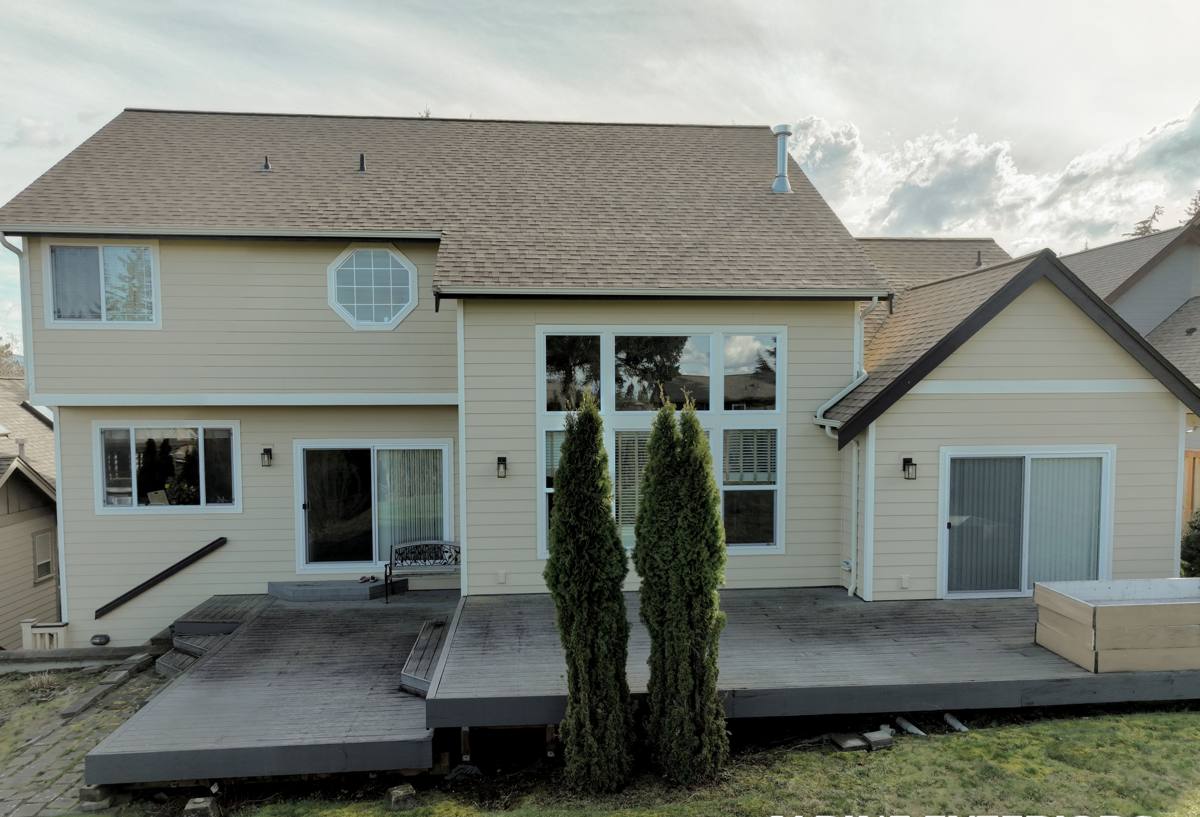
Signs a Columbia Deck Needs Replacement, Not Just Repair
Structural Red Flags
Some problems are cosmetic and some mean the deck can't be trusted anymore. Soft or spongy spots in the decking, a ledger board that's separated even slightly from the house, posts that wobble, or joists you can push a screwdriver into are all signs the structure itself has been compromised. Once rot reaches the framing, patching individual boards doesn't fix the underlying problem — it just delays a conversation you'll have again next year.
Cosmetic Wear That Doesn't Mean Failure
Surface graying, moss on the boards, or a finish that's worn thin are normal in this climate and don't automatically mean replacement. Moss and algae growth are more about surface exposure and drainage than structural failure, and often can be addressed with cleaning, better airflow underneath the deck, or resealing. Part of an honest assessment is telling you when a repair or refinish is genuinely enough, rather than upselling a full tear-off you don't need yet.
What a Correct Deck Replacement Actually Involves
A deck that's going to hold up near the bay needs more attention paid to the parts you don't see than the decking boards on top. This is where a lot of the difference between a deck that lasts and one that needs work again in five years actually happens.
Ledger Flashing and Water Management
The connection where the deck meets the house is the single most common failure point we see. Proper flashing — installed so water is directed out and away from the house rather than behind the siding — is non-negotiable in a climate with this much sustained rain. We treat this connection as critical, not routine.
Framing and Fasteners
Joists, beams, and posts should be rated for ground contact and coastal exposure, and every fastener and structural connector needs to be corrosion-resistant hardware rated for the moisture and salt content in the air here — standard interior-grade hardware corrodes faster near the water and can fail well before the wood does. Joist tape or a protective cap over the tops of joists helps keep water from soaking into end grain, which is usually where rot starts first.
Airflow Underneath the Deck
Decks built low to the ground or against grade with poor drainage trap moisture underneath, which is exactly what feeds moss and mildew. Where the site allows it, we build in enough clearance and drainage slope to let the underside dry out between rain events instead of staying damp for weeks at a time.
Choosing Decking Material for This Climate
There's no single "best" decking material — there's a best fit for your budget, your maintenance appetite, and how much sun versus shade your specific lot gets. Here's how the common options actually perform in a wet, salt-air environment like this one.
| Material | Moss/Moisture Resistance | Maintenance | Typical Lifespan |
|---|---|---|---|
| Pressure-treated wood | Moderate — needs sealing to perform well | Annual cleaning and resealing | 10–15 years |
| Cedar | Good natural resistance, but surface wears without upkeep | Regular cleaning, periodic oil/sealant | 15–20 years |
| Composite | Very good — doesn't absorb moisture like wood | Occasional washing, no sealing/staining | 25–30 years |
| PVC/vinyl decking | Excellent — fully moisture resistant | Lowest — soap and water washing | 25–30+ years |
Composite and PVC decking have become popular near the water specifically because they don't give moss and mildew the porous surface they need to take hold, which matters more here than in a drier climate. That said, real wood, properly maintained, is still a fine choice for homeowners who want that look and don't mind the upkeep — it's a trade-off, not a wrong answer.
Our Deck Replacement Process
1. On-Site Assessment
We start by actually getting underneath and around the existing deck — not just looking at the surface — to check the ledger connection, framing condition, post footings, and drainage. This tells us whether you're looking at a straightforward replacement or whether grading and drainage work should happen at the same time.
2. Design and Material Selection
We walk through decking material, railing style, and layout with you, being upfront about cost and maintenance trade-offs for each option rather than steering you toward whatever's easiest for us to install.
3. Tear-Off and Structural Rebuild
Old decking, and any compromised framing, ledger, or footings, come out completely. This is also when we correct flashing, fastener, and drainage issues from the original build rather than building a new deck on top of old problems.
4. Final Details and Walkthrough
Railings, stairs, and any built-ins go in last, followed by a walkthrough with you to check the finished work before we consider the job done.
Permits and Local Considerations
Deck replacement in Whatcom County can require a permit depending on the deck's height, size, and whether structural elements like footings or ledger attachment are being changed — a simple like-for-like board swap is treated differently than a full rebuild. Requirements and timelines can shift, so rather than guessing, we confirm what applies to your specific project and handle that coordination as part of the job, so you're not the one tracking down paperwork.
Living With Your New Deck Through Moss Season
Even a well-built deck benefits from a little seasonal attention here. A few habits go a long way toward protecting the investment:
- Sweep leaves and debris off the deck regularly in fall — trapped organic matter holds moisture and feeds moss growth
- Keep gutters and downspouts near the deck clear so water isn't dumping directly onto or under it
- Trim back overhanging branches to let more light and air reach the deck surface
- Wash composite or PVC decking once or twice a year to remove surface film before it becomes established moss
- For wood decks, reseal on the schedule recommended for your specific product, not just "when it looks bad"
- Check the underside occasionally for standing water or debris blocking drainage
Why Hire a Crew That Already Works in Columbia
Building codes, drainage behavior, and material performance in this specific pocket of Fairhaven and the surrounding Whatcom County coastline aren't quite the same as they are twenty miles inland. A crew that already works in this neighborhood has already seen how salt air affects hardware choices, how the local rain pattern stresses ledger connections, and which lots tend to hold moisture longer than others. That local pattern-recognition is what keeps a deck replacement from becoming a five-year problem instead of a twenty-year solution.
Before hiring anyone for a deck replacement, it's worth asking a few direct questions:
- Do you carry current liability insurance and, where required, bonding?
- Will you pull the necessary permits, or is that left to me?
- What specific fastener and flashing hardware do you use, and is it rated for coastal/salt-air exposure?
- How do you handle drainage and airflow under the deck, not just the decking surface itself?
- Can you walk me through material trade-offs instead of just recommending the most expensive option?
A contractor who answers these clearly, without hedging, is generally one who's done this work enough times to know why it matters.
Get a Straight Answer About Your Deck
If your deck in the Columbia area is showing soft spots, persistent moss, or just isn't holding up the way it used to, we're happy to take a look and tell you honestly whether you're looking at repair or full replacement. Fill out the form below for a free, no-pressure estimate — no obligation, just a clear read on where your deck actually stands.