 Fairhaven Siding
 Building Decks for Columbia That Actually Hold Up
Columbia is a quieter residential pocket of the Fairhaven area, but the homes here face the same weather every other property near Bellingham Bay deals with: salty, moisture-laden air off the water, long stretches of driving rain, and a moss season that can run most of the year in shaded yards. A deck built to a generic national spec doesn't last long under those conditions. A deck built with this specific climate in mind can go decades before it needs more than routine upkeep. That's the gap we work in.
This page is about one thing: custom deck construction for homes in Columbia and the immediate Fairhaven area, done by a crew that already understands the soil, the drainage patterns, and the weather this part of Whatcom County throws at exterior wood and framing every winter.
What "Custom" Should Mean — Not Just a Bigger Deck
A lot of "custom deck" marketing just means a bigger footprint or a fancier railing. Real custom work starts before any material gets ordered.
Reading the lot first
Every yard in Columbia has its own combination of slope, drainage, tree cover, and sun exposure. A deck plan that ignores where water actually moves across that lot after a heavy rain is a plan that will eventually rot somewhere — usually at a ledger board, a post base, or a low corner that never dries out. We walk the site, look at how water drains during and after rain (not just on a dry day), and design around it rather than fighting it later.
Matching the deck to the house
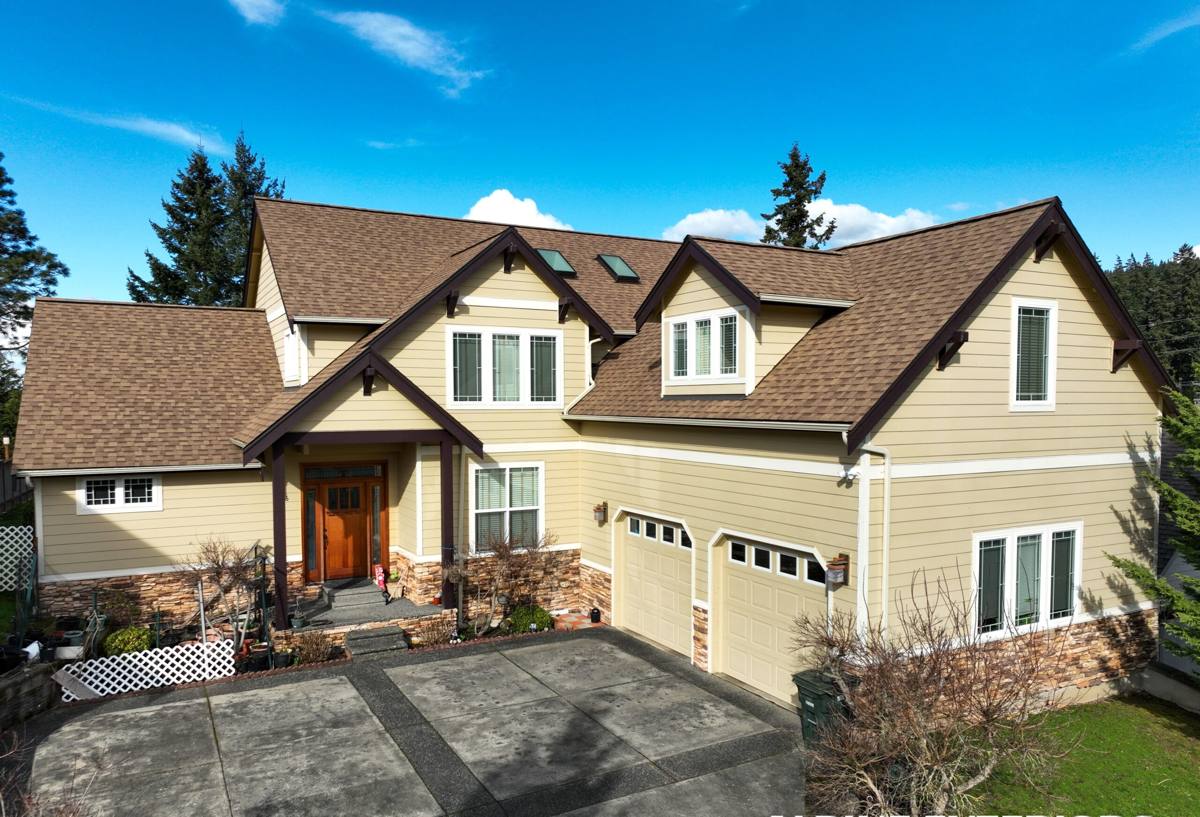
Custom also means the deck should look like it belongs to the house, not like an add-on. That covers board direction, rail style, stair placement, and how the deck ties into existing siding, trim, and rooflines — details that matter more on a visible, street-facing elevation than on a back deck tucked behind trees.
Why This Climate Is Harder on Decks Than People Expect
Homeowners who move to Fairhaven from drier climates are often surprised by how fast an untreated or poorly detailed deck shows wear here. A few specific reasons:
- Salt air accelerates corrosion. Standard hardware and fasteners that would last for years inland can start rusting and staining decking within a couple of seasons this close to the water.
- Driving rain gets under things, not just on top of them. Wind-driven rain pushes moisture sideways into ledger connections, stair stringers, and post bases — areas that stay dry in calmer climates but take a beating here.
- Moss and algae don't take a season off. Shaded decks, especially under mature trees common in older Fairhaven neighborhoods, can stay damp for weeks at a stretch, which is exactly what moss needs to establish.
- Freeze-thaw cycles are inconsistent but real. Whatcom County doesn't get deep freezes every winter, but the ones that do happen can crack poorly cured concrete footings or stress joints that weren't built with any flex.
None of this means a deck in Columbia has to be high-maintenance. It means the build has to account for these conditions from the framing up, not just at the surface finish.
Decking Material Comparison for This Climate
We install several decking materials, and each one carries real trade-offs here — not just in appearance, but in how it behaves in salt air and constant moisture.
| Material | Moisture & Salt Air Behavior | Maintenance | Typical Lifespan |
|---|---|---|---|
| Pressure-treated wood | Performs well if properly sealed and re-coated; end grain and fastener holes are the weak points | Needs cleaning and sealing every 1-2 years | 15-20 years with upkeep |
| Cedar | Naturally rot- and insect-resistant, ages to a silver-gray if left unfinished | Occasional cleaning; sealing optional depending on look desired | 15-25 years |
| Composite decking | Doesn't absorb water like wood, but board quality varies — cheaper composites can trap moss on the surface if not cleaned | Periodic washing; no staining or sealing | 25-30+ years |
| PVC/capped composite | Fully sealed surface, best resistance to salt air staining and moisture absorption | Lowest maintenance of the group | 25-30+ years |
We don't push one material as universally "best." A shaded, moss-prone lot in Columbia is a different conversation than a sunny, exposed one. We'll tell you honestly which option fits your specific yard and budget rather than defaulting to whatever has the best margin.
The Construction Details That Actually Determine How Long a Deck Lasts
Ledger board and house connection
This is the single most common failure point on decks in wet climates. Proper flashing behind the ledger board, correct fastener spacing, and a small gap or flashing detail to keep water from wicking into the house band board are non-negotiable. This is also the connection point most likely to get rushed on a low-bid job, since it's hidden once the deck is built.
Footings and posts
Footings need to be set below frost depth and poured correctly, not just dropped into an undersized hole. Post bases should hold the post above the decking surface and off standing water — wood sitting directly on or near grade in this climate is wood that starts rotting from the bottom up within a few years.
Fasteners and hardware
Close to the water, standard galvanized hardware corrodes faster than it should. We use stainless or high-grade coated fasteners rated for coastal and treated-lumber contact, which costs a little more up front and saves the rust streaks and loosening connections that show up in year three or four with cheaper hardware.
Drainage and airflow underneath
A deck built tight to the ground with no airflow underneath stays damp longer after every rain, which speeds up rot and gives moss and mildew a head start. Proper joist spacing, board gapping, and grading underneath the deck all affect how quickly it dries out between storms.
Our Process for a Columbia Deck Project
- On-site walkthrough. We look at the lot, drainage, sun/shade exposure, and how the deck will connect to the house.
- Design and material discussion. We talk through layout, railing style, and decking material trade-offs based on your specific site — not a one-size-fits-all recommendation.
- Written estimate. Clear scope and pricing before any work starts, so there are no surprise line items mid-project.
- Permitting. We handle the permit application and any required inspections tied to the local jurisdiction covering your property.
- Framing and structural work. Footings, posts, beams, and joists go in first, with attention to the ledger connection and drainage details covered above.
- Decking, rails, and finish work. Surface material, railing system, stairs, and any built-in features go in last.
- Final walkthrough. We go over the finished deck with you, including basic care guidance for whatever material you chose.
What to Expect for Upkeep After the Build
Every deck in this climate needs some level of ongoing care — the material you choose just determines how much. A simple annual checklist keeps most problems from ever starting:
- Clear leaves and debris out of gaps between boards before fall rains set in
- Rinse or lightly scrub shaded areas where moss tends to establish first
- Check railing connections and stair stringers for any looseness once a year
- Reseal or re-stain wood decking on the schedule appropriate to the product (typically every 1-2 years)
- Keep gutters and downspouts near the deck clear so runoff isn't draining directly onto or under it
- Watch for any soft spots near the ledger board or post bases, since that's where hidden moisture problems show up first
Permits and Local Requirements
Deck projects in and around Fairhaven typically require a building permit once the structure exceeds a certain height or size, and inspections are usually required at the footing and framing stages before decking goes on. Requirements can vary depending on exactly where your property falls within Whatcom County jurisdiction, so we confirm the specifics for your address as part of the estimate process rather than assuming a blanket answer applies to every lot in the area.
Why Hiring a Crew That Already Works in Columbia Matters
A deck contractor who mostly builds in drier inland regions and occasionally takes a coastal job will make the same mistakes over and over — underestimating how fast salt air corrodes standard hardware, or not accounting for how long a shaded deck actually stays wet after a storm. A crew that regularly works Columbia and the surrounding Fairhaven neighborhoods has already seen which details matter and which shortcuts cause callbacks two winters later.
That local experience shows up in small decisions throughout the project: which fasteners we spec, how we detail the ledger flashing, how much airflow we build in underneath the deck, and which materials we're honest with you about steering away from for your particular lot. None of that is guesswork when it's the type of build we do regularly in this exact climate.
Ready to Talk Through Your Deck Project?
If you're planning a new deck or replacing one that's showing its age, we're happy to walk your property, talk through material and layout options, and put together a straightforward written estimate — no pressure, no obligation. Use the form below to get started.