 Fairhaven Siding
 Siding Built for Where Chuckanut Actually Sits
Chuckanut sits in a spot most siding products were never really designed for: forested bluffs rising right off Bellingham Bay, with salt-laden air drifting through the trees on one side and storms pushing rain sideways off open water on the other. We install James Hardie fiber cement siding here, and only James Hardie, because after years of tear-offs and repair calls in exactly this kind of coastal, tree-shaded terrain, it's the one product system we're willing to stand behind fully. This page covers what that looks like specifically for a Chuckanut home — what the climate demands, what a correct installation involves, and how our process works from first walkthrough to finished wall.
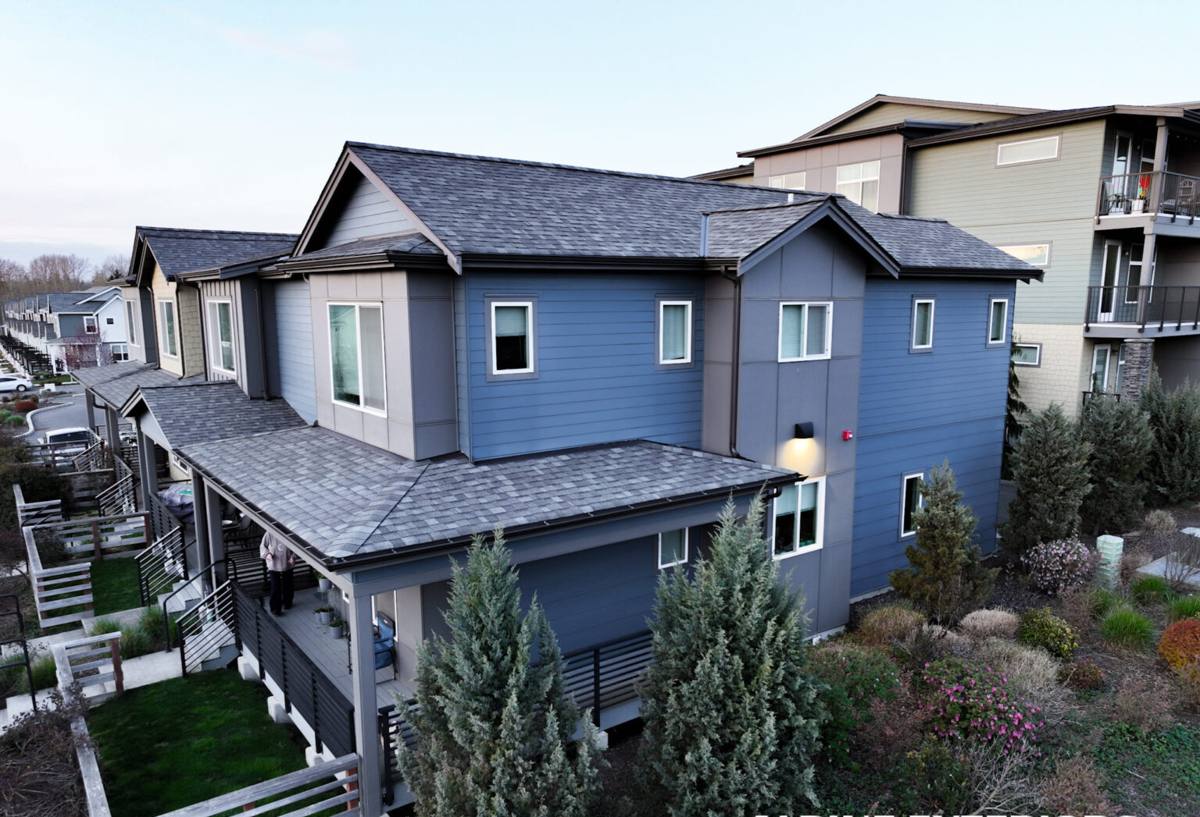
What Chuckanut's Climate Actually Demands From Siding
Salt Air Off Bellingham Bay
Homes near the water pick up a steady, low-grade dose of salt-tinged marine air, and it doesn't need a storm to do damage. Over years, that exposure works on fasteners, flashing, and lower-grade finishes, showing up eventually as rust bleed at nail heads, degraded caulk lines, or a finish that's chalked out well before it should have. A siding system built for this stretch of coast needs a factory finish and fastening approach that's rated for sustained salt exposure, not just occasional weather.
Wind-Driven Rain
Chuckanut's exposure to open water means storms don't just drop rain, they drive it. Wind pushes water sideways into lap joints, trim seams, and wall penetrations on south- and west-facing walls especially, from angles a siding system built for a calmer inland climate was never pressure-tested against. Getting water management right at every seam and joint matters more here than it would forty miles inland.
A Moss Season That Doesn't Really End
The forested bluffs that give Chuckanut its character also keep a lot of walls shaded and slow to dry out after a storm. Combine that with mild year-round temperatures and you get a moss and mildew season that can run most of the year on north-facing walls and anywhere tree cover blocks the sun. Porous or moisture-retentive materials become a growth surface over time, and it usually starts in the spots homeowners check least: behind shrubs, under eaves, along the shaded side of the house.
Why James Hardie Fits This Specific Combination
Put salt air, wind-driven rain, and a long moss season together and you get a climate that stresses a wall assembly harder and more often than most of Washington sees. James Hardie fiber cement is engineered around exactly that kind of stress: a non-combustible, non-organic core that doesn't feed moss and mildew growth the way wood-based products can, a factory-cured ColorPlus finish that holds up against salt and UV far longer than field-applied paint, and HZ product lines specifically formulated for regions with heavy sustained moisture rather than a single generic national spec.
What a Correct James Hardie Installation Involves
Choosing the right material only solves half the problem. A Hardie installation performs the way it's engineered to only when the details around it are done right, and on a shaded, coastal property like Chuckanut, those details carry more weight than they would on a drier, more open lot.
- Fastening pattern and spacing that matches Hardie's spec for the specific product line and exposure
- Correct clearance from grade, decks, and roof lines so splash-back and standing moisture don't sit against the bottom course
- Lapped and sealed joints at every seam, with attention to south- and west-facing walls that take the brunt of wind-driven rain
- House wrap and flashing installed as one integrated water-management system, not as separate steps done in isolation
- Flashing details at every window, door, and roof-to-wall intersection, the most common spot we find hidden moisture damage behind older siding
- Ventilation and clearance planning that accounts for shaded walls drying out more slowly than sun-exposed ones
A rushed or corner-cut install is one of the most common reasons a genuinely good product ends up with a callback two winters later. We treat installation detail with the same seriousness as the material choice itself, because in this climate, a small gap in flashing or a skipped clearance detail doesn't stay small for long.
Our Process, Start to Finish
1. Walkthrough and Assessment
We walk the property in person before quoting anything. On a Chuckanut home, that means checking sun exposure and shade patterns wall by wall, looking for existing moss or moisture staining, checking clearance at grade and rooflines, and assessing the condition of whatever siding is currently on the house. Pricing off square footage alone misses too much of what actually drives cost and scope on a property like this.
2. Tear-Off Versus Repair
Not every siding problem on a Chuckanut home means a full replacement. Isolated impact damage or a section that's failed around a window can sometimes be repaired and matched into existing Hardie siding. But when moisture has been tracking behind the wall assembly for a while, or the existing material has simply reached the end of its service life, a patch job usually just delays a bigger project a year or two down the road. We'll give you a straight answer about which situation you're actually in.
3. Substrate Check Before Anything New Goes Up
Tear-off is where hidden problems surface. Years of trapped moisture behind failing siding, especially on shaded walls that never fully dry between storms, can rot sheathing and framing before it's ever visible from outside. We check the substrate before installing new siding over it, and we'll show you what we find rather than covering it up.
4. Installation to Hardie Spec
Correct fastening, flashing, clearance, and joint work, done to the manufacturer's specification for the HZ product line and exposure level appropriate to a coastal Chuckanut lot. This is also where a certified installer matters: Hardie's transferable warranty depends on the installation actually meeting spec, not just on the product itself.
5. Final Walkthrough
We walk the finished job with you, confirm the details that matter for long-term performance, and make sure you understand the warranty coverage you now have and what, if anything, requires periodic attention.
Cost Factors for a Chuckanut Siding Project
| Factor | What It Affects | Why It Matters in Chuckanut |
|---|---|---|
| Tear-off vs. overlay | Labor scope and substrate access | Tear-off exposes hidden moisture damage common under older siding on shaded, coastal walls |
| Substrate condition | Repair costs before new siding goes on | Trapped moisture behind failing siding can rot sheathing before it's visible from the street |
| Wall orientation and shade | Detailing time and material choice | North-facing and tree-shaded walls need extra attention to moisture and moss resistance |
| Slope and site access | Labor time and equipment needs | Bluff-adjacent lots common in the area can add staging and setup time |
| Trim and color selection | Material cost and finish longevity | Factory ColorPlus finishes outlast field-applied paint against salt air and UV exposure |
Real numbers depend on the specific house and what tear-off reveals, which is why we quote from an in-person walkthrough rather than a phone estimate.
Signs a Chuckanut Home Needs Siding Attention
- Moss or dark staining that returns quickly after cleaning, especially on shaded or north-facing walls
- Soft or spongy siding near the base of the wall or around window and door trim
- Peeling, bubbling, or chalking paint on siding boards or trim
- Cracked, chipped, or missing sections after wind events
- Visible gaps at seams, corners, or trim joints where wind-driven rain can track in
- Rust staining around fasteners or flashing, an early sign of sustained salt air exposure
Why a Crew That Already Works Chuckanut Matters
A crew that installs siding on this stretch of coast regularly sees how salt air, wind-driven rain, and moss actually behave on real houses over a full year, not just how a product performs on a spec sheet. That shows up in practical decisions on install day: which walls need extra flashing attention, how much clearance a shaded lot really needs at grade, and which joints are worth the extra time so a homeowner isn't dealing with a callback two winters later. Chuckanut's combination of bluff terrain, tree cover, and direct bay exposure isn't identical to conditions elsewhere in Whatcom County, and a crew with real experience on this specific terrain accounts for that instead of applying a one-size-fits-all install.
If your Chuckanut home needs new siding, a repair, or just an honest look at what's going on behind an aging wall, we're glad to take a look. Reach out using the form below to schedule a free, no-pressure estimate.