 Fairhaven Siding
 Why Bow Homes Take a Different Kind of Beating
Bow sits close enough to the water and far enough into the rural stretch north of Fairhaven that homes here deal with a specific combination of stresses most siding products were never engineered for. Salt-laden air off the bay works into seams and fastener heads. Driving rain, pushed sideways by winter storms, finds every gap a caulk gun missed. And the long moss season — stretching from fall through late spring in this part of Whatcom County — turns any siding with a rough or absorbent surface into a growing medium if it isn't detailed correctly.
None of that is exotic. It's just Pacific Northwest coastal exposure, year after year, with no real dry season to let materials reset. The siding on a Bow home isn't decorative — it's the first line of defense against moisture intrusion, and it has to keep doing that job through decades of freeze-thaw cycles, wind-driven rain, and shade from surrounding tree cover that keeps north and west walls damp longer than homes further inland.
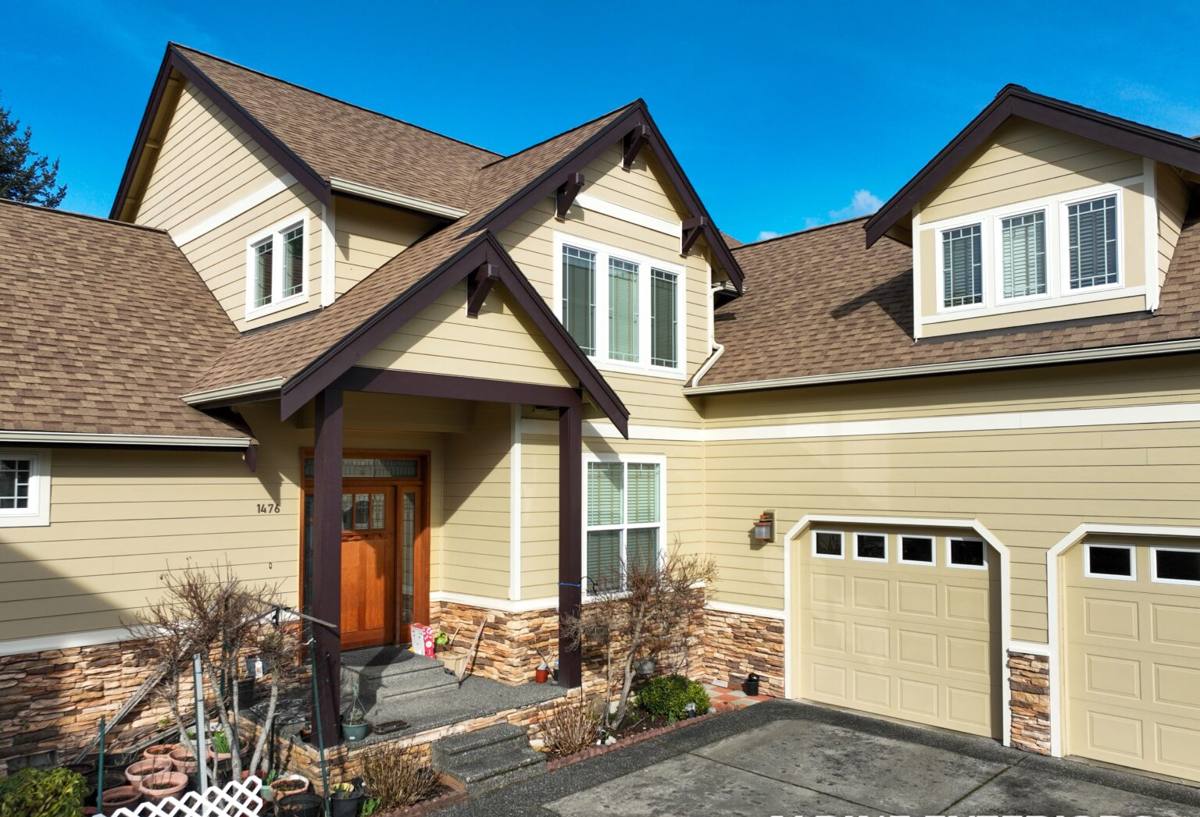
Why We Only Install James Hardie
We don't offer vinyl, LP SmartSide, Cemplank, Allura, or primed wood siding, and that's a deliberate standard, not an oversight. In a marine climate like Bow's, the products that struggle are almost always the ones that rely on paint film integrity or engineered wood cores to keep water out. Once a seam opens or a coating fails, those materials start absorbing moisture from the inside, and by the time it shows on the surface, the damage is already done underneath.
James Hardie fiber cement doesn't share that failure mode. It's non-combustible, dimensionally stable, and doesn't swell, rot, or delaminate when it gets wet — which matters on a site where "wet" is the default condition for half the year. We standardized on it because we'd rather install one product correctly, every time, than juggle five products and hope the ones with known weak points hold up in this exposure.
What Hardie Gets Right for This Exposure
- Fiber cement composition resists moisture absorption that causes swelling, cupping, and rot in wood-based sidings
- ColorPlus factory finish is baked on and warranted separately from the substrate, so it holds up against salt air and UV without the chalking you get from field-applied paint
- Non-combustible material, which matters for insurance conversations even in a wet climate where wildfire risk feels distant
- Dense, engineered surface that sheds standing moisture instead of wicking it, which slows moss and algae colonization compared to more porous sidings
Choosing the Right Hardie Line for Bow
Not every Hardie product is the right fit for every wall. Part of doing this job correctly is matching the product line to the exposure on each side of the house, not just picking one profile for the whole project.
HardiePlank Lap Siding
The most common choice for Bow homes, and usually the right one. It gives a traditional lap look, handles wind-driven rain well when the laps are set with correct exposure and overlap, and comes pre-primed or in ColorPlus finishes that hold color through the grey, low-light stretches of the year.
HardiePanel Vertical Siding
Useful for gable ends, accent walls, or homes going for a more modern look. Vertical panels shed water fast, which is an advantage on steep-pitched roof lines common in this area where runoff concentrates at wall intersections.
HardieShingle
A good option where a property wants a textured, shake-like look without the maintenance burden of actual cedar shingles, which need regular treatment to resist the moss and moisture this area produces.
All Hardie products used in this region should be specified for the HZ5 climate zone, which is engineered for the freeze-thaw and moisture cycling typical of Western Washington. It's a manufacturer specification, not an upsell — installing the wrong climate zone product is one of the more common corners cut on jobs that weren't planned by someone who works this area regularly.
What a Correct Installation Actually Involves
Fiber cement siding is only as good as the assembly behind it. In a high-moisture, salt-air environment, the parts nobody sees after the walk-through are what determine whether the siding performs for thirty years or starts showing problems in five.
The Water Management Layer
Every installation starts with a weather-resistant barrier and, on most Bow projects, a rainscreen gap behind the siding. That gap lets any moisture that does get past the cladding drain and dry instead of sitting against the sheathing — a meaningful detail in a climate where walls rarely get a long enough dry stretch to self-correct minor mistakes.
Flashing and Penetrations
Windows, doors, hose bibs, and vent penetrations are where most siding failures actually start, regardless of the cladding material. Correct step flashing, head flashing, and kick-out flashing at roof-wall intersections matter more than the siding brand in preventing the kind of hidden water intrusion that rots sheathing before anyone notices.
Fastening and Joints
Hardie specifies fastener type, spacing, and placement for a reason — corrosion-resistant fasteners driven correctly hold the board tight without splitting it or leaving gaps that trap water. Butt joints get flashed or caulked per manufacturer detail, not just butted and painted over, which is a shortcut that shows up as staining and gaps within a couple of wet seasons.
Installation Checklist We Hold Every Bow Job To
- HZ5 climate-zone Hardie product specified for the region, confirmed before ordering
- Weather-resistant barrier installed and lapped correctly, shingle-style, top over bottom
- Rainscreen or drainage gap included behind the cladding on applicable walls
- Manufacturer-specified fasteners, spacing, and edge clearance followed on every course
- All penetrations, windows, and roof-wall intersections properly flashed before siding goes on
- Minimum ground clearance maintained to keep the bottom course out of splash-back moisture
- Joints and seams detailed per Hardie's installation guide, not just caulked and left
- Final walkthrough checking reveal consistency, fastener seating, and finish condition
Comparing the Real Cost Factors
Homeowners in Bow often ask why quotes vary as much as they do for what looks like the same job. Most of the spread comes down to a handful of factors that actually drive cost and long-term performance, not the sticker price of the boards themselves.
| Factor | Why It Matters Here |
|---|---|
| Wall complexity and elevation count | More corners, gables, and dormers mean more cutting, flashing, and labor time — common on the varied rooflines in this area |
| Existing wall condition | Rot or moisture damage found once old siding comes off adds sheathing repair before new siding can go on correctly |
| Rainscreen inclusion | Adds material and labor cost but meaningfully extends performance in a climate with limited dry-out time |
| Product line mix | Combining lap, panel, and trim for architectural detail costs more than single-profile siding but holds up better on exposed elevations |
| Access and site conditions | Tree cover, slope, and setback from the road affect staging and can add time on rural Bow lots |
Our Process on a Bow Project
We keep the process the same on every job because consistency is what prevents the shortcuts that cause problems later.
- On-site assessment: we walk the exterior, check for existing moisture damage, and evaluate which Hardie profiles fit the home's elevations and exposure.
- Detailed proposal: product lines, colors, flashing details, and scope are spelled out in writing before any work starts — no vague allowances.
- Removal and prep: old siding comes off, sheathing is inspected and repaired where needed, and the weather barrier goes on correctly before anything else happens.
- Installation to spec: Hardie's fastening, spacing, and flashing requirements are followed on every course, not just the visible ones.
- Final inspection: we walk the finished job checking reveals, caulking, trim, and touch-up before calling it done.
Why a Crew That Already Works This Area Matters
Siding installation isn't just a national spec sheet applied to a house. A crew that regularly works Bow and the surrounding Fairhaven area already knows which elevations take the worst wind-driven rain, where moss establishes fastest, and how local permitting and inspection expectations run. That familiarity shows up in details a first-time or out-of-area crew is more likely to miss — the extra flashing at a tricky roof-wall intersection, the wider rainscreen gap on a shaded north wall, the fastener pattern that holds up against the salt air coming off the water.
It also means we're not guessing at product selection. We know which Hardie colors and finishes hold up against this region's UV and moisture pattern, and we're not learning the climate zone requirements on the client's dime.
Living With Hardie Siding in a Marine Climate
Correctly installed Hardie siding is low-maintenance, not no-maintenance. A little seasonal attention keeps it performing and looking right for the long haul.
- Rinse the exterior annually to clear salt residue and organic buildup before it has a chance to stain the finish
- Keep gutters and downspouts clear so overflow doesn't run down the siding face and feed moss growth
- Trim back vegetation and tree cover that keeps specific wall sections shaded and slow to dry
- Inspect caulking at trim and penetrations every couple of years and re-caulk where it's cracked or pulled away
- Address any impact damage or fastener issues promptly rather than letting a small gap become a water entry point
None of this is heavy upkeep — it's the same basic exterior attention any home in this climate needs, just without the repainting cycle or moisture-driven repairs that come with less stable siding materials.
If you're planning a siding project in Bow and want a straight answer on what your home actually needs, we're happy to take a look. Fill out the form below for a free, no-pressure estimate — we'll walk the exterior with you and tell you exactly what we'd do and why.