 Fairhaven Siding
 Why Birchwood Homes Need a Roof Built for This Climate
Birchwood sits close enough to Bellingham Bay and the Salish Sea that homes here deal with a specific combination of punishment most inland Whatcom County properties don't see: salt-laden air off the water, wind-driven rain that gets pushed sideways under poorly sealed flashing, and a wet, shaded moss season that can run eight months or more depending on tree cover and sun exposure. A roof that would hold up fine in a drier part of the state can start showing problems here years ahead of schedule.
Metal roofing, installed correctly, handles this combination better than almost anything else on the market. It sheds water fast, doesn't give moss the organic surface it needs to colonize, and — when the right alloy and coating are used — resists the corrosion that salt air accelerates. The catch is that phrase: installed correctly. Metal roofing is unforgiving of shortcuts in a way that asphalt shingles aren't, and Birchwood's climate finds those shortcuts fast.
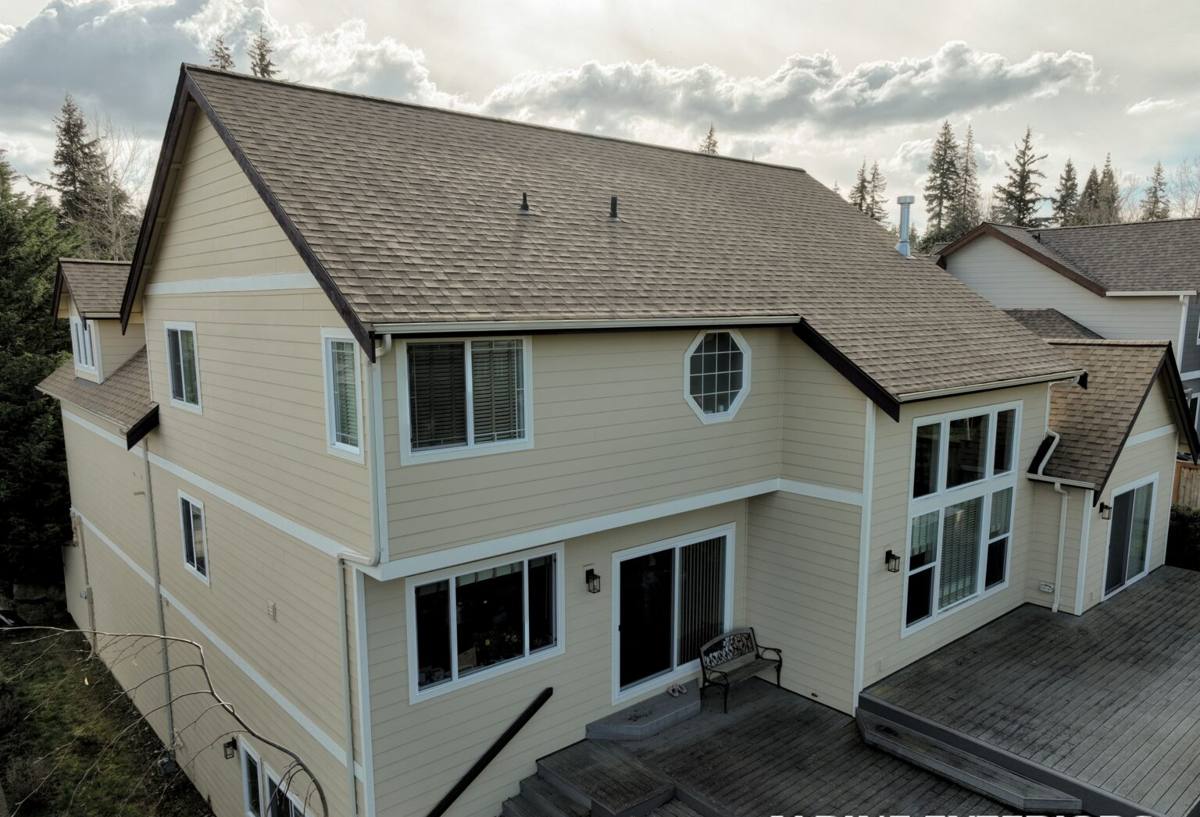
What This Climate Actually Does to a Roof
Salt Air and Corrosion
Homes near the water take in airborne salt that settles on every exterior surface, including the roof. On metal roofing, this matters most at cut edges, fastener heads, and any spot where the protective coating has been scratched or worn through during installation. Bare or poorly coated steel exposed to salt air will rust years before a properly finished panel shows any wear.
Driving Rain
Storms coming off the water don't just fall straight down — wind pushes rain sideways and up under laps, ridge caps, and flashing that wasn't detailed for that kind of pressure. Standard installation techniques that work fine in calmer inland conditions can leak in Birchwood during a hard blow if the underlayment, fastening pattern, and flashing overlaps weren't built with wind-driven rain in mind.
Moss and Shade
Whatcom County's long wet season, combined with tree cover common in and around Fairhaven neighborhoods, creates ideal moss conditions on roofs that stay damp and shaded for much of the year. Moss holds moisture against roofing material, works into seams, and — on shingle roofs especially — accelerates granule loss and decking rot. Metal's smooth, non-porous surface gives moss far less to grip, which is one of the biggest practical advantages it offers a shaded Birchwood lot.
What a Correct Metal Roofing Job Involves Here
A metal roof is only as good as the details underneath it. For Birchwood specifically, the parts that matter most are:
- Underlayment built for wind-driven rain — a high-quality synthetic or self-adhering underlayment at eaves, valleys, and other water-prone areas, not just a minimal code-minimum layer.
- Fastener and coating compatibility — using fasteners and flashing metals that won't set up galvanic corrosion against the panel material, which matters more in salt air than almost anywhere else.
- Sealed, over-detailed flashing — around chimneys, vents, skylights, and roof-to-wall transitions, with extra attention where wind can drive rain uphill under a lap.
- Panel and fastener spacing rated for coastal wind exposure, not just standard inland spacing.
- Clean cut edges — every field cut re-coated or capped so bare steel isn't left exposed to salt air.
- Attention to roof pitch and shade patterns on the specific lot, since low-slope or heavily shaded sections need extra underlayment protection where moss and standing moisture are most likely to develop.
Skip any one of these and the roof may still look fine for a year or two — the problems that show up in this climate are usually slow ones: a fastener rusting from the inside out, a lap that weeps during the next big southwesterly storm, moss creeping into a valley that wasn't quite sealed tight.
Choosing the Right Metal Roofing System
Not every metal roofing product performs the same way in a coastal, wet climate. We steer Birchwood homeowners toward systems that match the conditions rather than whatever is cheapest or trendiest.
| Option | Coastal Performance | Trade-offs |
|---|---|---|
| Standing seam steel (quality coating) | Strong — concealed fasteners reduce corrosion entry points; smooth panel sheds moss well | Higher upfront cost; installation is detail-sensitive |
| Exposed-fastener metal panels | Decent, but fastener seals need regular checking over time | Lower cost; more long-term maintenance around fasteners |
| Aluminum panels | Excellent salt-air resistance — aluminum doesn't rust the way steel can | Costs more than steel; softer material, more careful handling during install |
| Uncoated or minimally coated steel | Poor near the water — we don't recommend it for Birchwood | Lowest cost, but corrosion risk outweighs the savings here |
For most Birchwood properties, a quality-coated standing seam steel or an aluminum system offers the best balance of upfront cost and multi-decade performance against salt, rain, and moss. We'll walk through the specific trade-offs for your roof's exposure and budget rather than defaulting to one answer for every house.
Our Process for a Birchwood Metal Roof
1. On-Site Assessment
We look at more than the roof surface — pitch, tree coverage, prevailing wind exposure, proximity to the water, existing flashing condition, and decking health all factor into the plan. A roof on a shaded, low-slope section of a Birchwood lot needs different underlayment attention than an open, steep section catching direct sun and wind.
2. Material Selection
We talk through panel type, gauge, and coating options against your budget and how long you want this roof to last with minimal upkeep. There's rarely one "right" answer — it's a real trade-off conversation.
3. Tear-Off and Deck Inspection
Existing roofing comes off and the decking gets inspected for rot or moisture damage before anything new goes down — a step that matters even more on a roof that's had years of moss and moisture exposure.
4. Underlayment and Flashing
This is where most of the long-term performance is decided. We install underlayment and flashing rated for wind-driven rain, with extra attention at valleys, penetrations, and roof-to-wall transitions.
5. Panel Installation
Panels go down with fastening and lap spacing suited to coastal wind exposure, and every cut edge gets treated so bare metal isn't left exposed to salt air.
6. Final Walkthrough
We walk the finished roof with you, point out what was done and why, and go over any maintenance that will help it perform over the long haul.
Maintenance That Actually Matters in Birchwood
Metal roofing needs far less upkeep than shingles, but "less" isn't "none" — especially this close to the water.
- Rinse off accumulated salt residue and debris once or twice a year, particularly after dry stretches followed by storms.
- Keep gutters and valleys clear of needles and leaves so water has a clear path off the roof.
- Watch shaded areas for early moss or algae growth and address it before it spreads into seams.
- Have flashing and fastener seals checked periodically, especially after a particularly windy storm season.
- Trim back overhanging branches where practical to reduce shade, moisture retention, and debris buildup.
Why a Crew That Already Works Birchwood Matters
Metal roofing installed by a crew unfamiliar with coastal Whatcom County conditions often looks the same as one installed by a crew that works this area regularly — until the first real storm season or the first few years of salt exposure. The difference shows up in the underlayment choices, the flashing details, the fastener compatibility, and the small decisions made on the roof deck that don't show up in a sales brochure.
We work on homes throughout Fairhaven and the surrounding Bellingham Bay area regularly, which means we're not guessing about how a Birchwood roof needs to be built — we've seen what holds up here and what doesn't, and we build to that standard as our default rather than as an upcharge.
What This Typically Involves Cost-Wise
Metal roofing costs more upfront than asphalt shingles, and coastal-grade detailing adds to that compared to a bare-minimum install. The honest range depends heavily on roof size, pitch, complexity (valleys, penetrations, dormers), and the material tier you choose — steel versus aluminum, exposed-fastener versus standing seam. Rather than quote a number that won't reflect your actual roof, we'll walk the property and give you a written estimate based on what your home actually needs, with the reasoning behind each line item explained plainly.
If you're weighing a metal roof for a Birchwood home, we're happy to take a look and talk through what your roof actually needs — no pressure, no obligation. Use the form below to request a free estimate.