 Fairhaven Siding
 Siding Repair for Bellingham Homes
Most siding repair calls start the same way: a homeowner notices one bad spot — a cracked board, a stain that won't scrub off, a soft patch near the bottom of a wall — and wants it fixed. That's a reasonable way to think about it, but in Bellingham the visible damage is rarely the whole story. Salt-tinged marine air, rain that gets driven sideways into seams and trim instead of falling straight down, and a moss season that runs long on shaded walls all work on siding continuously, not just at the one spot you happened to notice. A repair that only addresses what's visible can leave the actual cause untouched, which means the same problem, or a related one nearby, shows up again within a season or two.
We approach siding repair in Bellingham as a diagnostic job first and a patching job second. That distinction is most of what separates a repair that holds for years from one that's back on someone's to-do list by the following winter.
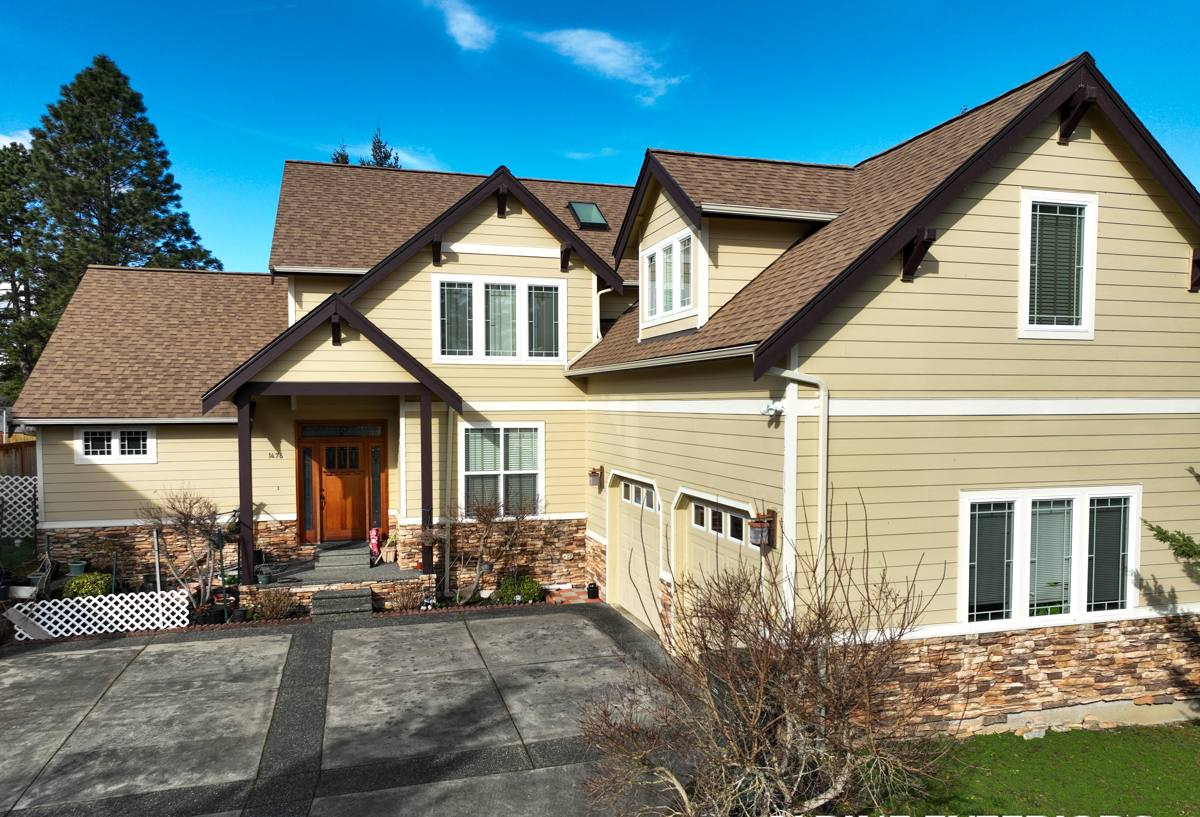
What Damages Siding in Bellingham's Climate
Wind-Driven Rain and Wall Penetration
Rain off the bay and the Salish Sea doesn't just fall on a wall — wind pushes it sideways into seams, corner boards, and window and door trim. Over enough wet seasons, that sideways pressure finds any gap where flashing was skipped, caulk has failed, or a joint wasn't lapped correctly, and water starts working its way behind the siding rather than running off the surface. By the time that shows up as a soft spot or a stain, it's usually been happening for a while.
Salt Air and Fastener or Trim Corrosion
The steady salt exposure common to homes near Bellingham Bay is hard on exposed metal — fasteners, flashing, and trim hardware corrode faster here than they would further inland. A corroded fastener doesn't hold siding as tightly as it should, and a corroded flashing edge stops shedding water the way it was designed to. Both failures tend to look minor from the ground until you're up close.
A Long Moss Season on Shaded Walls
Whatcom County's moss season stretches across most of the year on north-facing and tree-shaded walls. Moss holds moisture directly against the siding surface, which accelerates whatever breakdown is already happening underneath it — paint failure, substrate softening, or in the case of porous materials, gradual saturation. A wall that gets full sun dries out between storms; a shaded wall often doesn't, which is why the same siding product can hold up differently on two sides of the same house.
Repair or Replace? How We Make That Call
Not every damaged wall needs full replacement, and not every problem is fixable with a patch. The honest answer depends on how much of the wall is affected, what's causing the damage, and how the existing material is holding up overall. We'd rather tell a homeowner a repair is the right call and save them money than sell a replacement they don't need yet — and we'd rather be upfront when a repair would just be delaying a bigger job.
| Situation | Usually a Repair | Usually a Replacement Conversation |
|---|---|---|
| Damage extent | Isolated to one board, panel, or small section | Spread across a wall or multiple elevations |
| Cause | Impact damage, a single failed flashing point, isolated fastener issues | Widespread moisture intrusion or long-term neglect |
| Material condition | Surrounding siding is sound and still performing | Surrounding material is aging out or already showing wear |
| What's behind it | Sheathing and framing test dry and solid | Soft or damp sheathing found once siding is opened up |
The only way to know which category a given wall falls into is to look at it closely, including pulling back the damaged section far enough to see what's underneath. Guessing from the outside is how homeowners end up paying for a repair twice — once for the patch, and again a year later for the replacement that was actually needed the first time.
What a Correct Siding Repair Actually Involves
A repair that's built to last through Bellingham's wet seasons involves more than swapping out the damaged piece. A correct job includes:
- Removing enough surrounding material to see the full extent of the damage, not just the visible edge of it
- Checking the sheathing and water-resistive barrier behind the damaged area for moisture or soft spots before closing anything back up
- Correcting the underlying cause — a flashing gap, a failed sealant joint, an exposed fastener — not just replacing the material that failed because of it
- Matching the replacement material's profile, reveal, and finish closely enough that the repair doesn't stand out
- Re-flashing and properly lapping any disturbed transitions at windows, doors, corners, or the wall base
- Using corrosion-resistant fasteners suited to this area's salt exposure, not standard hardware
Skip the diagnostic step and you're left guessing whether the repair actually solved anything. A patch over an unaddressed flashing gap looks fine until the next wind-driven storm finds the same weak point again.
Common Repair Scenarios We See in Bellingham
Impact Damage
Cracked or dented boards from storm debris, a fallen branch, or an accidental impact are usually the most straightforward repairs — the damage is contained, the cause is obvious, and once the section is replaced and properly flashed, the wall is back to performing the way it should.
Moisture and Soft Spots at the Base
Siding near grade and around foundation lines sees more splash-back and standing moisture than the rest of a wall. Soft or spongy siding at the bottom courses often means water has been sitting against the material longer than it should, and it's worth checking whether grading, gutters, or drainage nearby are contributing before the repair goes back in.
Moss-Related Staining and Surface Breakdown
Persistent moss or dark staining on shaded walls sometimes means the surface just needs cleaning and re-sealing, and sometimes means the finish has broken down enough that the underlying material is exposed. Telling the difference matters, because treating the second case like the first just delays a repair that's going to be needed anyway.
Failed Caulk and Trim Joints
Caulk has a limited service life, and in a climate that cycles through wet and dry as often as this one does, failed caulking at trim and window joints is one of the most common entry points for water. It's also one of the cheapest fixes when it's caught early, and one of the more expensive ones once it's let water into the wall for a season or two.
Repairing Hardie Siding vs. Other Materials
We install James Hardie fiber cement siding exclusively, and repairing it is straightforward: the ColorPlus factory finish and consistent panel profiles mean a well-matched replacement section blends in cleanly, and the material itself doesn't swell or distort the way wood-based products can after a repair is made. If your home already has Hardie siding, we can typically match the existing product closely even if it's been on the wall for years.
We'll also look at and repair other siding materials when that's what a home already has — vinyl, LP SmartSide, cedar, or others. We're straightforward about what a repair on those materials can and can't fix long-term. Some of them are more sensitive to moisture at cut edges and fastener holes than fiber cement is, which means a repair can hold the line for a while without necessarily matching the lifespan the rest of the wall has left. If a home is heading toward a point where repairs are becoming frequent, we'll say so plainly, and that's usually when a broader conversation about replacement — and what we'd recommend instead — makes sense.
Our Bellingham Repair Process
Diagnosis Walkthrough
We start by looking at the damaged area and the wall around it, checking what's underneath once the siding is opened up, and identifying the actual cause rather than just the visible symptom.
Scope and Estimate
Once we know what's actually going on, we give you a clear scope — what's being repaired, why, and what it involves — and a straightforward estimate before any work begins.
The Repair Itself
We complete the repair to the same fastening, flashing, and clearance standards we'd use on a full installation, because a repair that's built to a lower standard than new work just becomes the next problem.
Final Walkthrough
We walk the finished repair with you, explain what was found and fixed, and flag anything else on the wall worth keeping an eye on going forward.
Why a Crew That Already Works Bellingham Matters
Siding repair rewards local experience more than most exterior work, because the failure patterns here are specific to this climate. A crew that's repaired siding across Bellingham through multiple wet seasons already knows which orientations tend to hold moisture longest, how far salt exposure typically reaches inland from the water, and where a flashing detail that works fine in a drier climate tends to fail here. That judgment shows up in whether a repair actually solves the problem or just resets the clock on it for a year.
Cost Factors for Siding Repair in This Area
Repair costs vary more than replacement costs, because so much depends on what's actually found once a wall is opened up. A few things that typically move the price:
| Factor | Why It Matters |
|---|---|
| Extent of damage | A single board is a different job than a section spanning several courses |
| Condition behind the siding | Sound sheathing keeps the job simple; damp or soft sheathing adds repair scope |
| Material match | Matching an older or discontinued color or profile can take more sourcing time |
| Access | Second-story walls, steep lots, or tight side yards can add labor time |
| Underlying cause | Fixing a flashing or drainage problem behind the damage adds scope beyond the patch itself |
We'd rather walk your specific wall and give you real numbers than a rough estimate based on a phone description — repair costs are harder to predict from a distance than most other exterior work.
If you've got a section of siding that needs attention in Bellingham, we're happy to take a look, tell you honestly whether it's a repair or a bigger conversation, and put together a free, no-pressure estimate. There's a form below — reach out and we'll set up a time to come by.