 Fairhaven Siding
 Bellingham's Climate Is Hard on Roofs
Roofs in Bellingham and the surrounding Whatcom County shoreline take a different kind of beating than roofs a hundred miles inland. Salt-laden air off Bellingham Bay accelerates corrosion on exposed metal — flashing, fasteners, vent caps, and gutter hardware all wear faster here than the manufacturer's charts assume. Add driving rain that comes in sideways during winter storms, and any small gap in flashing or underlayment turns into an active leak instead of a slow drip. Then there's moss season, which in this part of Washington isn't really a season at all — it's most of the year. Shaded, north-facing slopes and roofs under mature trees stay damp long enough for moss and algae to take hold, and once established, that growth holds moisture against the roofing material and works into seams, nail heads, and shingle laps.
None of this means a Bellingham roof is doomed to fail early. It means repairs here have to account for conditions a roof in a dry climate never deals with. A patch that would hold for a decade in eastern Washington might fail in two winters here if it isn't detailed for wind-driven rain and constant moisture exposure.
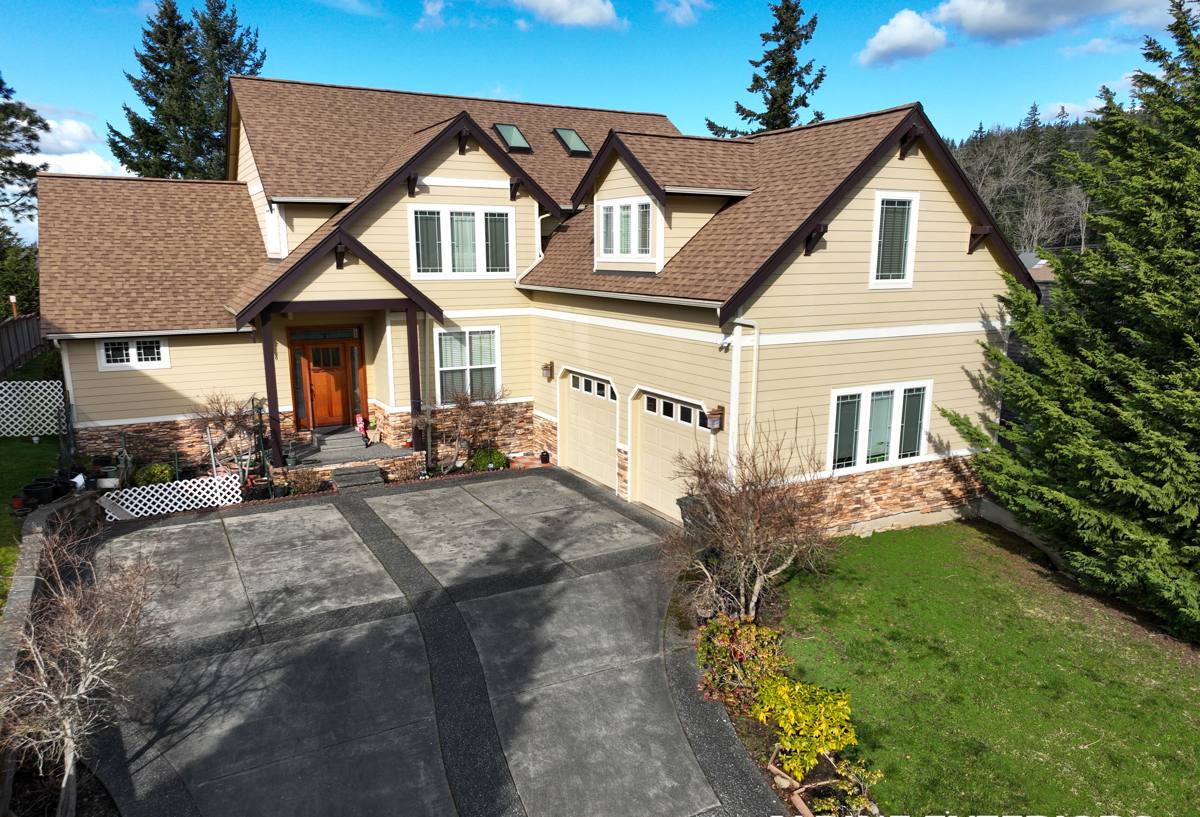
Signs of Trouble We Look for in Bellingham Homes
Most roof problems in this area show up gradually, and homeowners often notice the secondary damage — a stained ceiling, a musty smell in an attic — before they notice the roof itself. Catching problems earlier keeps repair costs down and protects the decking and insulation underneath.
- Dark streaking or thick moss growth, especially on shaded or north-facing sections
- Granules collecting in gutters or at the base of downspouts
- Curling, cracked, or lifted shingle edges
- Rust staining or visible corrosion around flashing, vents, or chimney details
- Soft spots or noticeable sagging when walking the roof deck
- Daylight visible through the attic roof deck, or damp insulation below it
- Water stains on interior ceilings, especially after a wind-driven rainstorm
- Granular loss or bare patches around valleys, where water volume is highest
Any one of these on its own might be minor. Several together, especially around valleys, chimneys, or skylights, usually means water has already found a way in and the repair needs to address the cause, not just the visible symptom.
What a Proper Roof Repair Involves
A roof repair that actually holds up in this climate is more than swapping a few shingles. It means tracing the problem to its source and rebuilding that section correctly, with materials and details suited to constant moisture and salt exposure.
Flashing and Flashing Details
Flashing failure is behind more Bellingham roof leaks than worn-out shingles are. Step flashing at wall intersections, counter-flashing at chimneys, and valley flashing all rely on correct overlap and fastening to shed water — and salt air corrodes cheaper or improperly sealed metal faster than most homeowners expect. A correct repair replaces compromised flashing with material suited to coastal exposure and reinstalls it with proper laps, not just a bead of sealant over the old piece.
Underlayment and Decking
Underlayment is the roof's backup layer if wind-driven rain gets past the surface material, which happens more often here than in calmer climates. Where underlayment has degraded or decking has gone soft from sustained moisture, that material needs to come out and be replaced — patching over rotten decking just relocates the problem a season or two down the road.
Moss, Algae, and Debris Management
Any repair on a roof with active moss or algae growth should include careful removal before the repair itself, plus attention to what's feeding the growth — usually overhanging branches, debris buildup in valleys, or persistent shade. Removing moss without damaging the roofing surface underneath takes a gentler touch than pressure-washing, which can strip granules and shorten the life of the surrounding shingles.
Ventilation Checks
Poor attic ventilation traps moisture against the underside of the roof deck, which speeds up rot and, in cold snaps, contributes to ice damming at the eaves. Part of a thorough repair is checking that intake and exhaust venting are actually balanced, not just present.
Roof Materials Common in Bellingham — Repair Considerations
The right repair approach depends heavily on what's already on the roof. Here's how the materials we see most often around Bellingham typically hold up and what tends to need attention.
| Roofing Material | Common Issues in This Climate | Repair Notes |
|---|---|---|
| Composition (asphalt) shingles | Granule loss, curling, moss holding moisture against the surface | Matching existing shingle age and exposure matters for a repair that blends in and seals correctly |
| Wood shakes and shingles | Moss and algae growth, splitting from repeated wet-dry cycling | Requires careful moss removal and often individual shake replacement rather than patching |
| Metal roofing and flashing | Corrosion and fastener failure from salt air | Fastener and seam inspection matter as much as the panels themselves |
| Torch-down or membrane (low-slope) | Seam separation, ponding water on flat sections | Seam repair needs matching membrane material and correct heat-welding or adhesive technique |
Whatever the material, the repair only lasts if it's compatible with what's already there — mismatched materials or fasteners can create new points of corrosion or leakage instead of solving the original problem.
Repair or Replace? How We Help You Decide
Not every roof problem calls for a full replacement, and not every roof is a good candidate for another round of patching. We look at the age of the roofing material, how much of the roof is affected, the condition of the decking underneath, and how many prior repairs the roof has already had. A roof with isolated flashing failure and otherwise healthy shingles is usually a straightforward repair. A roof with widespread granule loss, multiple soft spots in the decking, or repair after repair in the same areas is often past the point where patching makes financial sense. We'll give you a straight answer on which category your roof falls into, along with the reasoning behind it, so the decision is yours to make with real information.
Our Process From Call to Completion
Inspection and Diagnosis
We start by getting on the roof, not just looking at it from the ground. That means checking flashing, decking, ventilation, and the interior attic space where accessible, so we're diagnosing the actual cause of a leak or wear pattern rather than guessing from a stain on the ceiling.
Written Scope and Estimate
You get a clear explanation of what we found, what needs to happen to fix it correctly, and a written estimate before any work starts. If there's a lower-cost option and a more thorough one, we'll explain the tradeoffs honestly instead of just pushing the bigger job.
The Repair Itself
We use materials suited to this climate — corrosion-resistant fasteners and flashing, underlayment rated for sustained moisture exposure — and we detail the work the way it needs to be detailed for driving rain, not just fair-weather conditions.
Cleanup and Follow-Up
We clear debris, magnet-sweep for stray fasteners, and leave the site the way we found it. If anything about the repair doesn't perform the way it should once it's been through a real Bellingham winter, we want to hear about it.
Why a Fairhaven-Based Crew Serving Bellingham Makes a Difference
We're based right in Fairhaven, which means Bellingham roof repair isn't a job we drive an hour to reach — it's the work we do every week, in the same weather patterns and on the same style of housing stock found throughout Whatcom County. That familiarity matters. We already know how moss behaves on the shaded, north-facing roof slopes common in this area, how salt air off the bay treats unprotected metal, and how wind-driven rain finds the gaps that a drier climate's roofers might never think to check. Being local also means we're accountable locally — this is our community, and a repair with our name on it needs to hold up through the next storm season, not just look fine on the day we leave.
Keeping a Repaired Roof Healthy Between Visits
A good repair buys you time, but a little upkeep between service visits protects that investment. Keep gutters and valleys clear of needles and leaves so water has a clear path off the roof. Trim back branches that keep sections of roof shaded and damp longer than the rest. If moss returns, address it early with a gentle removal method rather than letting it re-establish through another wet season. And if you notice a new stain, a slow drip, or granules building up in the gutters, get it looked at before the next round of driving rain turns a small issue into decking damage.
If you're dealing with a leak, visible moss and wear, or just want an honest opinion on the condition of your roof, we're happy to come take a look. Reach out for a free, no-pressure estimate — the form below gets you started.