 Fairhaven Siding
 Asphalt Shingle Roofing for Bow Homes
Bow sits along Samish Bay just south of Fairhaven, close enough to the water that every roof in the area deals with the same combination of problems: salt-laden air moving in off the bay, long stretches of driving rain, and short winter days that never quite dry things out. Asphalt shingle roofing is still the right choice for most homes here — it's durable, repairable, and reasonably priced — but only when it's installed with this specific climate in mind. A shingle roof built the way a catalog or a national installer might do it in a drier region will underperform here. One built correctly for Whatcom and Skagit County conditions will hold up for decades.
We work on homes throughout the Bow area regularly, alongside our work in Fairhaven and the rest of Whatcom County, so we're not guessing at how these roofs age here. We're looking at the same wind exposure, the same rainfall totals, and the same moss pressure on every job.
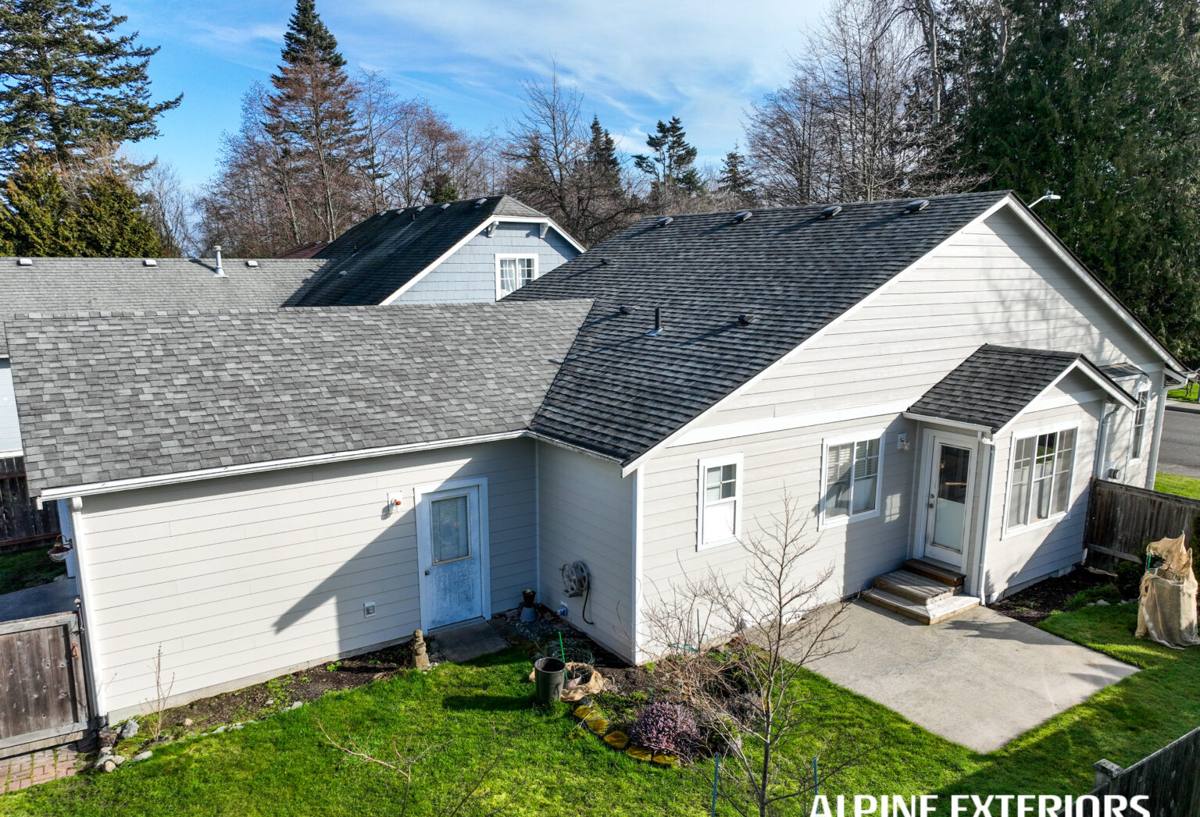
What the Local Climate Actually Does to a Shingle Roof
Salt Air and Coastal Wind
Homes closer to Samish Bay and the open water take more wind-driven exposure than homes further inland. Salt-carrying air accelerates the breakdown of exposed metal fasteners and flashing over time, and steady wind loading stresses shingle tabs and ridge caps at their edges — the first place a poorly fastened roof starts to fail.
Driving Rain
It isn't just how much rain falls here, it's how it arrives — often sideways, pushed by wind off the water. That kind of rain finds every weak point in a roof: under-lapped shingle courses, thin or missing underlayment, flashing that was caulked instead of properly integrated. A roof that would be fine in a calmer, drier climate can leak here within a few seasons if those details were skipped.
Moss Season
Shade, moisture, and mild temperatures make Whatcom and Skagit County prime moss territory for a large part of the year. Moss doesn't just look bad — it holds moisture against the shingle surface, lifts tabs as it grows under the edges, and can shorten the effective life of a roof significantly if it's never addressed. Any asphalt shingle roof installed in the Bow area needs to be built and maintained with moss in mind from day one, not treated as an afterthought once it's already established.
What a Correct Installation Looks Like Here
A shingle roof is a system, not just a layer of shingles nailed to plywood. For homes in this climate, every layer of that system matters more than it would somewhere drier.
- Ice and water shield at eaves and valleys: a self-adhering waterproof membrane at the roof's most vulnerable points, not just felt paper
- Synthetic underlayment across the full deck: more tear-resistant and more water-resistant than old-style felt, and it holds up better if weather moves in mid-project
- Properly integrated step and counter-flashing: woven into the roofing at walls, chimneys, and dormers rather than sealed over with caulk after the fact
- Balanced attic ventilation: intake at the eaves and exhaust at the ridge, sized correctly so moisture doesn't get trapped under the deck and shorten the shingles' life from underneath
- Correct nailing pattern and fastener count: matched to the shingle manufacturer's high-wind specifications, not the minimum
- Algae-resistant shingle granules: copper-infused granules that slow the growth of the algae and moss that darken and degrade roofs left untreated
Skip any one of these and the roof may still look fine going up — the problems show up two, five, or ten years later, usually as a leak that traces back to a shortcut nobody can see from the ground.
Choosing a Shingle for This Climate
Not every asphalt shingle product is built the same way, and the differences matter more here than in a milder, drier region. This is a general comparison of the categories we typically discuss with Bow homeowners — exact products and pricing depend on the manufacturer and your roof's specifics.
| Shingle Type | Wind & Rain Performance | Moss/Algae Resistance | Typical Lifespan |
|---|---|---|---|
| 3-Tab (economy) | Lower wind rating, more seams for water to find | Standard, unless algae-resistant granules specified | 15–20 years |
| Architectural (laminated) | Higher wind rating, thicker profile sheds water better | Usually available with algae-resistant granules | 25–30 years |
| Impact-rated / heavier architectural | Best wind and debris resistance | Algae-resistant granules standard on most lines | 30+ years |
For most homes in the Bow area, we recommend an architectural shingle with algae-resistant granules and a high wind rating as the baseline, not the upgrade. The cost difference over a 3-tab shingle is modest relative to the roof's total price, and the performance gap in this climate is real.
Manufacturers and Warranties
We install from established manufacturers with proven track records rather than lesser-known or off-brand lines, because the warranty is only as good as the company standing behind it in twenty years. We'll walk you through the specific product options, their warranty terms, and what's actually covered — manufacturer warranties on materials and workmanship warranties on installation are two different things, and homeowners deserve to understand both before signing off.
Signs a Bow Roof Needs Attention
Because of the moss and rain cycle here, problems tend to develop quietly. Watch for:
- Granules collecting in gutters or at downspout outlets
- Shingle tabs that look curled, cupped, or lifted at the edges
- Visible moss or dark streaking, especially on shaded slopes
- Soft spots or sagging when walked (a sign of deck moisture damage)
- Daylight visible through the attic roof deck
- Water stains on interior ceilings, especially after a wind-driven storm
- Flashing that looks caulked or patched rather than woven into the roofing
Catching these early is usually the difference between a repair and a full replacement.
Repair or Replace?
Not every roofing problem in Bow means a new roof. We look at the roof's age, the extent of the damage, and how the original installation was done before recommending either path.
| Factor | Favors Repair | Favors Replacement |
|---|---|---|
| Roof age | Under 10–12 years | Approaching or past expected lifespan |
| Extent of damage | Isolated to one area or slope | Widespread across multiple slopes |
| Underlying deck condition | Solid, no soft spots | Soft decking or evidence of long-term moisture |
| Original installation quality | Correctly flashed and ventilated | Missing underlayment, poor flashing, or no ventilation |
| Moss/algae history | Recent, surface-level growth | Long-term growth that's lifted shingle edges |
We'll give you a straight answer on which category your roof falls into, including when a repair is genuinely the right call rather than upselling a replacement you don't need yet.
Our Process for a Bow Roofing Project
- On-site inspection: we walk the roof and attic, checking deck condition, current ventilation, flashing, and any leak history you can tell us about
- Written estimate: a clear scope of work, materials specified by name, and a price — no vague allowances
- Tear-off and deck check: full removal of the old roofing so we can inspect and, if needed, replace damaged decking before anything new goes down
- System installation: ice and water shield, synthetic underlayment, flashing, ventilation, and shingles installed in that order, to manufacturer spec
- Cleanup and final walkthrough: site cleared of debris and nails, and we review the finished roof with you before we consider the job done
We schedule around the weather here rather than fighting it — a roof torn off and left partially exposed during a driving rain event is a bigger risk in this region than in drier parts of the country, so timing matters.
Ongoing Care After Installation
A new shingle roof in Bow still needs some attention to reach its full lifespan. We recommend:
- Keeping gutters clear so water isn't backing up under the eaves
- Trimming back overhanging branches that keep shaded areas of the roof damp longer
- Having moss treated or gently removed before it establishes under shingle tabs, rather than after
- A periodic visual check after major windstorms for lifted or missing shingles
None of this requires a maintenance contract or constant attention — just a reasonable check once or twice a year, which we're happy to help with.
Why Local Experience Matters for This Job
Asphalt shingle roofing isn't a complicated product, but installing it correctly for Bow's combination of salt air, wind-driven rain, and moss pressure takes judgment that comes from doing it in this specific climate repeatedly. A crew that mostly works inland or in a different climate may not think twice about ventilation balance or algae-resistant granules — details that matter less where they're used to working, but matter a great deal here. We're based in Fairhaven and work this stretch of Whatcom and Skagit County regularly, so the decisions we make on your roof come from what actually holds up in this environment, not a generic checklist.
If you'd like an honest look at your roof's condition or want to talk through options for a new installation, we're happy to come out to your Bow property for a free, no-pressure estimate — just fill out the form below.