 Fairhaven Siding
 Why Sunnyland Homes Are Hard on Siding
Sunnyland sits inland from Bellingham Bay but still close enough that salt-laden air, wind, and heavy seasonal rain all reach the neighborhood's older and newer homes alike. Whatcom County's marine climate doesn't punish a house all at once — it wears siding down slowly, through repeated wet-dry cycles, shaded lots that never fully dry out, and months of low winter sun that leaves north- and west-facing walls damp far longer than homeowners realize. A siding system that isn't built and installed for this specific combination of stressors tends to show problems years before it should.
Salt air and coastal moisture
Even a few miles from open water, airborne salt accelerates corrosion on fasteners, trim hardware, and any siding product with exposed metal components. Over time it also breaks down cheaper paint films faster than inland climates would, leading to chalking and fading well ahead of a manufacturer's stated finish life.
Driving rain and wind-driven wet walls
Storms coming off the Sound don't just fall straight down — wind pushes rain sideways into wall assemblies, which is exactly the condition that exposes weak flashing, gapped joints, and undersized overlaps. Siding that looks fine in a still, dry inspection can still be letting water behind it during a real Whatcom County storm.
A long moss and mildew season
Between the tree cover common in Bellingham neighborhoods and the region's extended damp season, siding here spends a large share of the year at high humidity. That's ideal growing conditions for moss, algae, and mildew on any surface that holds moisture, especially in shaded side yards and under eaves that get little direct sun.
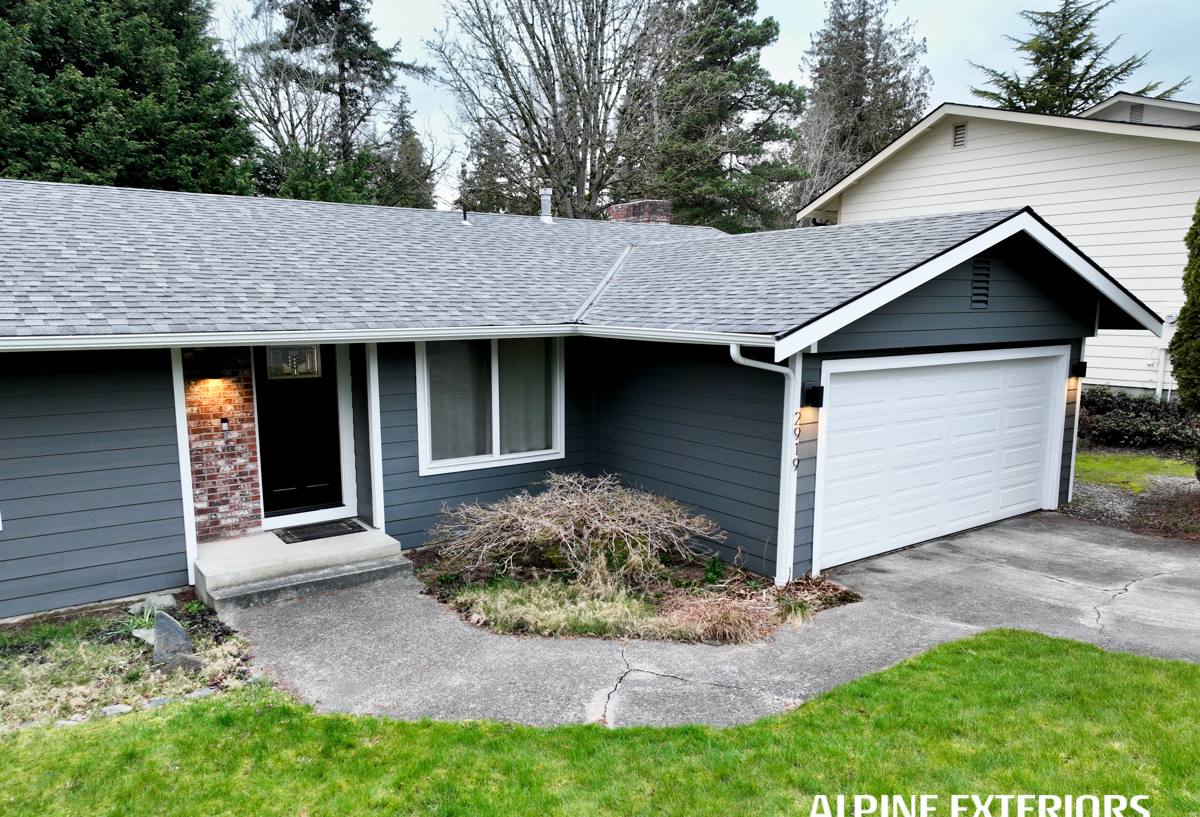
Signs Sunnyland Siding Has Reached the End of Its Life
Most siding failure is gradual, which is why homeowners often live with early warning signs for a season or two before calling anyone. Watch for these:
- Soft or spongy spots when you press on the siding, especially near the bottom courses and around window and door trim
- Persistent green or black staining that comes back within weeks of being cleaned
- Paint that's peeling, bubbling, or chalking heavily rather than just fading evenly
- Visible cupping, warping, or separation at seams and butt joints
- Cracking around nail heads or fasteners that have started to rust or bleed through the finish
- Interior clues — musty smells, peeling interior paint, or warped baseboards on an exterior wall
- Gaps or caulk failure at corner boards, window trim, and where siding meets the foundation
Any one of these on its own might just need a repair. Several appearing together, especially on the same wall, usually means moisture has been getting behind the siding for a while and a full replacement is the more honest recommendation.
What a Correct Siding Replacement Actually Involves
Siding replacement is not just swapping old boards for new ones. The materials matter, but the work that happens underneath them — the parts you never see again once the job is done — is what actually determines whether a house stays dry for the next 30 to 50 years.
A proper job includes full removal of the old siding down to the sheathing, an honest inspection of that sheathing and the framing behind it for rot or hidden damage, correction of anything found before covering it back up, and installation of a code-compliant weather-resistive barrier. Flashing gets installed or replaced at every window, door, and horizontal trim transition, since these are the highest-risk points for water intrusion. Fasteners, gaps, and clearances all get set to the siding manufacturer's published specifications rather than "close enough" — those numbers exist because they were tested against exactly the wind-driven rain conditions this region sees.
Why We Install Only James Hardie Fiber Cement
We made a deliberate decision to install James Hardie fiber cement siding exclusively, and we don't install vinyl, LP SmartSide, Cemplank, Allura, primed spruce, or cedar. That's not a marketing position — it's a standard we hold because of what we've seen these products do, and not do, in a Pacific Northwest climate over time.
| Material | How it handles this climate | Where it falls short |
|---|---|---|
| James Hardie fiber cement | Non-combustible, engineered for wet climates (HZ5 product line), factory ColorPlus finish resists fading and chalking | Heavier, requires specialized installation skill |
| Vinyl siding | Low upfront cost, low maintenance in mild weather | Can warp or crack in temperature swings, seams and panels flex and loosen over decades, fading over time |
| LP SmartSide (engineered wood) | Lighter and easier to install than fiber cement | Wood-based core is more moisture-sensitive; edge sealing and caulking maintenance is critical to prevent swelling |
| Cedar / primed spruce | Natural appearance, long regional tradition | Needs ongoing refinishing, more vulnerable to moisture, rot, and pest damage without diligent upkeep |
James Hardie's fiber cement is cement, sand, and cellulose fiber — it doesn't burn, it doesn't feed insects, and it doesn't swell the way wood-based products can when they take on moisture. The factory-applied ColorPlus finish is baked on under controlled conditions, which is a meaningfully more durable finish than field-applied paint, and it comes with its own warranty against fading and chalking. For a neighborhood dealing with salt air, driving rain, and a long moss season, that combination of moisture resistance and finish durability is the deciding factor for us.
Our Sunnyland Siding Replacement Process
- Inspection and estimate. We walk the exterior, check for moisture damage, and give you an honest read on whether you need a full replacement or targeted repair — no pressure either direction.
- Product and color selection. We go through the relevant James Hardie lines and ColorPlus options and help you match board profile and color to your home and neighborhood.
- Site preparation. Landscaping, fixtures, and outdoor living areas get protected before any tear-off begins.
- Tear-off and sheathing check. Old siding comes off, and we inspect what's underneath before anything new goes up — this is the step that catches hidden rot or past water damage.
- Weather barrier and flashing. A new moisture barrier goes on, along with fresh flashing at every window, door, and trim transition.
- Installation to spec. Hardie boards go up with the fastening pattern, gapping, and clearances the manufacturer requires — not shortcuts that happen to look fine on day one.
- Trim, caulking, and final details. Corner boards, trim, and joints get sealed correctly so water has nowhere to collect.
- Cleanup and walkthrough. We clear the site and walk the finished job with you before calling it done.
What Drives the Cost of a Sunnyland Siding Job
Every home is different, and we won't quote a number without seeing the house, but these are the factors that most often move the price up or down:
| Factor | Why it matters |
|---|---|
| Extent of hidden damage | Rotted sheathing or framing found during tear-off adds repair scope before new siding can go on |
| Home size and wall complexity | Multiple stories, dormers, and cut-up wall lines take more labor and material than a simple rectangular footprint |
| Board profile and accessories | Trim boards, corner detailing, and specialty profiles cost more than standard lap siding |
| Access and site conditions | Tight side yards, mature landscaping, or slope can slow staging and add labor time |
| Full replacement vs. repair | Spot repairs cost less upfront but don't reset the clock on an aging weather barrier the way a full replacement does |
Why a Crew That Already Works Sunnyland Matters
Bellingham's neighborhoods aren't uniform — a wall that stays shaded most of the day in a tree-covered part of Sunnyland behaves differently than one with full southern exposure a few blocks away, and a crew that only shows up occasionally doesn't build the pattern recognition for that. Knowing which walls in this area tend to hold moisture longer, which exposures need extra attention to moss and mildew, and how local permitting and inspection expectations work all comes from doing this kind of work here repeatedly, not from a one-off job. That familiarity shows up in small decisions on site — where to pay extra attention to flashing, how tight to run clearances near grade, which corners of the house need the most careful sealing — that don't show up on a quote but do show up in how the siding performs ten years later.
Caring for Your Siding After Installation
James Hardie fiber cement is low-maintenance compared to wood or engineered-wood alternatives, but "low-maintenance" isn't "no-maintenance," especially in a climate that supports moss growth most of the year.
- Rinse siding gently once or twice a year to keep organic growth from taking hold, especially on shaded and north-facing walls
- Keep gutters and downspouts clear so runoff doesn't sheet down the siding face
- Trim back shrubs and branches that keep a wall shaded and damp longer than necessary
- Check caulking at trim and joints periodically and have any cracked sections resealed
- Address any impact damage or chipping promptly rather than letting it sit exposed
Warranty and Long-Term Value
James Hardie backs its fiber cement products with a strong transferable warranty, and the ColorPlus finish carries its own separate finish warranty covering fading and chalking. That transferability matters if you sell the home — it's a documented, manufacturer-backed asset rather than a verbal assurance from whoever installed it. Combined with correct installation, that warranty structure is a big part of why we consider Hardie the right long-term investment for homes in this climate rather than a product that needs refinishing or partial replacement well before a mortgage is paid off.
If your Sunnyland home is showing signs of siding wear, or you're planning ahead rather than waiting for a problem, we're happy to take a look and give you a straightforward, no-pressure estimate. Use the form below to get started.